Have you ever used low-cost online platforms such as Temu or SHEIN to buy Halloween costumes or Christmas decorations?
Recently, the use of low-cost online platforms such as Temu, SHEIN, and AliExpress has been increasing across Europe.
Unlike traditional retailers, low-cost online platforms such as TEMU, SHEIN and Aliexpress connect consumers directly with manufacturers and sellers in digital market places. These platforms can offer various products at relatively low prices. This e-commerce model has contributed to the rapid growth of low-value imports into the European market.

Browsing products on Temu
In October, Bona who is exchange student in Netherlands purchased Halloween costumes using Temu. After selecting several items and proceeding to the checkout page, an additional €12.71 in taxes was added to the total.
The original price of the products was €31.77, excluding taxes. The tax was calculated differently for each individual item, resulting in a total tax amount of approximately €12.
Consumers cannot easily see the additional tax charges while selecting products. Instead, the final price, including the additional taxes, is only displayed once they proceed to the checkout page.
European Commission report
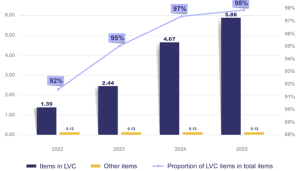
The European Commission reported a significant rise in e-commerce imports valued below €150. In 2025, these imports recorded a further 26% increase from the previous year, totaling approximately 5.88 billion items.
These low-value goods account for 97% of all imported parcels in the EU, but represent only around 2.1% of total import value. The average value of each item is also less than €9. This result highlights the growing trend of large volumes of low-priced goods from e-commerce platforms.
This trend has led to a growing number of problems, including product safety risks and various other issues.

BEUC office in Brussels
According to the BEUC(The European Consumer organization)’s test, they tested products from Temu and shein in three categories. So it was over like 150 products. It was toys for kids, jewelry, electronics. And 69% of them did not comply.
International affairs policy officer mykyta sobko said that for example, electronics, it could be like electrocuting risk or overheating. For toys, you’ll have some dangerous chemicals or you would be having like detachable pieces that could present like a choking hazard. Or for jewelry, it was again a chemical hazard.
European Commission
The European Union fined Temu €200 million last May for failing to adequately prevent the sale of illegal and dangerous products.
In response to these problems, the European Commission has decided to abolish the customs duty exemption previously applied to goods valued at less than €150, effective 1 July, 2026.
“From 1 July 2026, the EU will apply a temporary €3 customs duty per item on low-value consignments (up to €150) imported from outside the EU, abolishing the duty exemption applicable until 30 June 2026. The €3 temporary customs duty is a flat fee, which will apply until 1 July 2028, after which normal customs duties will apply, depending on the type of good.” -EU Commission-

BEUC International affairs policy officer mykyta sobko
BEUC International affairs policy officer mykyta sobko said that EU decided to do the custom reform because they saw this as one of the biggest issue or upcoming challenges, how to tackle e-commerce, to make sure to protect the people, but also to protect the businesses, to make sure that everyone complies with the same rules.
And he said that BEUC already see this improvement because since the introduction on the 1st of July, there have been 60% less parcels coming to the EU. It means that just the platforms adapted to the changes and they constructed warehouses here in Europe and they just started to import everything in bulk, which is easier to enforce safety rules at the border.
In relation to this policy, a customs policy expert offered the following opinion.
According to Erasmus university professor Aksel Erbahar, low income households are more likely to rely on low-cost online platforms such as Temu and SHEIN. Therefore, the additional customs duties could place a financial burden on these consumers.
Erbahar professor said that stricter enforcement of standards and greater responsibility for online marketplaces would be more effective. Ideally, the EU should focus on these underlying problems rather than relying primarily on tariffs, which risk raising prices for consumers.
The EU’s tariff policy represents an important step towards addressing the challenges of e-commerce. The EU’s tariff policy has both advantages and disadvantages. Therefore EU needs to develop measures that maximise its benefits while addressing its weakness.