Walking through the streets of Brussels, it’s easy to see why it’s nicknamed the capital of Europe. Yet behind the institutions, Belgium is facing a growing financial crisis. Like most countries in Europe, the government of Prime Minister De Wever is tasked with finding a balance between balancing the books and tackling the acute cost-of-living crisis, which is becoming more visible. Not far from the ‘heart of Europe’, you can see homeless people coming from all different backgrounds trying to survive. The European project was built to promote social values and prosperity, but if European citizens can’t make ends meet, does the European project still work?
The stark reality facing the federal government is that it is looking for savings worth 10 billion euros to get borrowing down to around 4% of GDP by 2029, lower than the 5.2% it was in 2025 but still higher than the 3% rule which EU member states must abide by. According to the latest numbers from Eurostat the debt-to-GDP ratio in 2025 was 108.1%, which is an increase of around 4% compared to 2024. The borrowing rose to 5.2% in 2025 from around 4.4% in 2024. Compared to other countries in Europe, it had the third-highest budget deficit, ranking only behind Romania at 7.8% and Poland (7.2%). On debt-to-GDP, the country ranks fourth behind Greece, Italy and France.
Political disagreement is the primary reason why these issues have arisen, but according to Bart Engelaar, president of Belgium’s socialist trade union ABVV, the issues run deeper: ‘The government is making a clear political choice to put the burden of these cuts on work, not wealth,’ he says animatedly. ‘Everyone should contribute equally to the problem we face today.’ Belgium’s five-party government has defended the proposed reforms, saying that they are necessary to protect Belgium’s financial stability.
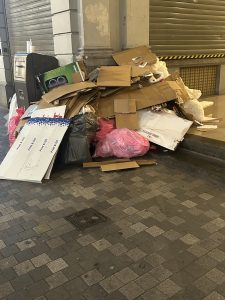
Engelaar says the consequences are becoming increasingly visible in everyday life: ‘People who previously managed are now struggling to pay the bills, even when both partners work, even when they work two jobs. Not only in Belgium, but partner unions elsewere in Europe .’ He offers a sobering example: a family of four where both parents are working two jobs, but these extra jobs only started in the last 18 months. ‘We are not only talking about the traditional working class anymore but also people that were previously well off, that’s the reality,’ he crosses his arms as if he has told this story hundreds of times without getting listend to . Also, without knowing the stories, you can see that cost-of-living protests have spilled over to a feeling of genuine anger: I walk through one side street of central Brussels; litter is not getting picked up, glasses smashed, businesses boarded up.

Foto’s: Jake Foreman
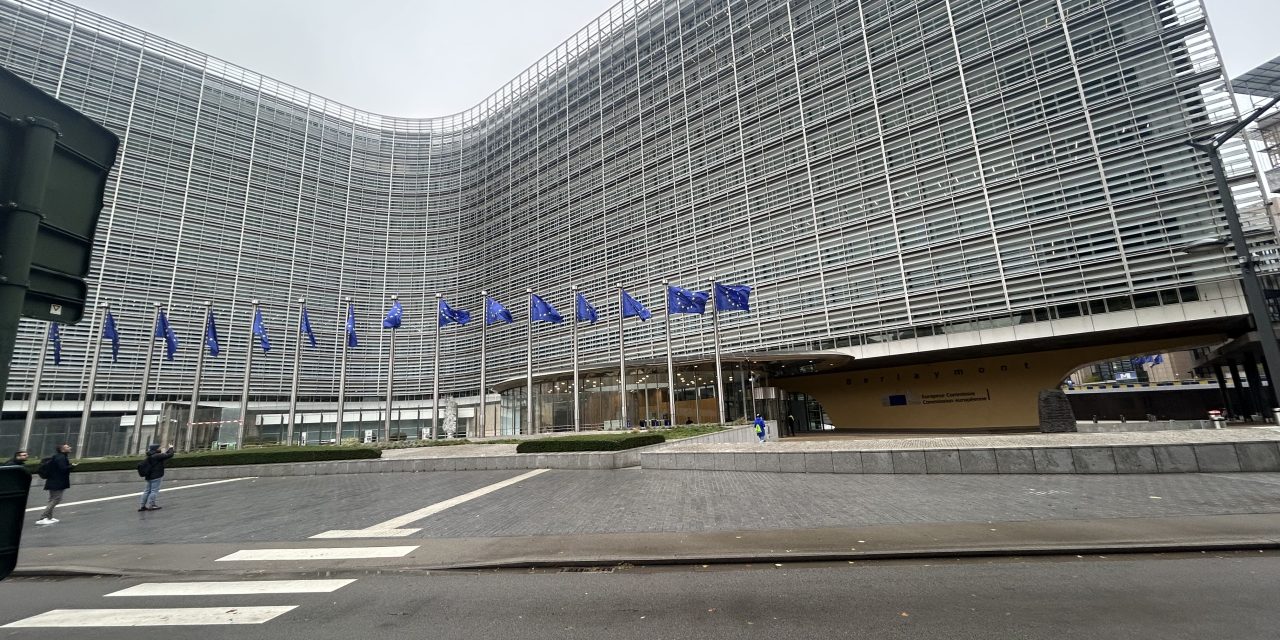
The financial challenges facing most countries across the continent and the widespread discontent stemming from that also have a very real political cost, with different political extremes gaining a foothold in national politics in recent months. These tensions also make the European project fragile, according to Daniel Freund, member of the Green Party in the European Parliament. Freund has also for years been at the forefront of European democratic reform.‘European integration and the four core values of the EU – freedom of people, services, goods and capital – have not only traditionally been linked with economic prosperity but also with shared values and social progress. When citizens feel economic decisions benefit another group of people, trust in institutions and wider democracy gets weaker.’ Freund points out that there is a rise of the extreme left and right but feels that Europe only has itself to blame: ‘Citizens feel detached from their governments, which then makes them feel ignored. There is a failure across political Europe to work between moderate parties, which has led to the state we have now, where we have a strong representation of nationalist parties.’
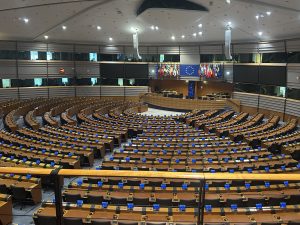
European Parlement
Foto: Jake Foreman
And that refusal to listen is also happening on a national level, as Engelaar explains: ‘I’ve met the minister three times in the last 18 months! ’ The federal government and the EU want to present Brussels as the poster city of the European project, but sometimes I think, do they ever step out of their elite bubble?’ He concludes soberly. As the government is not listening, a general strike has been called for the 23rd of November. It’s another reminder that people are at the point of not listening anymore. The European project was created to make people work in harmony. The first mission of any governments is to serve its people but now it’s cracked, with no easy way out.