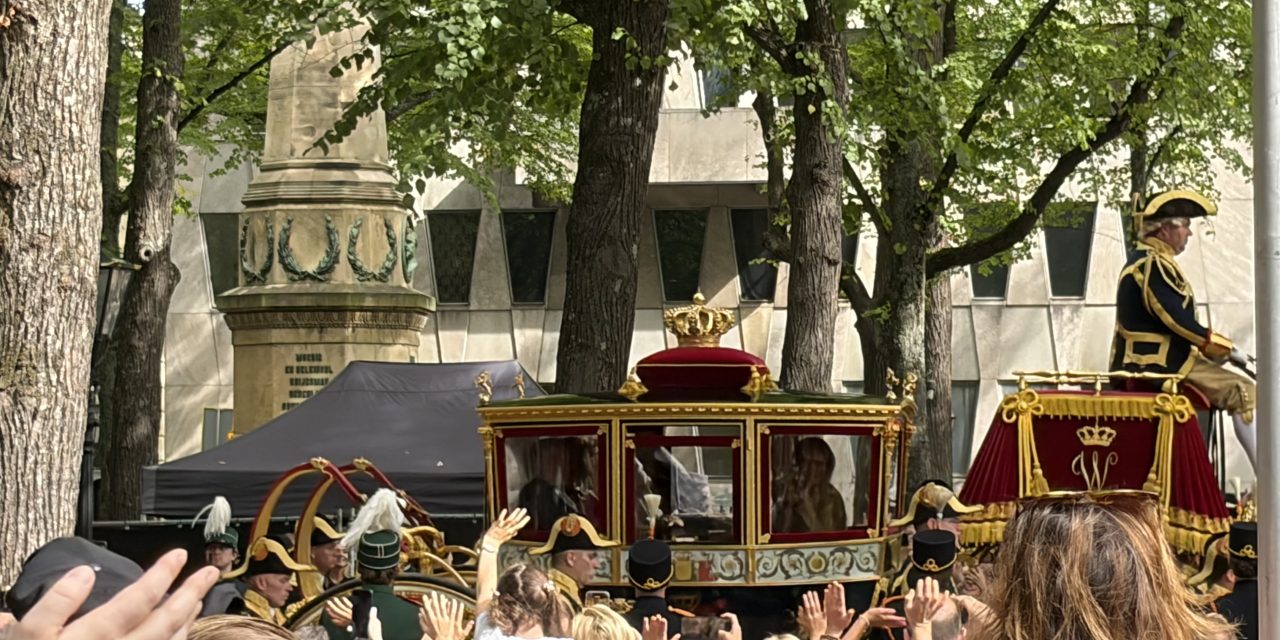
On a sunny Tuesday morning in the busy central station of The Hague, there’s people walking around in interesting looking clothes: long Victorian styled dresses with lots of patterns and designs in different colours, wearing huge hats with bows and flowers. There are also others dressed in all neon orange, with Dutch flags drawn on their cheeks, walking in the same direction as the people with the hats.
They all gather around the Lange Voorhout, one of the oldest and most popular streets in the country. Groups of kids are playing and joking around, policemen are keeping watch on all the visitors and journalists are snapping photos of the event. It’s Prince’s Day in the Netherlands and people are getting ready to see the king and hear the big speech.
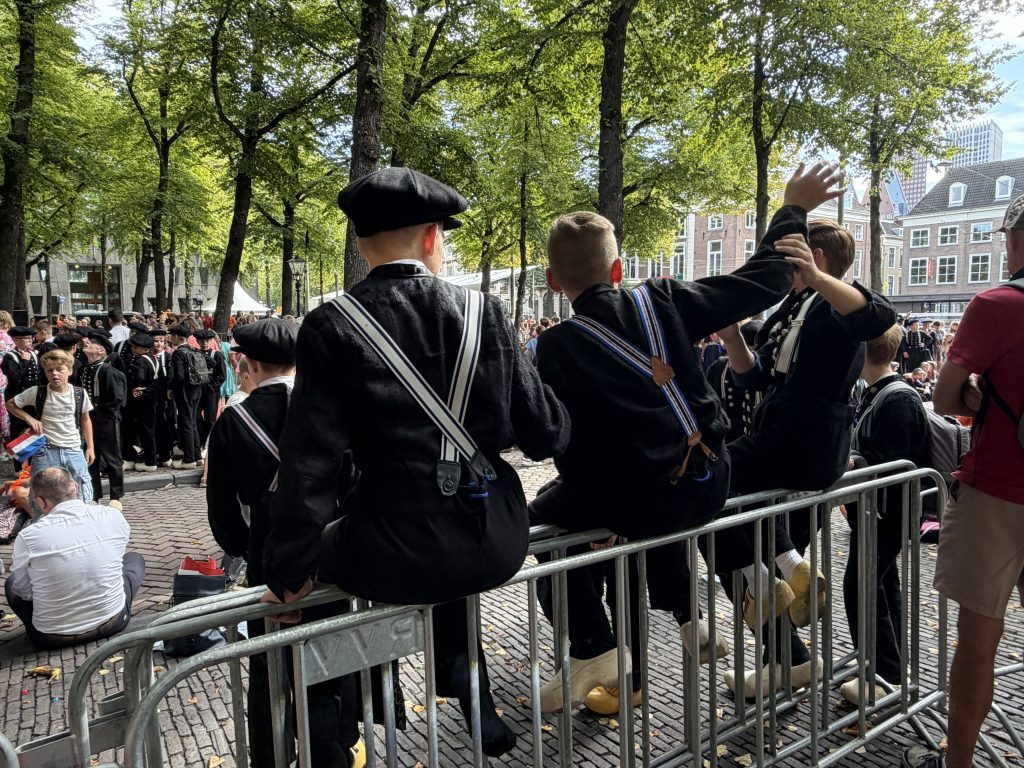
Dutch pupils dressed in old-timey clothes playing with each other.
Also known as Budget Day, it marks the beginning of the Parliament year. The king and his family get carried in the two hundred year old Glass Coach to the Royal Theatre, where the ministers, state secretaries, members of the Senate and House of Representatives are waiting. There the king opens the year by reading the Speech from the Throne, where he outlines the plans of the government for the upcoming year.
But the speech is not the King’s own political programme. The government determines its content, with the Prime Minister coordinating the text based on contributions from the different ministers. Parliamentary historian Carla van Baalen explains: ‘The king does not have a say in the plans themselves, but he is allowed to express his views and propose new ones. However, it’s written in the Constitution that the Council of Ministers always remains responsible so, while he might propose a plan, it is never *his* plan. The ministers take it from there.’
This year, that distinction was particularly striking. Willem-Alexander opened the 2026 Speech from the Throne by emphasizing the importance of democracy and its ability to bring people together. On a day filled with centuries-old royal traditions, the King was therefore speaking about one of the foundations of modern Dutch political life.
Dressed up visitors walking to the Lange Voorhout.
That message comes at a time when many Dutch people have little confidence in national politics. In its annual Prince’s Day survey, research agency Ipsos I&O found that 36 percent of Dutch people had a lot or some trust in national politics, while 61 percent had little or very little trust. The survey, conducted at the beginning of September, also found that 72 percent thought the Netherlands as a whole was heading in the wrong direction, compared with 9 percent who thought it was heading in the right direction.
Yet according to Van Baalen, Prince’s Day itself is designed to create a very different image of Dutch politics: one of unity. ‘The King is the guest of the parliament’, she goes on, ‘while the government, both houses of parliament and important advisers such as the Council of State all gather in the same room to listen to him. That is the start of the political season. For one day, politicians who normally spend much of their time debating and disagreeing are brought together in the same place wearing their finest clothes.’ According to Van Baalen, ‘Prince’s Day represents the idea that we do it together -a celebration of democracy.’
As the king finishes up his speech, the crowds disperse through the city, the hats disappear into the streets, the cameras go down and the political year begins.
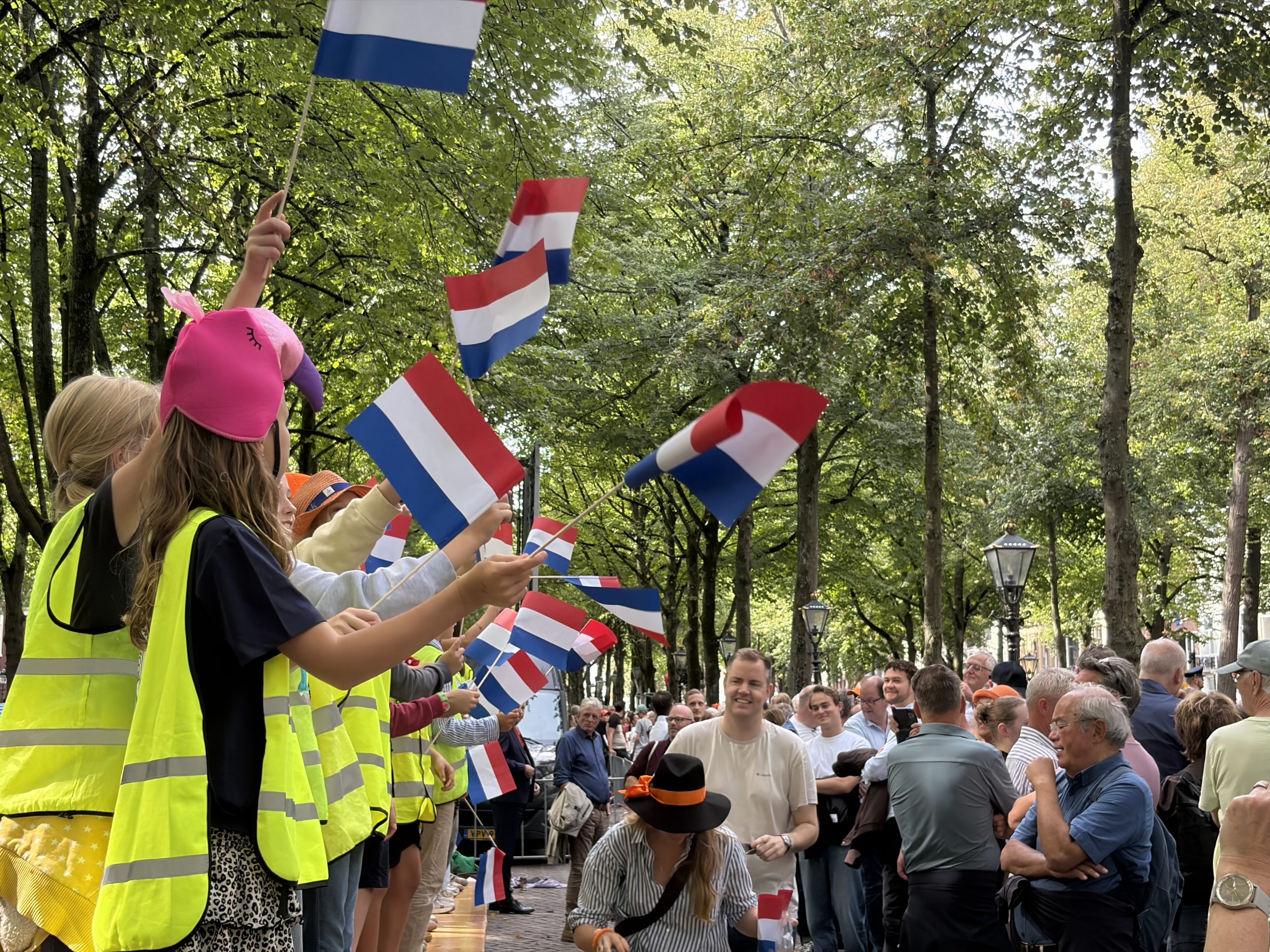
Dutch pupils waving the Dutch flag to the king.