The confusing legal situation of Dutch drug policies
Truffles, magic mushrooms, marijuana. The Netherlands is often seen as Europe’s drug capital. Millions of tourists per year travel to cities like Amsterdam to consume substances that are prohibited in most of Europe. But is the country really a drug user’s paradise, or does its reputation precede itself?
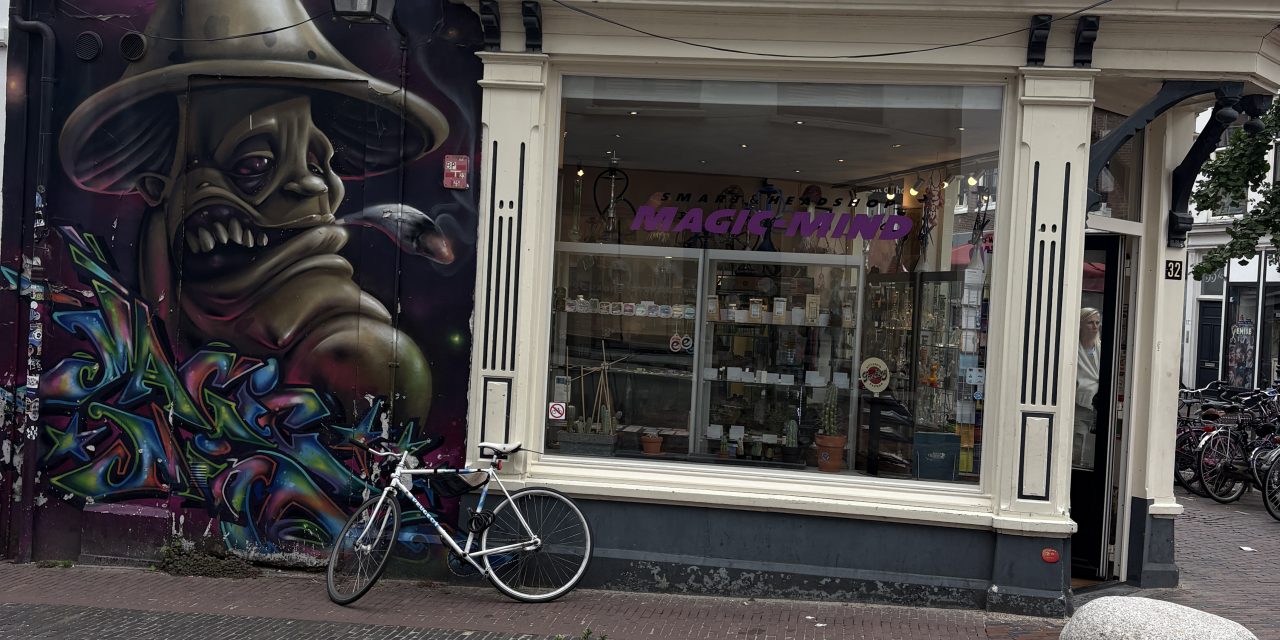
Walking through the streets of a Dutch city, your nose may pick up the distinctive smell of a burning joint. You may also come across a smartshop where you can either buy ready-to-consume psychedelic truffles or an all-in-one grow kit for even stronger magic mushrooms. What you are probably not going to smell is the often-fruity mist that roams around in many other European countries. The Netherlands officially banned flavoured vapes at the beginning of 2024. To some less-informed people, this may come as a surprise: “I honestly had no idea vaping was prohibited here,” says Ilona, an exchange student from France. “Vaping is so common in my country; I did not expect that even vape liquids are not sold.” Even though she vapes herself, she doesn’t see the strict laws around vaping as entirely negative: “Especially when it comes to younger people, the restriction is actually a good thing. I smoked cigarettes before, so vaping helps me not go back to them, but starting with vapes is not a good thing at all.”
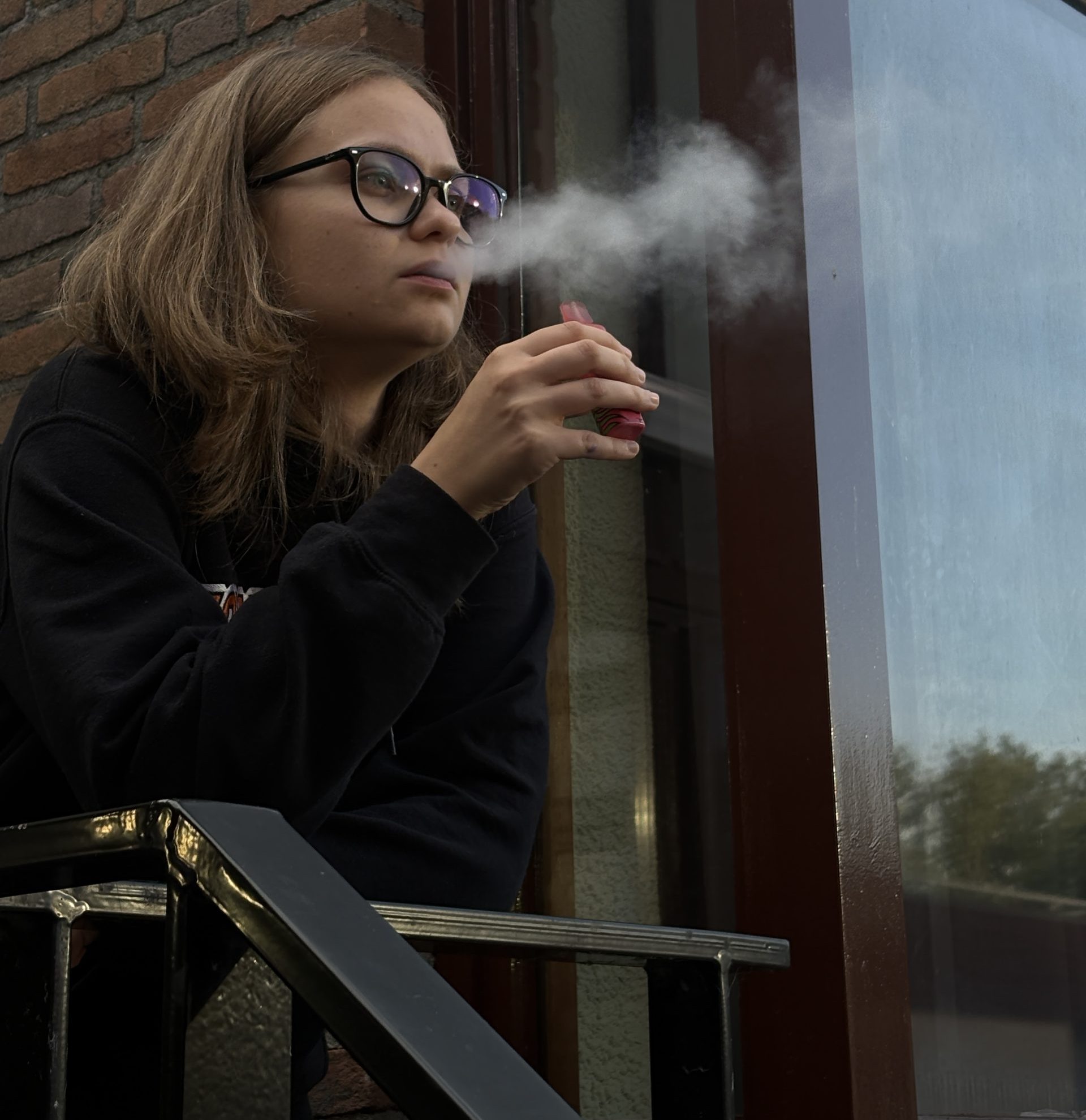
An exchange student smoking a cherry-flavoured vape
Laws and legal loopholes
The Netherlands Food and Consumer Product Safety Authority (NVWA) states that the ban is intended to discourage adults, but especially young people, from smoking e-cigarettes, since they are still harmful to health, highly addictive, and the sweet taste makes them even more appealing than traditional tobacco products, which are only available in designated stores. Smartshop owners who used to sell those vapes stated that controls are frequent and that the laws are being strictly enforced. But how does that go hand in hand with them still being able to sell psychedelics? It’s actually not about them being “legal,” but more about gaps in the law.
While the ban on sweet e-cigarettes is recent and is part of the Dutch government’s goal of achieving a smoke-free population by 2040, the laws concerning psychedelics are almost 20 years old. As part of the Opium Act, in 2008 mushrooms containing psilocybin or other psychedelic substances were banned from being sold, possessed, or redistributed. However, as the seeds of the mushrooms do not contain any of those substances yet, they do not fall under the same laws. With magic truffles, it is a bit less of a loophole: Since they are technically not the same as mushrooms and were not specifically included under the Opium Act, they can still be lawfully obtained.
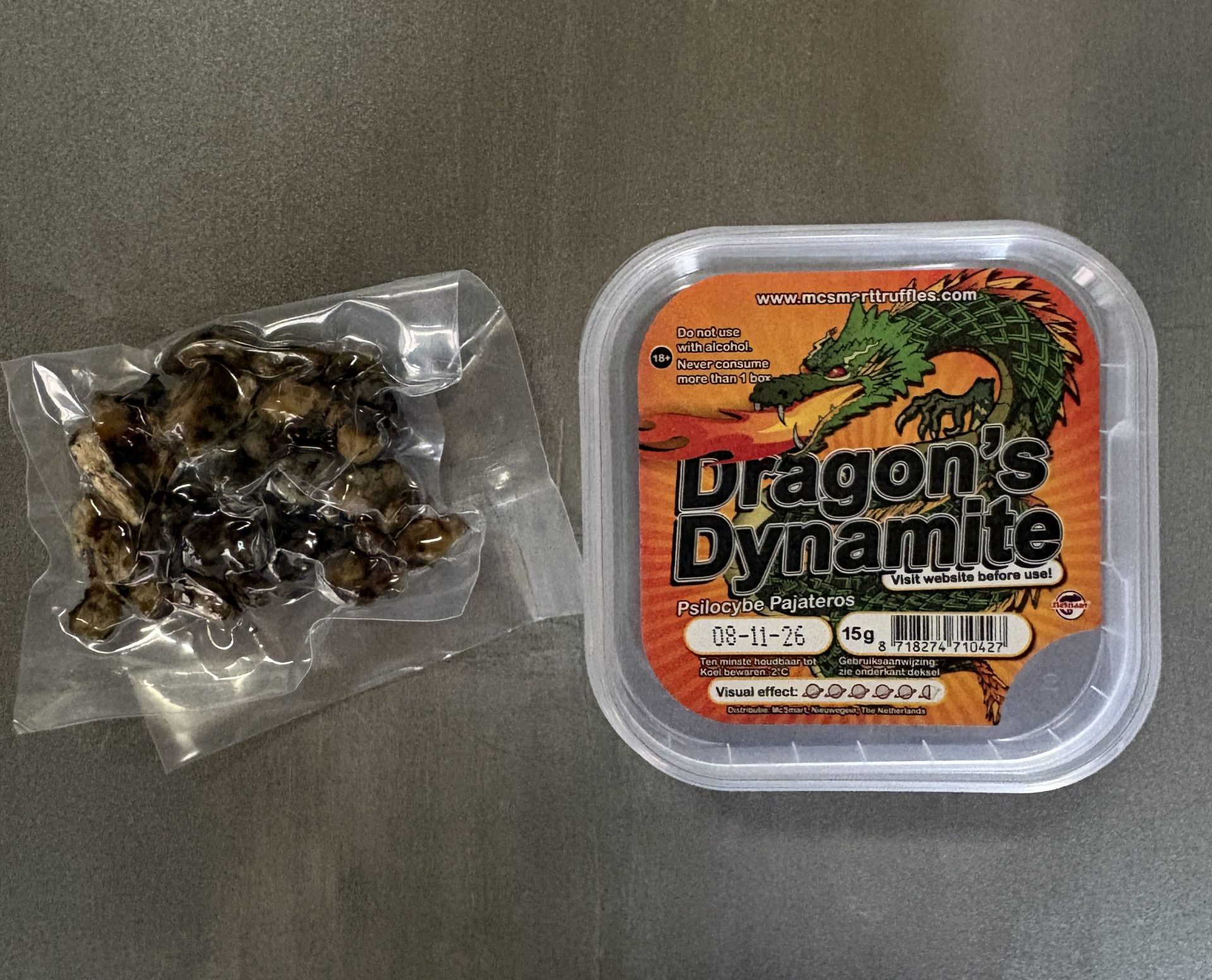
“Dragon’s Dynamite” magic truffles
Blackmarkets got sweeter
From an outside perspective, this might seem inconsistent, but the legalization of drugs has been a hot topic for decades: “I am not totally in favor of total legalization of drugs, but over the years I kind of changed my perspective. I personally think it’s better to have them legal and controlled by institutions than to further strengthen drug trafficking,” says Ilona. And there could be some truth to that. Since the ban on flavoured vapes, many people have started buying them on the black market via apps like Snapchat. The vapes that are sold this way often do not fulfill EU regulations and have not been registered by customs.
While the public image of the Netherlands continues to attract a lot of people interested in drugs, the actual laws and government goals differ greatly. This is demonstrated by the government’s recent tightening of regulations, not only on e-cigarettes, but also through an active fight against “smell disturbance” caused by marijuana, as well as a total ban on its use in many city centers.