Ding. Ding. Screech. “Watch out!”. Diiiiing.
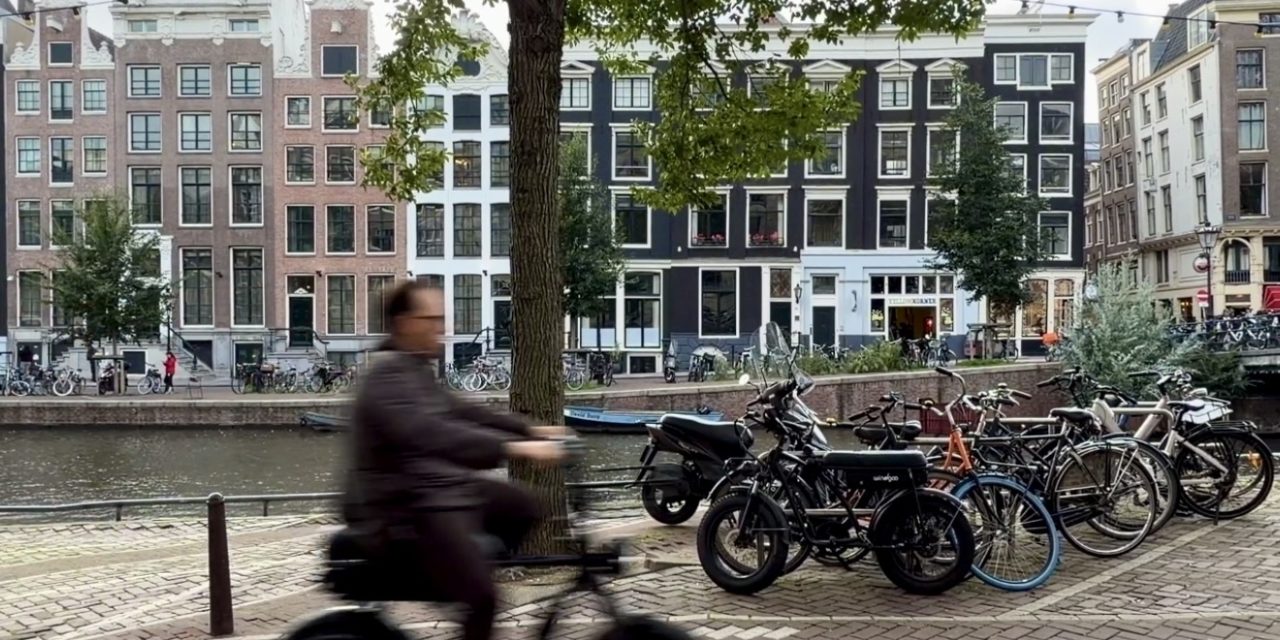
The sounds of Amsterdam’s morning rush hour echo between rows of narrow canal houses. Cyclists surge through intersections, weaving between trams, pedestrians and one another in a carefully choreographed chaos.
To an outsider, it can feel overwhelming. To the Dutch, it is simply another morning.
Yet the familiar choreography of Amsterdam’s streets is changing. Mixed among the sea of traditional bicycles are increasing numbers of e-bikes and fatbikes, capable of travelling at speeds rarely seen on Dutch cycle paths just a decade ago. Their growing popularity has sparked a national debate about safety, regulation and the future of cycling in the Netherlands.
Faster Bikes, New Challenges
The popularity of e-bikes has grown rapidly across the Netherlands. For many commuters and students, they offer the perfect balance between speed and convenience, making it possible to travel longer distances without getting stuck in traffic or relying on public transport.
Fatbikes, recognised by their oversized tyres and distinctive design, have proven particularly popular among younger riders. Their motorcycle-like appearance and electric assistance have helped turn them into one of the most visible trends on Dutch bike lanes.
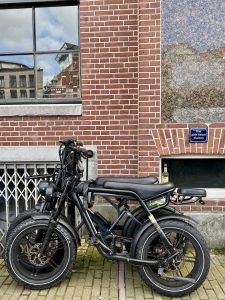
Fatbikes parked in front of a no-parking sign in Amsterdam. As local authorities attempt to regulate their use, the bikes remain a common feature of the urban landscape. Photo: Julie Clemmensen
While supporters praise them for making everyday travel easier, critics argue that they are changing traffic conditions on already crowded cycle paths.
According to research commissioned by the Dutch government, the number of injured fatbike riders treated in emergency departments increased from 75 in 2023 to 301 in 2024. More than half of those injured were between 12 and 18 years old. The number of young e-bike riders suffering brain injuries has also risen sharply in recent years.
Local Solutions to a National Problem
The growing concerns have pushed Dutch politicians to act. In response, several municipalities have introduced local restrictions, while the national government plans to introduce a helmet requirement from 2027 for riders under 18 using e-bikes, fatbikes and other light electric vehicles.
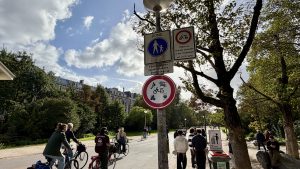
Amsterdam has banned fatbikes in parts of Vondelpark as local authorities seek to reduce conflicts between faster e-bikes and traditional cyclists. Photo: Julie Clemmensen
For Florrie de Pater, spokesperson for Fietsersbond Amsterdam, speed is at the heart of the problem.
“A lot of them go much faster than 25 kilometres per hour, which is illegal,” she says. “That has become a problem because bicycle paths, especially in Amsterdam, are not very wide.”
Florrie De Pater argues that the increasing speed differences between traditional bicycles and e-bikes are making Dutch cycle paths less safe.
“It’s getting more dangerous. We’re hearing from more people who would rather take public transport or drive because they’re too afraid to cycle,” she says.
Despite Dutch cycling organisations traditionally opposing compulsory helmet laws, Florrie De Pater supports the new measure for minors.
“If you oblige everyone to wear a helmet, you can be sure that fewer people are going to bike,” she says. However, she believes the safety benefits for young e-bike and fatbike riders outweigh that concern.
A Warning for Europe
The debate reaches beyond the Netherlands. As cities across Europe encourage residents to replace cars with bicycles, many are likely to face the same challenges Dutch policymakers are confronting today.
Florrie de Pater believes other countries should learn from the Dutch experience before the problem grows.
“We started much too late because we did not see the dangers of the introduction of e-bikes. But now it becomes more and more apparent,” she says.
For a country celebrated for its cycling culture, the challenge is no longer getting people onto bikes. It is ensuring that faster electric bicycles can coexist safely with the traditions that made the Netherlands a model for the rest of Europe.
The question now is whether the Netherlands can remain Europe’s cycling capital while adapting to a new generation of riders?