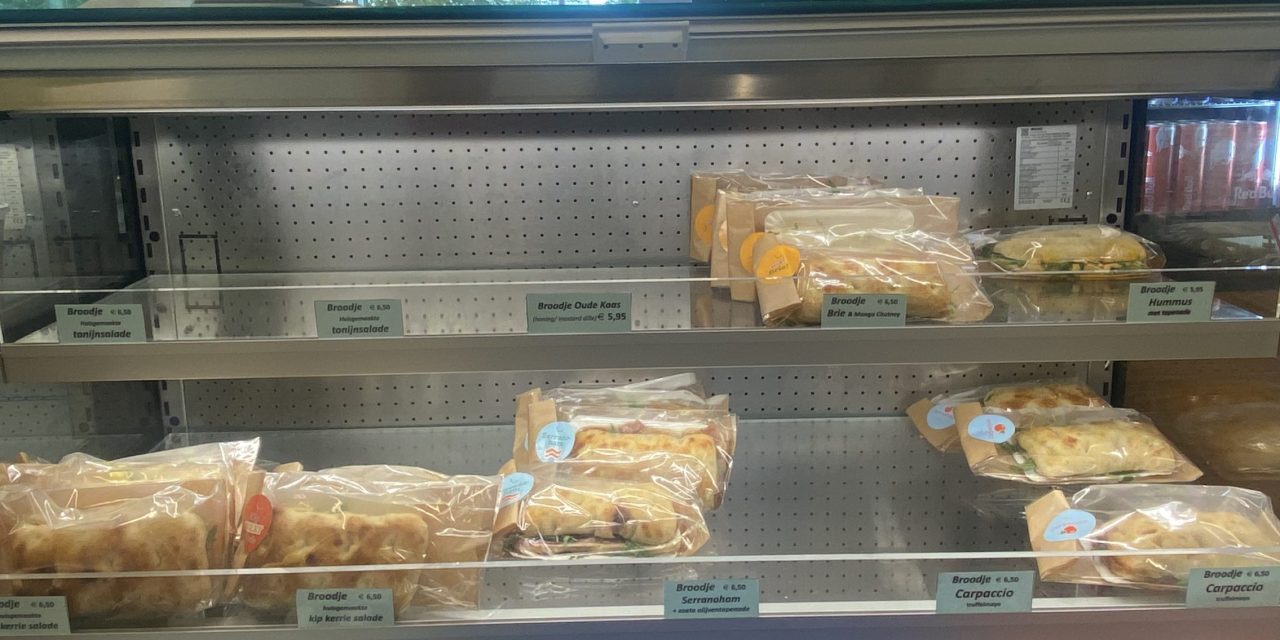
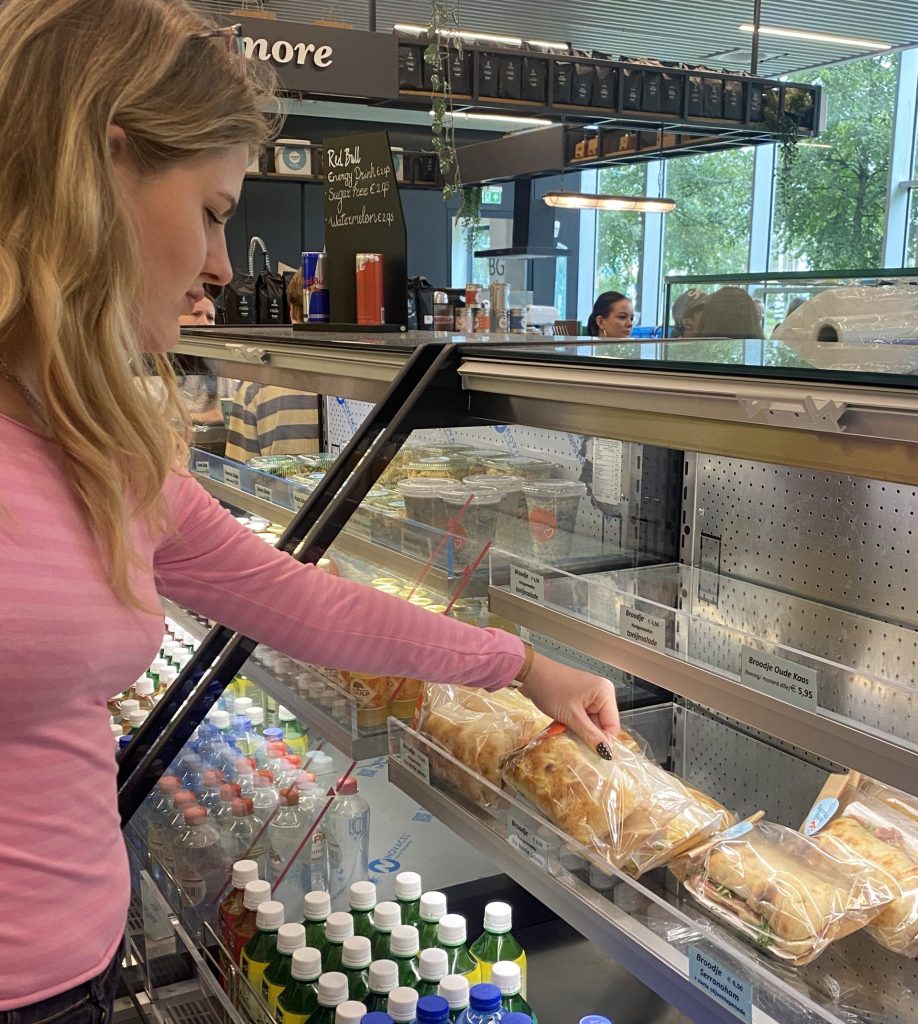
International student buying “een broodje kaas” for lunch [staged] (Photo taken by Linda Doose)
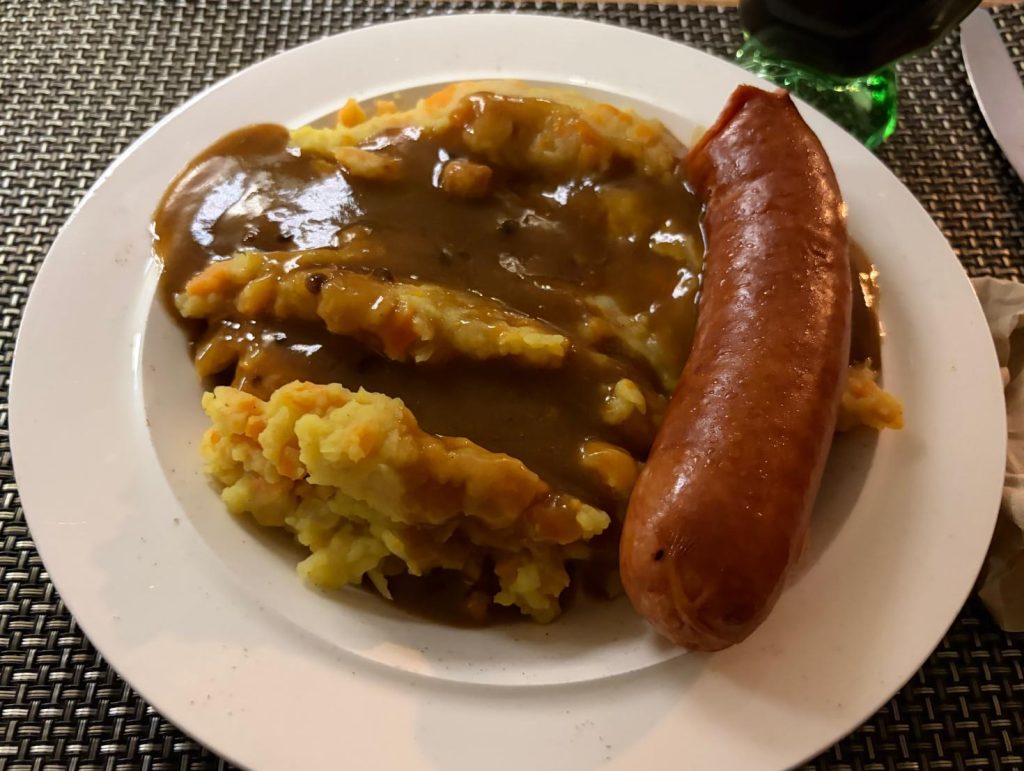
A typical homemade “AVG” meal
So whilst you enjoy your homemade, typically Dutch dinner you wonder: Why do Dutch people eat like this? It’s so different to your and your international friends’s eating habits back home. Are there perhaps historical roots to this?
To get to the bottom of your questions you consult Dr. Jessica Dijkman, a professor of economic and social history at Utrecht University. You expect her to confirm an unbroken century-old tradition, but instead you learn: “The whole idea that there is a set habit which has existed for centuries and is still there is simply not true. It has been changing over time.” Nevertheless, a look back on history reveals some fascinating background details.
The fact that lunch remains primarily functional in everyday life is often linked to the Calvinistic work ethic, which above all valued sobriety and diligence. But Jessica Dijkman emphasizes that this was not a rigid religious duty but rather a cultural imprint of a simple way of life. The “broodje kaas” is just a quick source of energy to continue working efficiently without a long break.
A possible explanation for the early dinners could be just as pragmatic. As Dijkman explains, Dutch farm labourers in the 18th century still ate their hot main meal at lunch-time. It was only the industrialization that forced then factory workers to postpone their hot meal until the evening, because the journey home at midday was no longer feasible. An explanation for this habit remaining, could, according to Dijkman, be Dutch club life in the 20th century. Before they went to their sports or music club meetings at 8 p.m., the family sat down to dinner quite early.
But what lies behind the “simple” cuisine of the AVG plate? As Dijkman explains, in the 18th century, potatoes were by not considered a delicacy but rather food for the poor and only whenever bread was too expensive. To get all the nutrients as cheaply as possible, the trio of potatoes, meet and vegetables emerged. Vincent van Gogh captured this simple rural life in his 1885 painting “The potato eaters”.
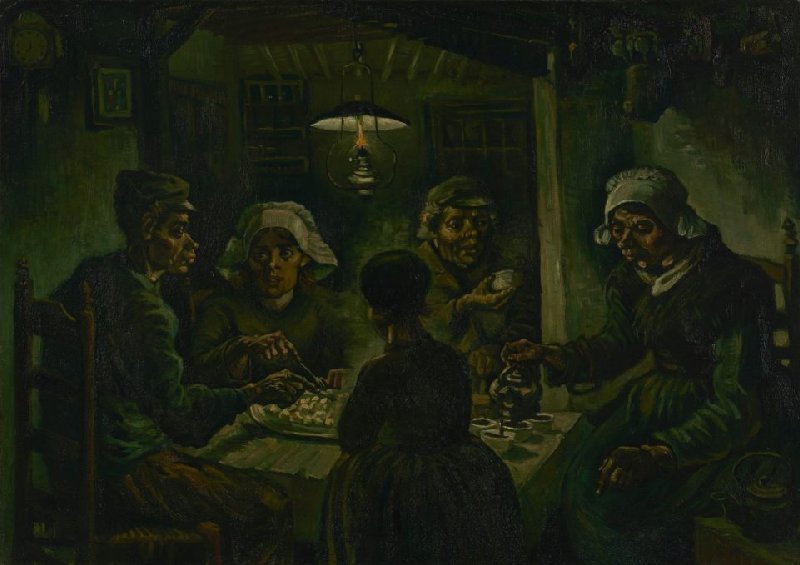
Vincent van Gogh’s “The potato eaters” (1885) (Van Gogh Museum Amsterdam)
But how prevalent are these habits today? Whilst mealtimes are changing amongst younger generations, the principle remains alive and well, as Dijkman notes. Even in modern fast-food culture, from traditional snack bars to shops like “De pieper”, the AVG meal is reinterpreted for example in form of fries, stamppot and other potato specialties, as well as croquettes.
Anyone who wonders about the “broodje kaas” for lunch, the early evening meal, or the AVG today will, upon closer inspection, discover more than just unusual eating habits. What may seem strange to exchange students at first may at the same time be a piece of Dutch history.
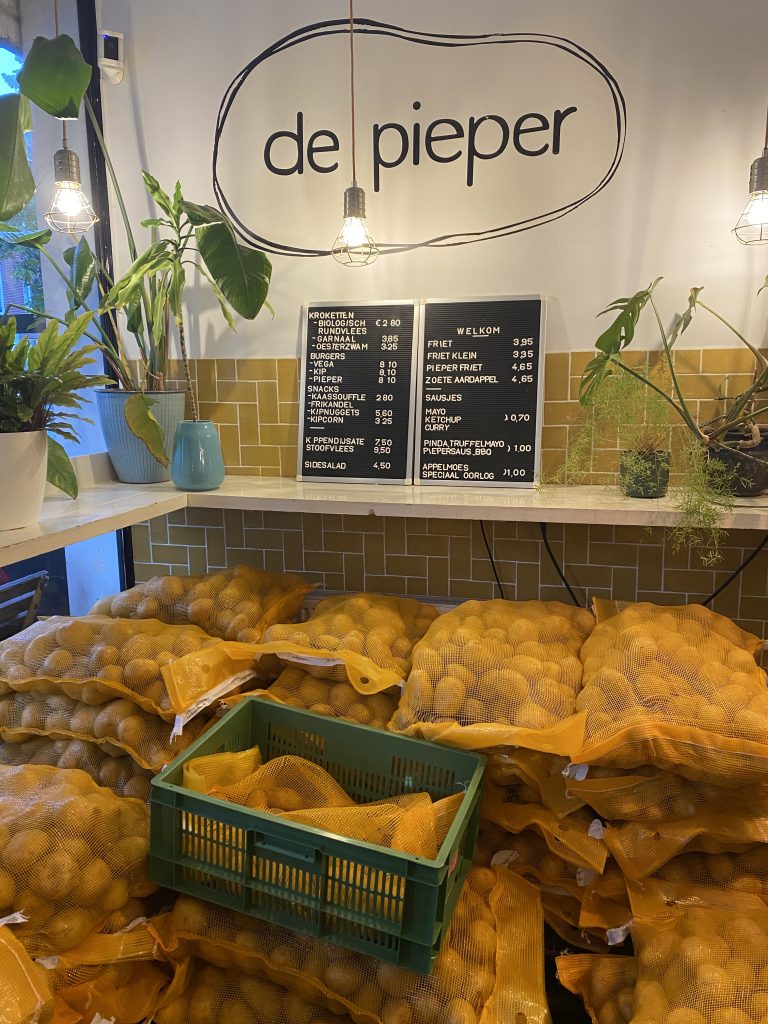
Potatoes displayed at “De pieper” (Photo by Linda Doose)
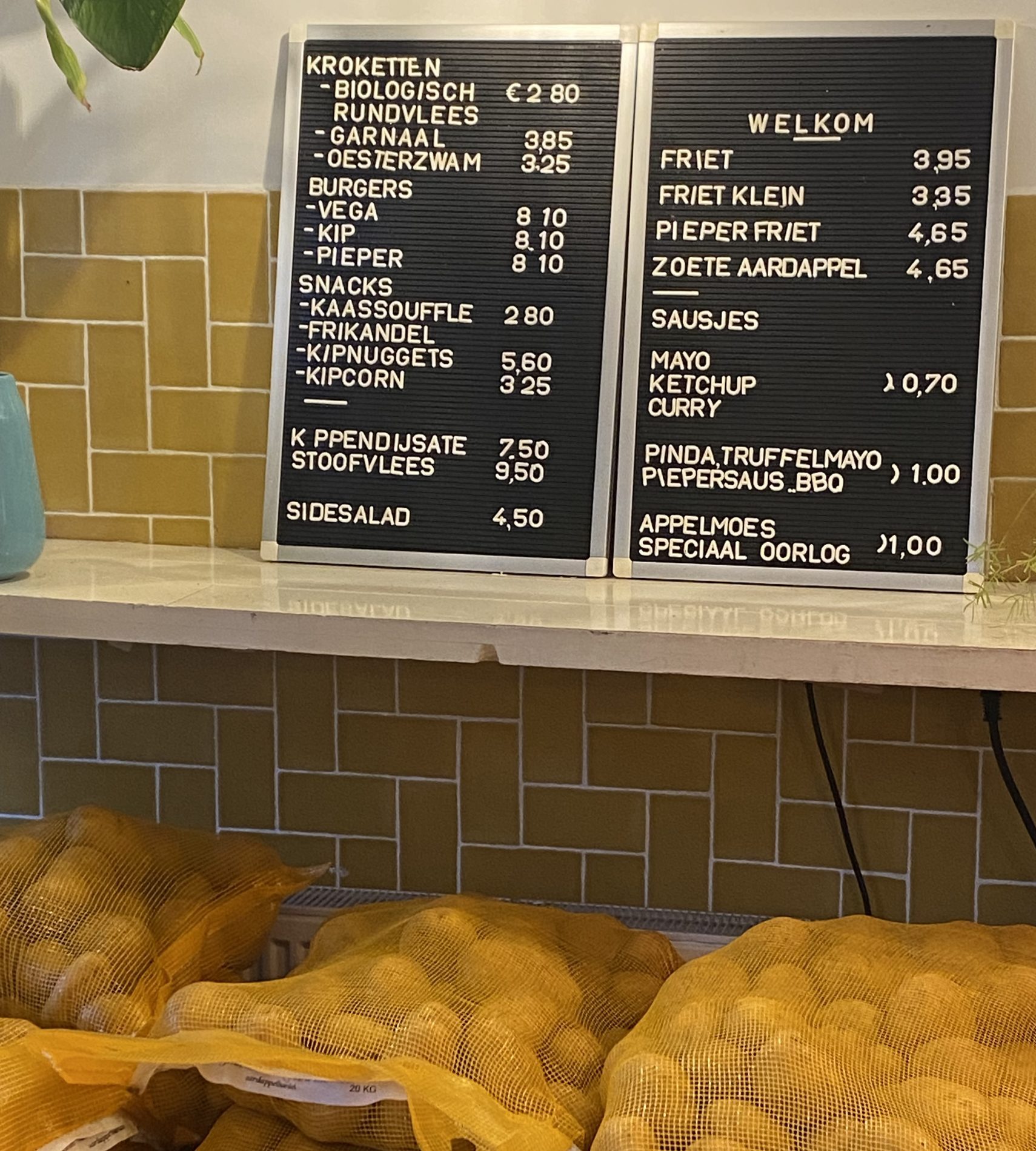
Menu at “De pieper” (Photo by Linda Doose)