The modern-day Dutch deer park was first created in the nineteenth century but grew in popularity in the twentieth century. Nowadays they are a custom for families with young children to go and see the animals. But on the other side is the issues with animal rights.
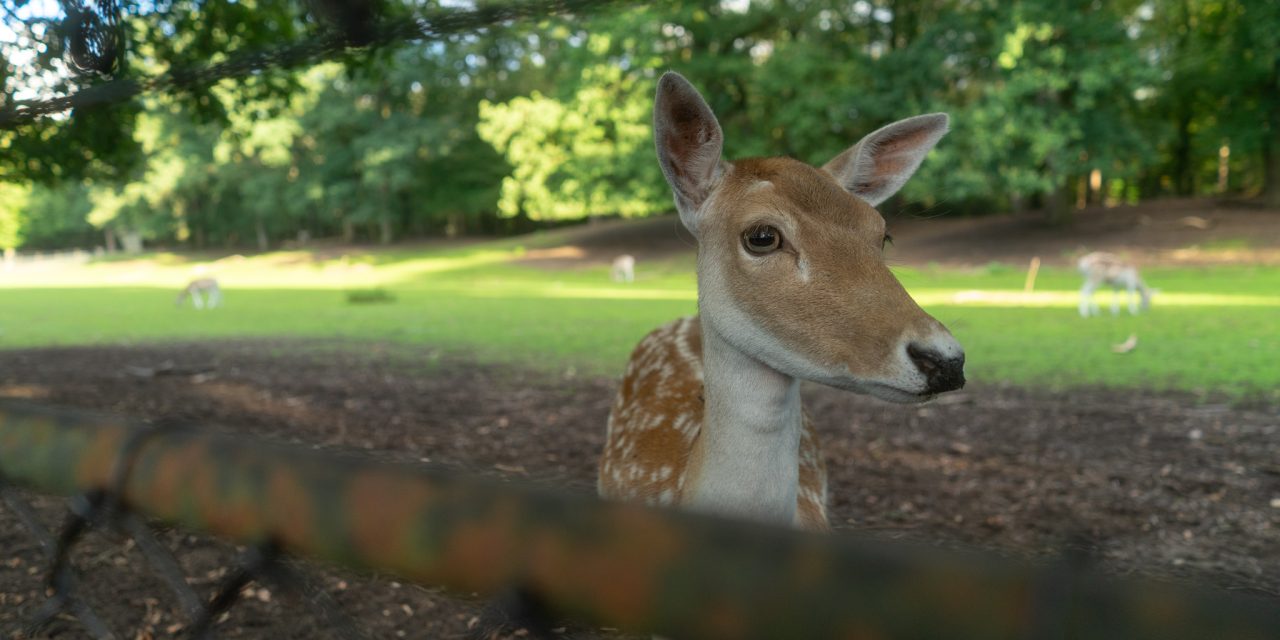
While walking in a Dutch park you might be surprised with a fenced area full of different species of deer, sometimes even other animals like peacocks. This is called hertenkamp in Dutch.
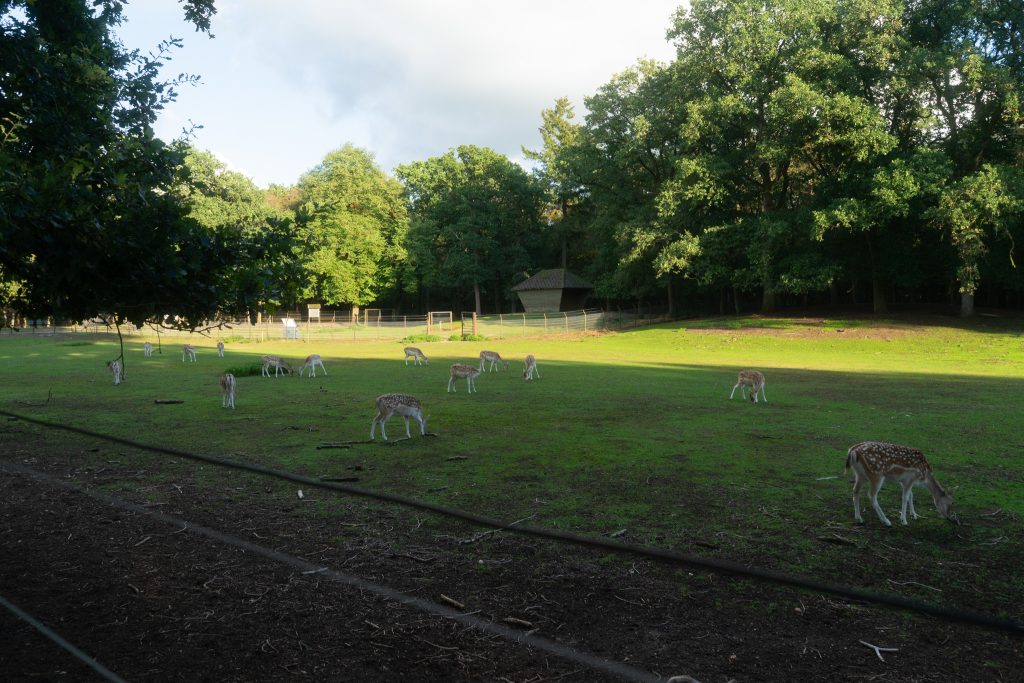
A field full of deer in Zeist
The deer parks split people into two camps, to one group they are only fun little activities that you do while walking in the park. Others see a moral problem with keeping living creatures’ captive.
Erwin Vermeulen, the press spokesperson for the Animal rights organization, explains that in the Netherlands they have historically had a petting zoo in every village and town. In those petting zoos there has been all kinds of animals that the people can come and see, with the idea that people would stay in touch with animals and nature. The deer parks have been a part of this.
The urban parks are not that big, usually only a fraction of what the deer are used to in the wild. According to a study by Jakub Borkowski & Marek Pudełko in 2007 a female fallow deer’s average home range area in the wild is from 2.1 to 2.9 km².
Erwin continues with explaining that some people don’t see deer that differently to your regular house pets or farm animals. But at the same time there has been a push for a long time to ban certain animals as pets. Usually, animals that are too dangerous to be kept as a pet, or animals that people could not fulfil their basic needs.
On 1 July 2024 the Dutch governments list of allowed animals to keep came to force. Though it does not contain the fallow deer or the red deer, they fall under an exception that allows the deer parks to have them. The exception was made for the 250 existing hertenkamps, because they were seen as traditional and part of the Dutch cultural heritage.
Animal Rights organization is for the abolishing of hunting, animal agriculture and animal testing. For them the issue with deer parks is that the animals can’t live their natural way in captivity. Animal rights are against keeping animals in captivity in general.
Erwin gives as an example of how the deer natural way of living gets disturbed in captivity. In nature you have a large group of female deer and one dominant male, and the subordinate males leave the group when they come to age. But because the birth rate of female and male is 50-50 in the deer parks, the subordinate males can’t be bachelor’s and leave the group for their own which can lead to infight between the deer.
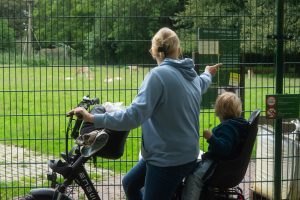
Aman pointing at a deer.
For other people the parks are a nice place to visit and bring the kids to see the animals. Like Aman, who rode with her bike to park Oog in Al in Utrecht. She thinks that the parks are necessary for the animals. In her opinion there isn’t enough room for the animals in the Netherlands, because of too many roads, cars and houses. She also has visited the parks since she has been a child with her family.
You can find wild deer in the Netherlands in national parks like the De Hoge Veluwe national park roaming freely.
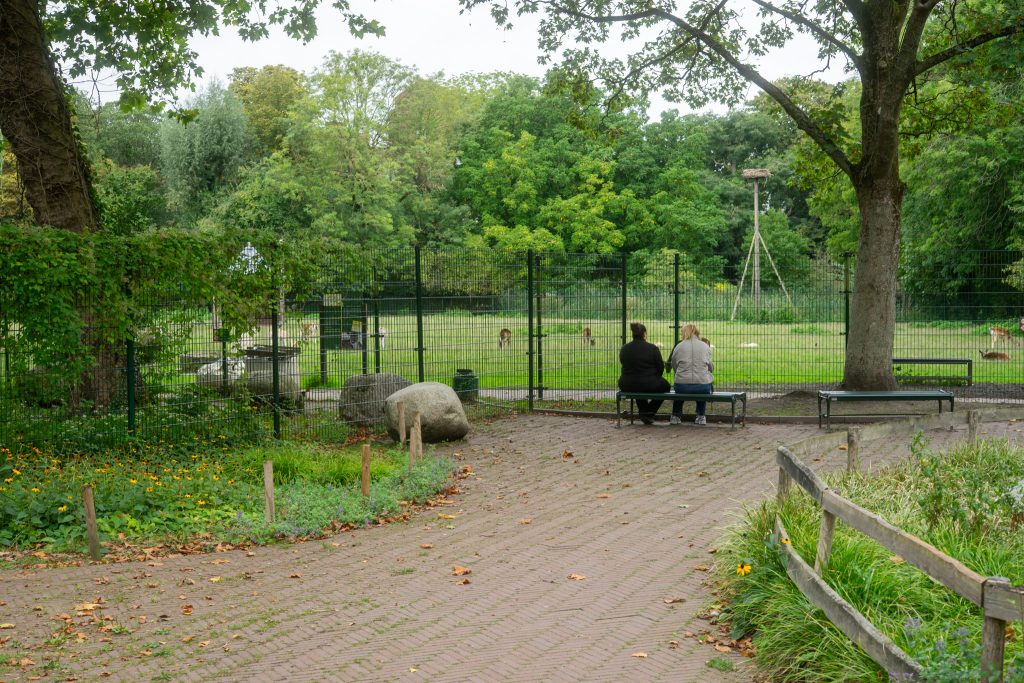
Two women sitting on a bench in front of a deer park in Park Oog in Al.