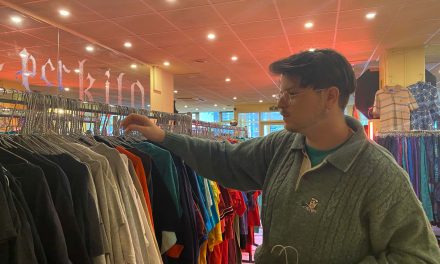
The Netherlands has a reputation for being one of Europe’s most wheelchair-accessible countries. On several international lists, the country ranks among the top five. On paper, this naturally flat country appears to be doing well. In reality, Dutch wheelchair users still have to plan carefully whenever they leave the house. “The one place where I know I can use the bathroom, closed at 18:00. I did not know where else to go, so I just hurried home.”
For Ivana van Leijden, a Dutch student and lifelong wheelchair user, accessibility is something she has to think about every day. A bump in the road. A heavy door at her university. Sitting at the back of the lecture room without a table in front of her. These seemingly small inconveniences make her feel different from her classmates: “of course I would love to have my laptop in front of me, just like everyone else.” Even accessible ramps are sometimes too steep for her. Bystanders are often kind and happy to help, but still: “it’s a shame that I have to ask for help with such simple tasks.
Public transport: on the right track?
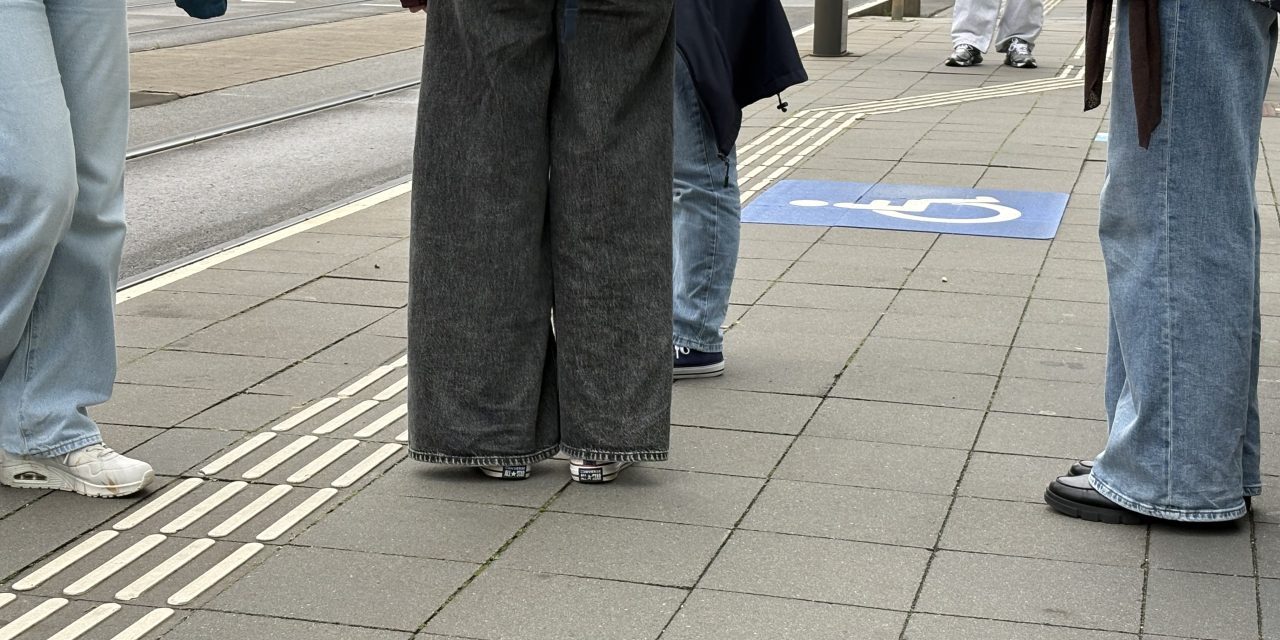
Despite efforts to make public transport more accesible, there are still improvements needed to make sure everyone can use it independently
To get to her university, Ivana relies on a government-provided taxi service. The public transport is not an option for her, despite the Netherlands’ reputation for accessible public transport.
According to the Dutch government everyone should be able to use public transport independently. The country has a range of measures to make public transport accessible, including assistance services at train stations, accessible platforms, ramps and elevators.
Despite this, the Netherlands was criticised by the United Nations in 2024 over its implementation of the Convention on the Rights of Persons with Disabilities. Among the concerns raised, were barriers to accessible public transport. A report from the Netherlands Institute for Human Rights also highlighted problems such as malfunctioning elevators, assistance being cancelled at short notice and ramps that do not always deploy.
Even the taxi service Ivana uses, has its limitations. Ivana has a fixed budget for the service, meaning that once her allocated budget is used, the government will not cover additional trips. “I would love to have my own car, that would make me much more independent, but I just can’t pay for that right now.”
The overlooked problem
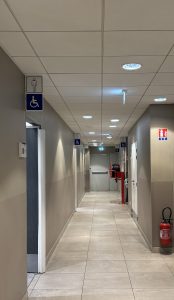
Ivana has ‘go-to’ places, where she knows the facilities are accessible
There is another part of accessibility that rarely makes it onto international rankings: toilets. For most people, the opportunity to go to the toilet is a thought that barely crosses their minds. For Ivana, it could be the first thing she thinks about. When she gets invited to a new restaurant, she does her research, and this does not entail the daily specials of the place. “Can I even get into the building? Are there any pictures of the entrance on Google Maps?” This is usually followed by: “can I go to the bathroom here? A lot of times, I’ve found the toilet is at the bottom or top of a flight of stairs.” As a result, Ivana has developed a collection of ‘go-to places’, where she knows she can use the bathroom.
For her, accessibility is not a top five spot in European lists, it’s her debating whether to go if there is no bathroom there for her. “That is just my life the way it is, I don’t know any better.”