Finding a place to live can become one of the biggest challenges for international students arriving in Utrecht. Rooms are limited and the demand and rents are high.
For Maria Fernandes, a 19 year old exchange student from Portugal, finding accommodation was one of the worst parts of moving to the Netherlands. “I went on every single website possible, even paying what they asked just so I could contact the landlords. I applied to more than 80, I’m sure.” explains.
Her experience reflects a wider problem. A 2025 Utrecht University master’s thesis by Shobhita Rokaha, Studentification and Structural Exclusion: Housing Experiences of International Students in Utrecht, found that international students face not only a shortage of housing, but also economic, social, cultural and spatial barriers when trying to find a home.
Money is one of the clearest barriers. According to Rokaha’s thesis, rents of more than €800 a month were common among the students surveyed. Some paid considerably more: one student interviewed for the research paid €1,200 for a 30-square-metre studio. The thesis also found that some international students accepted informal rental arrangements because they had few alternatives. “Right now I’m still looking for another place to live for the rest of Erasmus since where I’m living right now has very low living conditions” quotes Maria.
If we go to SSH (housing corporation specifically for students looking for a room or studio) we can see that the cheapest option is about 443.49 € /month and it goes up to 1200 € /month depending on the accommodations.
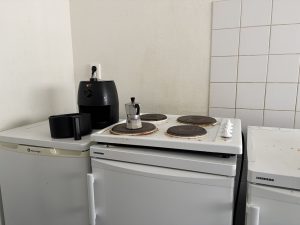
A kitchen of a residence where you pay 800€ per month.
But affordability is not the only issue. International students often arrive without the local networks that can help them find accommodation. The thesis describes students relying heavily on Facebook groups, Kamernet and other online platforms, where competition can be extremely high. One student reported competing with around 100 people for a single room, while some advertisements specified “Dutch speakers only”.
SSH illustrates the scale of the problem. The organisation says it has around 12,200 rooms and rental homes in Utrecht and the surrounding area, but only 800 are for short stay, which is particularly relevant for international students.
Although Utrecht University and Hogeschool Utrecht offer a limited number of rooms through SSH Short Stay, accommodation is not guaranteed. The university itself warns international students that the housing market is highly competitive and recommends reconsidering coming to Utrecht if accommodation has not been secured before arrival. “From my experience the university did almost nothing to help my situation. The only thing they did was to recommend to leave the country and cancel the erasmus, which I couldn’t after signing a contract”
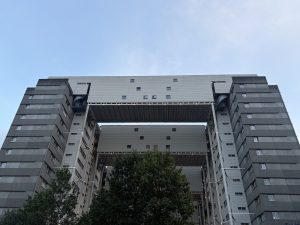
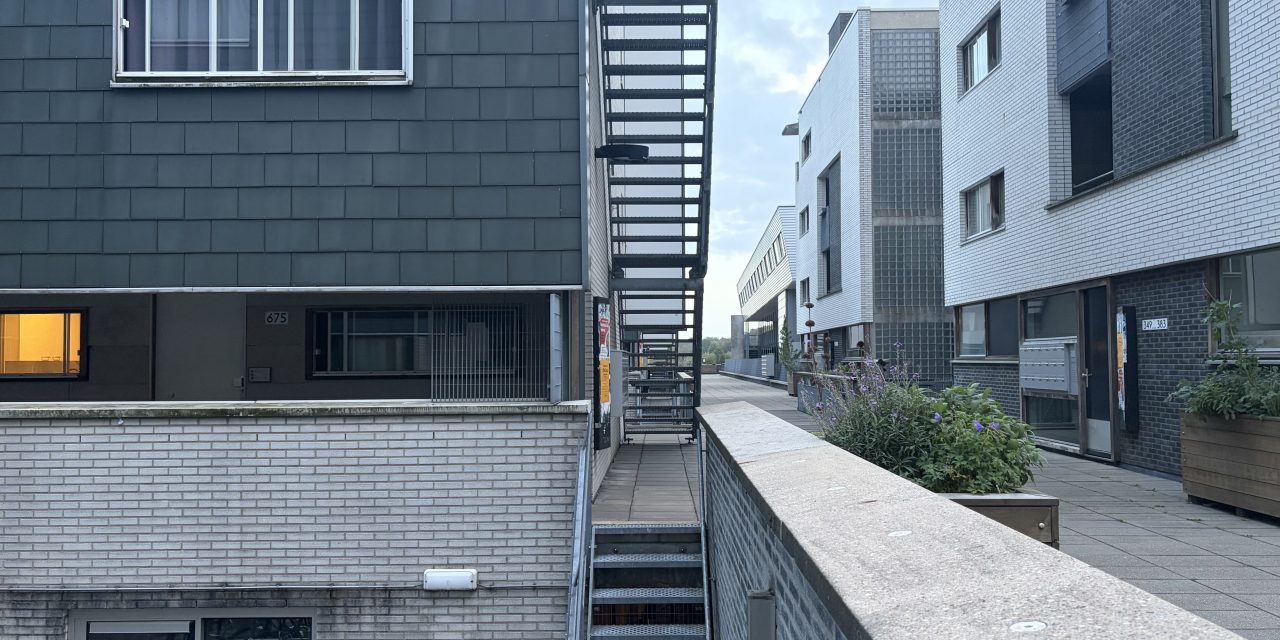
One of the residences at Utrecht Science Park
For Maria, the housing shortage had a direct impact on her exchange experience. “It was a very stressful time in my life, before and now during it. I had trouble sleeping and my parents had to skip days of work to help me search and move” ,” she says.
Her story shows that Utrecht’s housing crisis is about more than the number of rooms available. As Rokaha argues in her thesis, housing affects students’ academic participation, well-being and social integration.
The problem also raises a wider European reality: cities across Europe are attracting international students while facing growing housing shortages. So, getting accepted into university may be only the first step, but finding somewhere to live can be the real challenge.