Rental scooters, private e-steps. Once praised as the green solution for the last kilometer, now treated by many city halls as a nuisance. With Brussels about to remove its rental fleets, the question is whether Europe is turning against the scooter itself or just the rental companies.

Brussels city council made the decision to prohibit rentals starting 2027
Safety concerns and scooter shootings
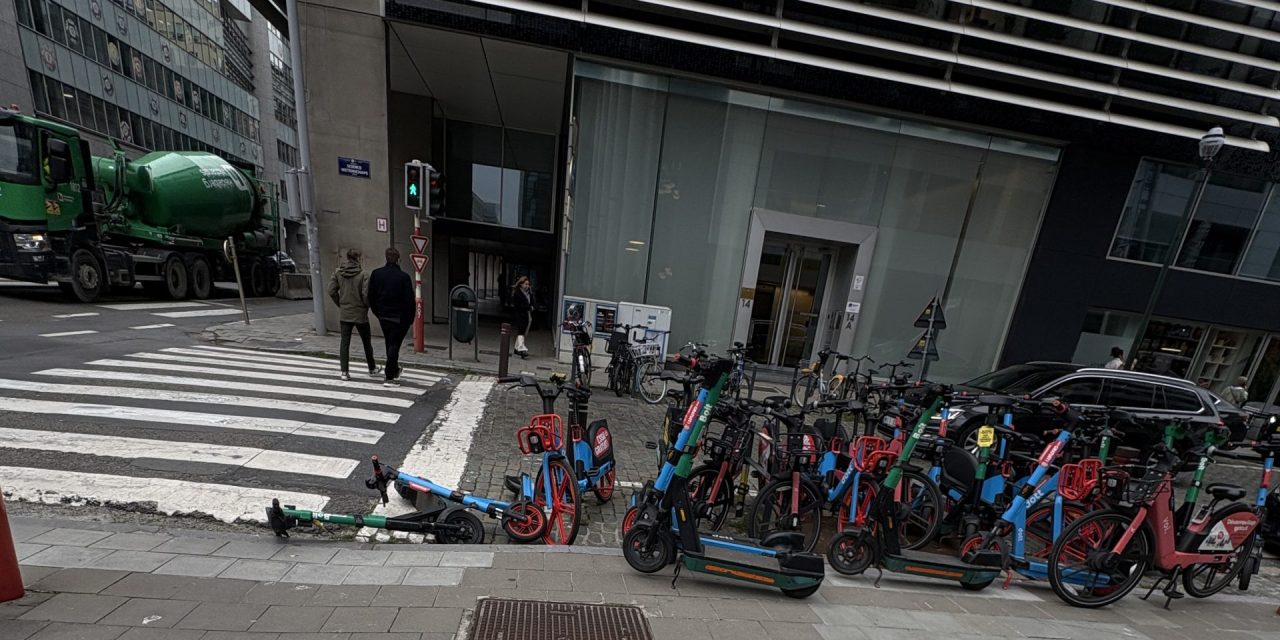
Walking through central Brussels, it does not take long to come across a flock of more or less legally parked scooters from companies like Bolt and Dott. From January 1, 2027, that will be a thing of the past. The regional government decided on June 11 to ban shared e-scooters from that date. The reasons are safety and public order. Last year, more than 650 people were injured in e-scooter accidents in the region, and Brussels public prosecutor Julien Moinil stated that in 25 cases the scooters even played a role in shootings.
For some Brussels residents, the ban comes in handy. Cler Mokey, a student at the Institut des hautes études des communications sociales (IHECS) in Brussels, is annoyed by wrongly parked scooters and reckless riders: “I don’t mind that those scooters have to go. Often people using them don’t care and endanger pedestrians. A lot of them also just get parked in the middle of the street and block the path. I can sneak by, but for people with wheelchairs or strollers this is a real issue.”
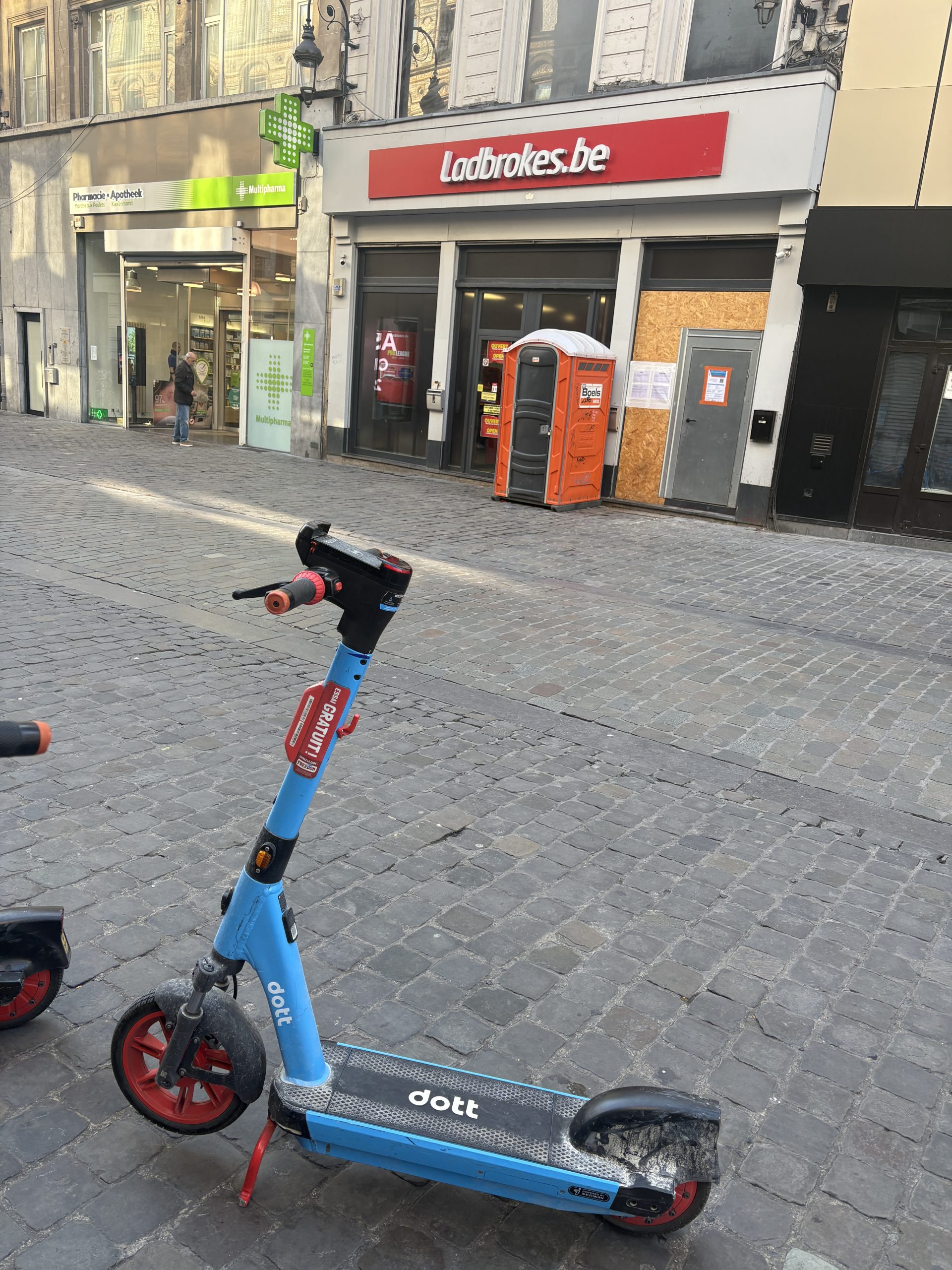
Ilegally parked Scooter in the inner city of Brussels
Different countries, different conclusions
As the capital of the European Union, Brussels often sets trends that other cities follow, though it was not the first to impose such a ban. Paris, Madrid and Prague have already removed rental scooters from their streets. In Paris the decision was made by referendum. About 100,000 people took part in the 2023 vote, and almost 90 percent rejected rental scooters. That sounds decisive, but turnout was only 7.5 percent. Prague’s argument was more practical. The city’s deputy mayor, Zdeněk Hřib, described chaos on the pavements, and that the city wants to promote shared bikes, which are supposed to have lower accident rates.
Yet other capitals look at the same problems and reach different conclusions. According to the EU Urban Mobility Observatory, Stockholm runs a permit system with a fleet cap of 12,000 vehicles, and Berlin relies on geofencing, designated parking and data-sharing with operators. Rome kept its rentals but tightened the rules. Since May 16, Italy has required license-plate stickers and insurance for both private and rental scooters.
One of the biggest e-scooter and bike-share companies
Rental restriction as the sole solution?
The Brussels ban covers rentals only, which is an unwelcome fact for some of the parties involved. Bolt, one of the involved rental companies, argues that the ban will just push residents toward private scooters, which are far less regulated and often untraceable, while shared ones must follow strict rules. Tue-Linh Nguyen, also a student at IHECS, is not convinced of that, even though she is not in favor of the ban: “Me and my friends use the scooters all the time after Uni. It is the easiest way to get somewhere spontaneously. At the same time, I don’t think too many people are going to buy a private e-scooter after the rentals are gone. They can be pretty expensive.”
This is where the Paris ban comes into play. France still sold about 600,000 scooters in 2024, even after rentals were banned. Mobility expert Dirk Lauwers, who teaches and acts as a research promoter in mobility planning and traffic engineering design at Ghent University and the University of Antwerp, claims that Paris accidents rose 33 percent in 2025 after the ban. Brussels’ mobility minister, Elke Van den Brandt, strikes the same note. She wants restrictions for private e-steps as well: “We need to be much stricter with these private e-scooters. People often use them, but we see that the risk of an accident resulting in injury is 10 times higher than on a bicycle.”
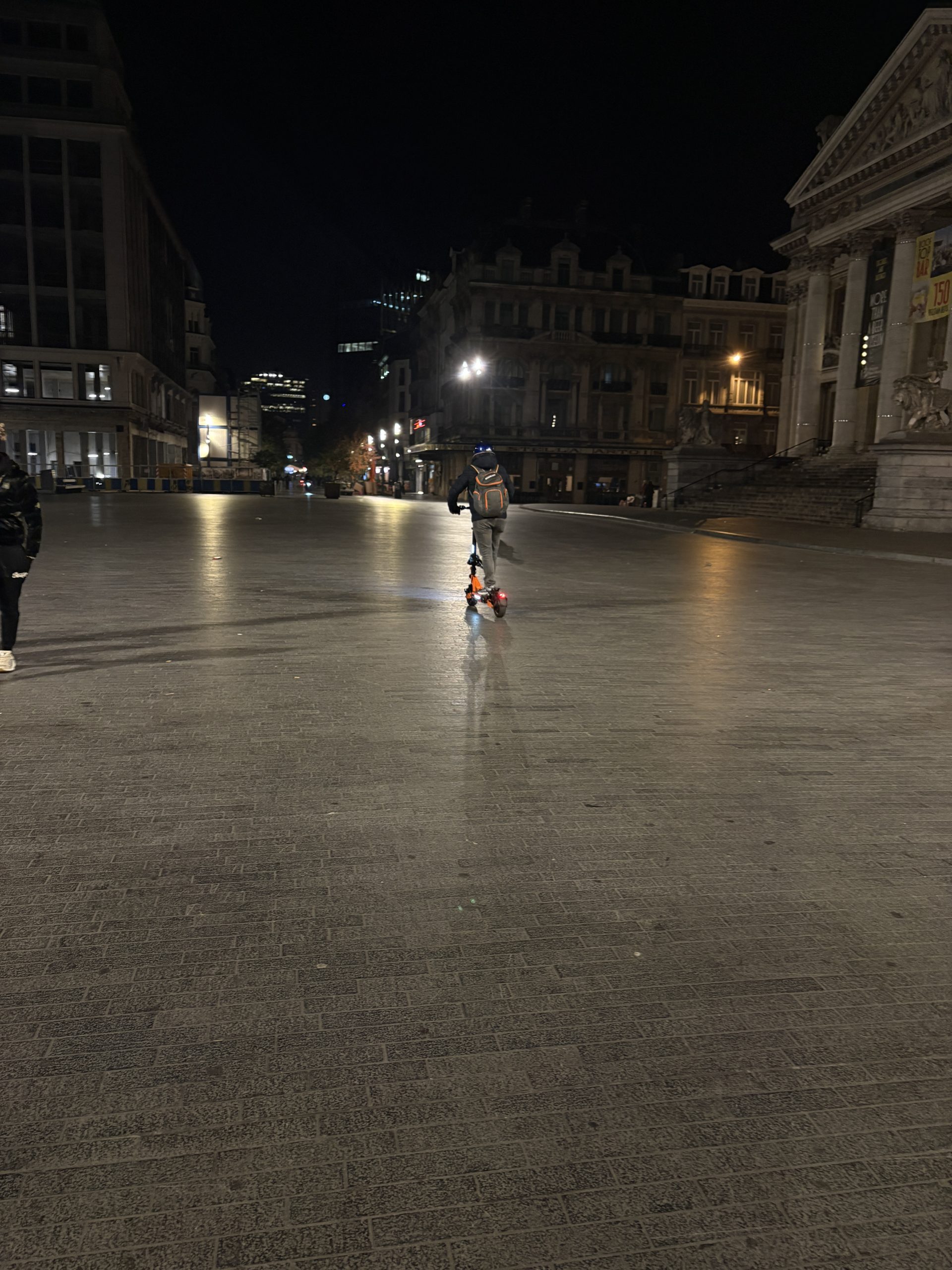
A man riding a scooter on the Boulevards du Centre
Patchwork instead of parity
All of this plays out in the capital of the European Union, which has no common rule on scooters. Less than a week after the Brussels decision, the Benelux Union asked the European Commission to propose an EU-wide framework, arguing that fragmented national rules hamper road safety and innovation. The EU’s own Urban Mobility Observatory reaches a similar conclusion, listing the need for clearer national regulation as a topic across Paris, Berlin, Stockholm and Brussels. For now, the picture stays a patchwork: bans in some capitals, permits and plates in others, and a continent still deciding whether the scooter is a nuisance or part of the future of urban transport.