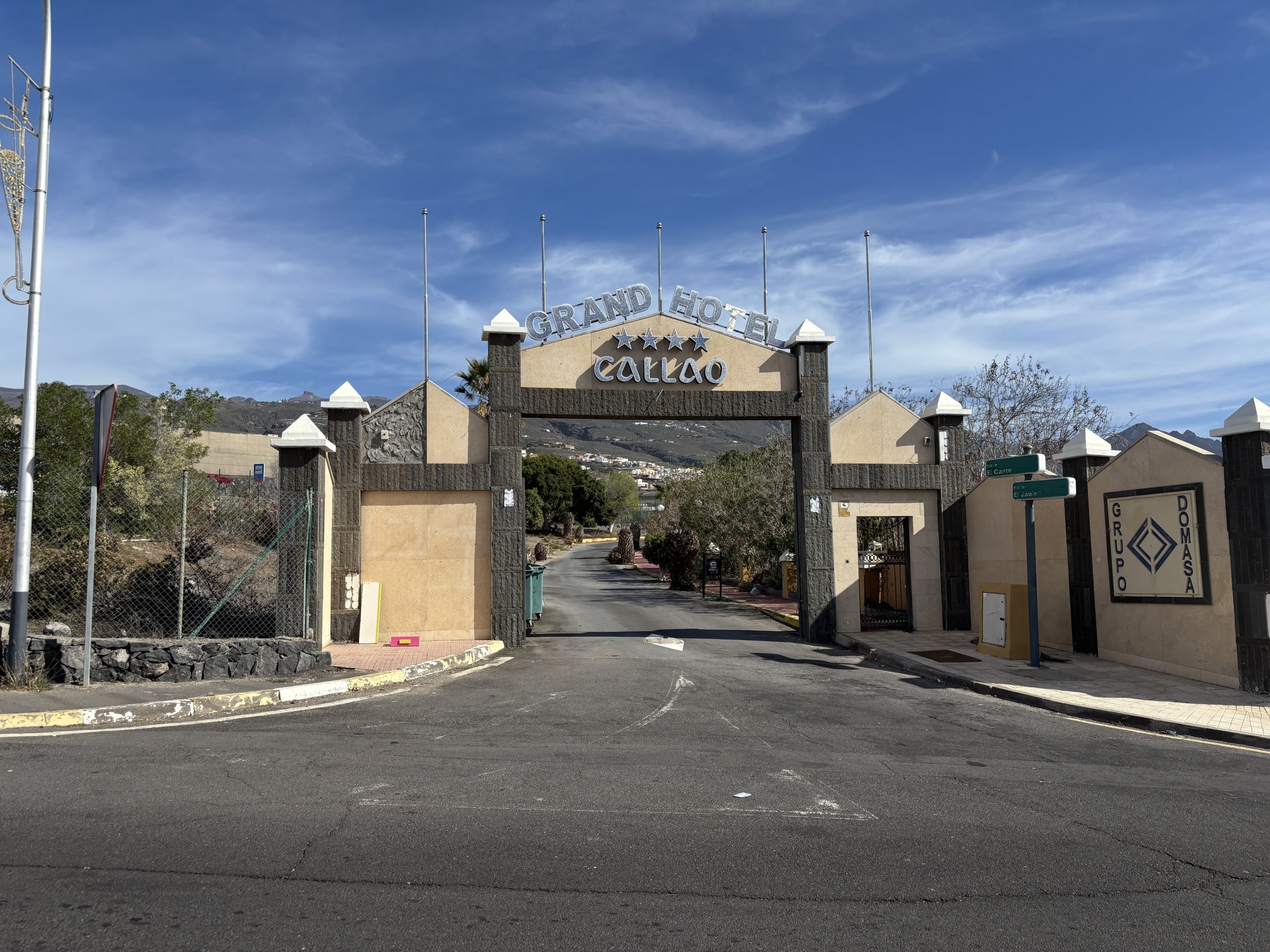
TENERIFE, CANARY ISLANDS – The smell of bleach and cleaning agents is unexpected in a derelict hotel. Yet it lingered inside a small ground-floor room of the ruined Callao Sport Hotel on December 9, 2025, just a day before a mass police eviction.
Beyond the walls, the luxury swimming pool sat empty as a vast concrete hole filled with stagnant rainwater and debris. Once a gleaming resort in southern Tenerife, the building had become a squatted settlement for those priced out of the local housing market.
Among them was Juliana, aged 37. She had lived in this condemned, squatted resort for eight months because she was unable to find an affordable alternative. Originally from Colombia, she represents a growing demographic of essential workers who have become invisible in the destination they maintain.
“I work as a cleaner in apartments and villas for tourists,” Juliana said. “Even though there are houses everywhere in this area, they are mostly for vacationers. For us, there is nothing.”
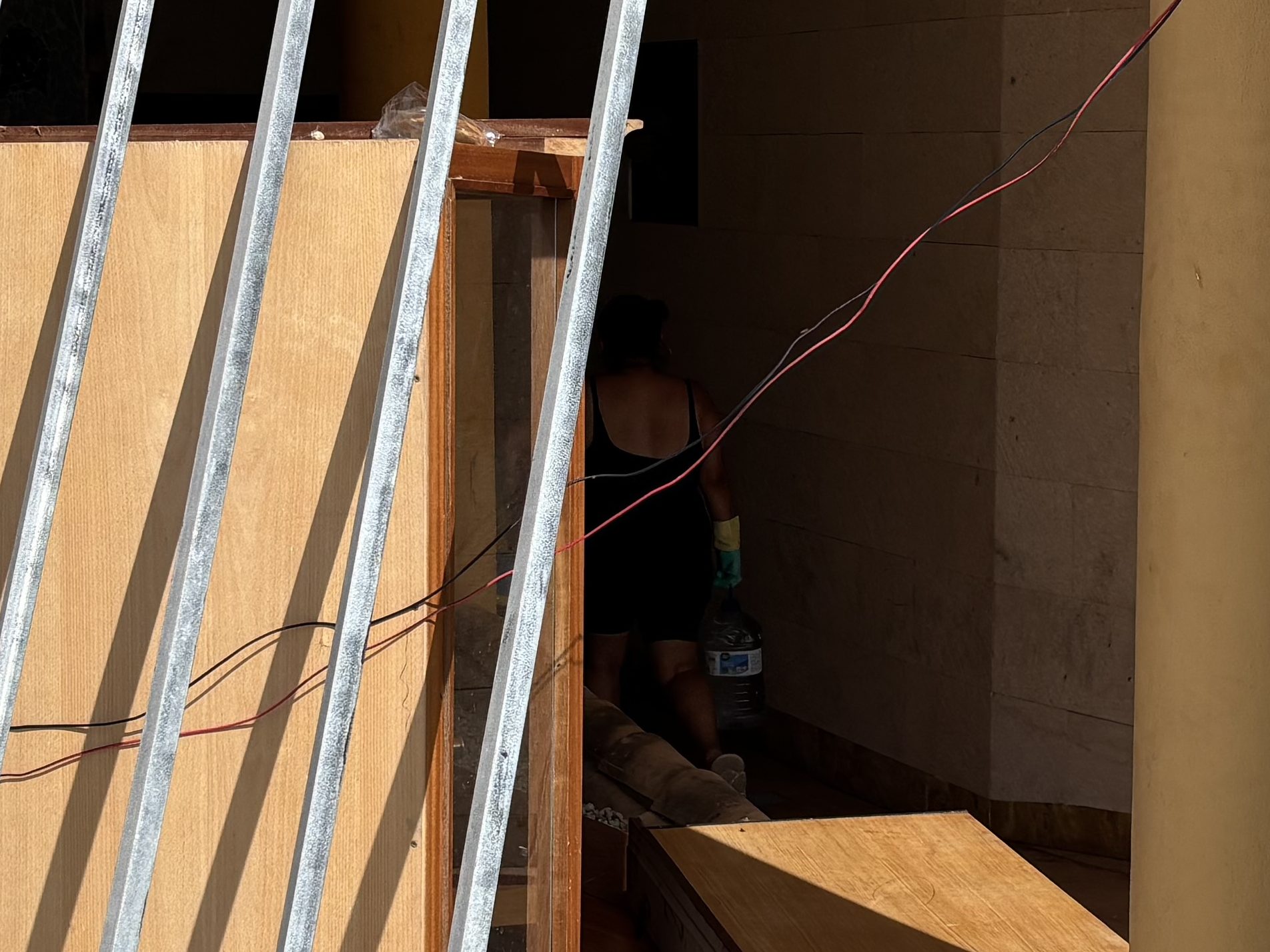
Juliana was one of hundreds who squatted the Callao Sport Hotel after it closed during the pandemic. By the afternoon of December 9, the building was quiet. Most occupants had already packed their lives into old cars and vans, choosing to leave during the day rather than face the scheduled police arrival the following morning.
“I can’t pay rent with what I earn,” she explains. Working primarily for cash without formal paperwork, she often lacks the proof of income required by landlords. “Everything gets more expensive, but my salary stays the same. I feel used as a worker.”
Her story is a reflection of a wider crisis. For millions of Europeans, the Canary Islands are a premier winter escape. However, the people who clean the rooms and cook the food cannot afford to live in the communities where they work.
The New Profile of Poverty
José Luis Cámara

For decades, poverty on Tenerife was associated with visible homelessness on the streets. Today, it has shifted toward a group social workers call the working poor.
“The profile of poverty has changed significantly,” says José Luis Cámara of the charity Cáritas Tenerife. “In the past, it was mostly people living on the streets. Now we see many families who require support despite having full-time jobs.”
The financial reality is stark. In areas with heavy tourism in southern Tenerife, a basic one-bedroom flat can cost between 800 and 1,000 euros per month. For a service worker earning 1,200 euros, rent consumes nearly the entire paycheck. “We see couples who both work in local hotels but are forced to live in their cars,” Cámara notes.
Tourism Overwhelming Local Housing
While tourism numbers continue to break records, the housing infrastructure for residents has stalled. Data from the Canary Islands Institute of Statistics shows that between 2019 and 2025, the number of traditional hotel beds fell by over 26,000.
During the same period, vacation rental places surged to over 190,000. This shift toward hort-term tourism has effectively removed thousands of units from the long term residential market.
Juan Pablo González

Juan Pablo González, director of the hotel association Ashotel, argues the industry is being blamed for a decade of failed government planning. “For more than 15 years, the government has not built a single unit of public housing,” González says. “When you stop promoting public housing while demand increases, prices rise rapidly.”
However, the Sindicato de Inquilinas de Tenerife disagrees that the problem is a lack of buildings. Javier, a representative for the union, argues that housing is being treated as a commodity for profit rather than a human right. “There is no real shortage of housing,” Javier says. “There are around 212,000 empty homes in the Canary Islands. Keeping homes closed should be prohibited. We demand the expropriation of housing held by vulture funds and banks.”
A Visible Backlash on the Streets
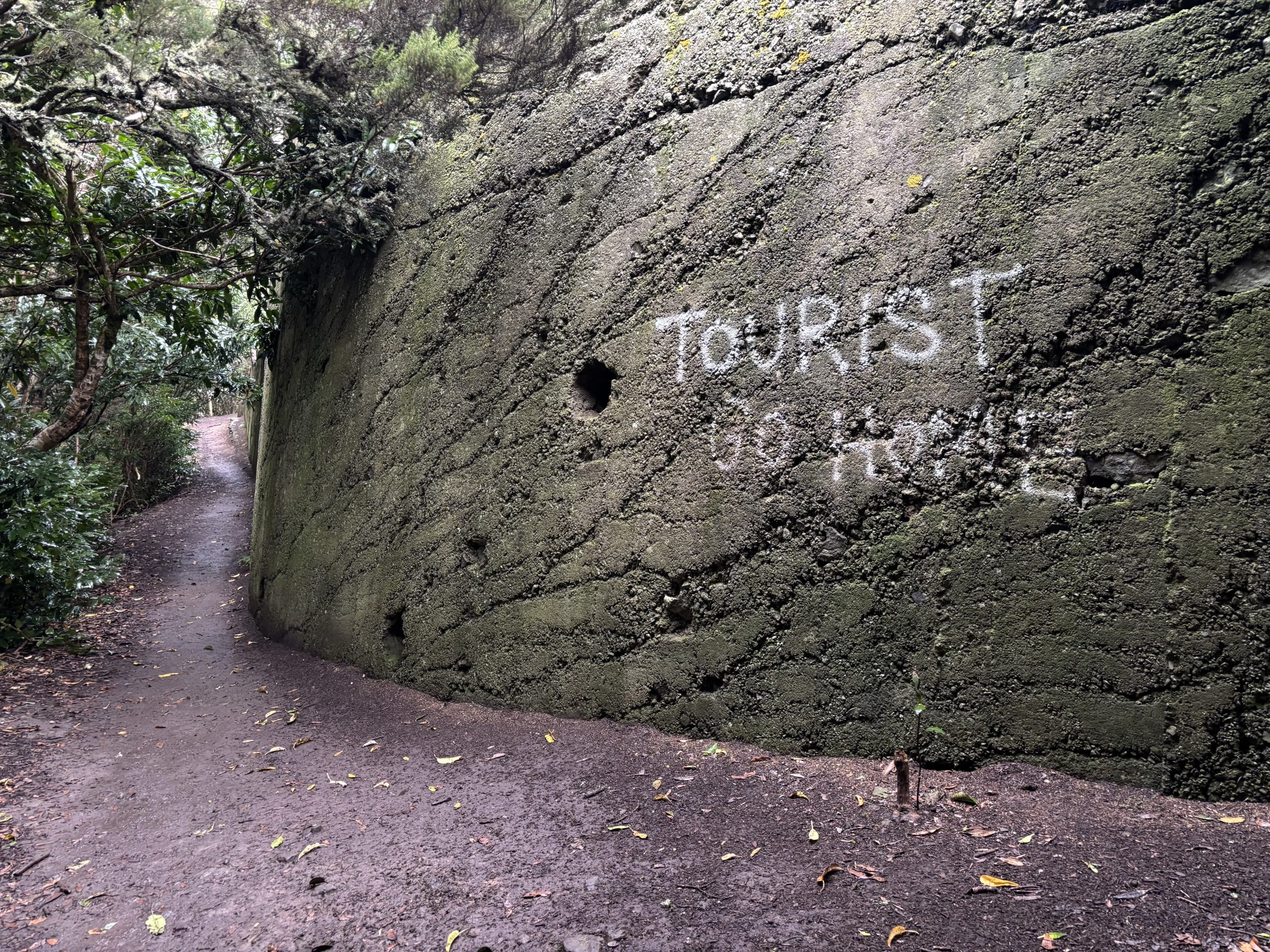
The squeeze on local housing has left a permanent mark on the landscape, often in the form of visible anger. Across southern Tenerife, concrete walls near beach resorts remain spray painted with slogans in English: “Tourists Go Home” and “Your Paradise, Our Misery.”
This graffiti is a residue of the massive unrest that swept the islands during the summer of 2024. Under the banner “Canarias tiene un límite” (The Canaries Have a Limit), tens of thousands of residents took to the streets in April and throughout the summer months. It was a historic mobilization that saw over 50,000 people marching simultaneously across the archipelago to demand a moratorium on new hotel projects and a limit on property purchases by people not living there.
Tenerife was not alone in this summer of discontent. In Mallorca, thousands of locals occupied beaches to protest overcrowding, while in Barcelona, activists made international headlines in July 2024 by symbolically dousing tourists with water pistols at popular terraces. From the canals of Venice to the streets of Tenerife, the message was the same: the local population is no longer willing to pay the price for a tourism model that leaves them without a home.
The Impact of the New Rental Law
Facing this pressure, the Canary Islands government finally implemented Ley 6/2025 in December 2025. This new Holiday Rental Law allows municipalities to cap tourist rentals at 10 percent of housing stock. The Sindicato de Inquilinas de Tenerife argues that the measure is overdue, noting that holiday home inventory grew by 25 percent in just two years while social housing construction remained stagnant.
The Spanish government has also petitioned the European Commission to allow restrictions on property purchases by foreign nationals not residing in the islands. This struggle in Tenerife mirrors a broader European movement where tourism outpaces local wages. Barcelona recently announced a plan to phase out all 10,000 of its licensed tourist rentals by 2028. Other cities, such as Berlin and Vienna, have instead focused on price controls and building projects subsidised by the state. Yet, with local zoning plans not due for finalisation until 2028, relief for workers on Tenerife remains years away.
Uncertainty for Tenerife’s Workforce
On the morning of December 10, 2025, police arrived at the Callao Sport Hotel to clear the remaining occupants. The room Juliana squatted is now locked and empty.
As 2026 begins, the Canary Islands continue to report record revenues. But as long as the cost of a roof exceeds the wages of the island cleaners and waiters, the tourism boom will remain a source of instability for the local population.
Juliana has found a temporary place to sleep with an acquaintance, but she knows it is a short-term fix. As the island prepares for another record-breaking season, she and thousands of others continue their search for a place to call home.