This production is made by: Freya Bjerrum, Justine van Overeem and Suzanne Borsboom
In recent months, drones have been spotted with increasing frequency across European airspace It’s often unclear who is controlling them or why, which worries both citizens and policymakers. In response, the European Commission has put forward plans for what it calls a “Drone Wall”. But what can such a system actually achieve, and are the expectations realistic?
The term “Drone Wall” comes from the EU Defence Readiness Roadmap 2030. Despite its name, it is not a physical barrier. Instead, it is a Europe-wide network of radars, sensors, communication systems, and countermeasures designed to detect, track, and, if necessary, neutralize drones, while sharing information in real time across EU countries.
The system functions as a technological ecosystem, a multi-layered detection and response setup aimed at protecting European skies. The EU hopes to have it fully operational by the end of 2027, reflecting the urgency of the project.
The challenge is not just technology
According to Erik Stijnman, Senior Research Fellow at the Clingendael Institute, the main challenge isn’t the technology itself, it’s understanding what counts as normal drone activity in Europe. ‘We don’t have a clear picture of what is normal and what isn’t’, Stijnman explains. ‘Not everything we see is Russian, but it’s also not true that nothing is happening.’
Without that baseline, it is very difficult to know which drones actually pose a threat. The interactive map makes this clear, showing unexpected activity across Europe. As Stijnman points out, without knowing what typical drone traffic looks like, it’s extremely hard to tell which drone incursions are genuinely dangerous.
The “Wall” metaphor is misleading
Stijnman also warns that the concept of a “wall” implies a level of protection that simply cannot be guaranteed. ‘A wall gives the impression that you can guarantee one hundred percent safety. That simply cannot be done.’ Small, commercially available drones are flexible and cheap, and many can be adapted for other uses beyond hobby or delivery purposes.
‘It takes little imagination to arm a normal drone’, he says, underscoring that the drone threat can start with everyday equipment. The name Drone Wall can therefore create a false sense of security. There is no barrier that can stop every drone in all possible scenarios.
Even if the Drone Wall detects a suspicious drone, deciding what to do next is not straightforward. Stijnman emphasizes this practical dilemma: ‘You cannot just shoot down every drone. Everything you bring down will land somewhere.’
Political and technical realities
Politically, the Drone Wall initiative has not been universally embraced. While some EU countries, particularly in eastern Europe, support stronger collective defence measures, others are more cautious about costs, technical complexity, and implications for national sovereignty in defence.
Building a truly shared system across many countries also presents technical hurdles. Sensor networks must be standardised and interoperable, detection capabilities must handle low-altitude drone traffic, and data needs to be shared securely and quickly.
Is it realistic?
With an operational target of 2027, questions remain about whether production, integration, and governance can keep pace. Stijnman emphasizes that strategy comes before technology: ‘Don’t start by buying equipment. Start with a concept, think about processes, and priorities.’
According to Erik Stijnman Europe must first define what it wants to protect and how it will respond to threats, before technology alone can make a meaningful impact. The Drone Wall, while ambitious, is ultimately a layered system of awareness and response rather than a literal shield, with real-time data on drone incidents helping policymakers make informed decisions.
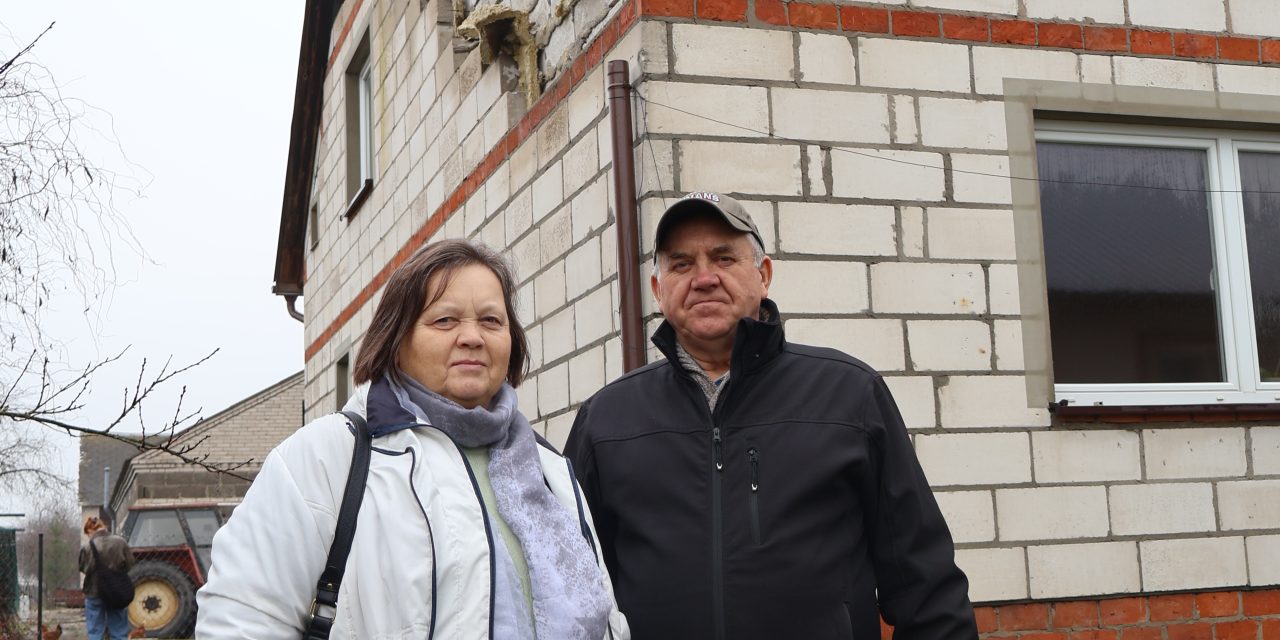
This article is part of a wider cross-media project. The accompanying documentary follows Tomasz and Alicja, a couple living near Poland’s Eastern border whose home was destroyed in a drone attack. Their personal experience is set alongside interviews with EU and NATO officials and security experts, showing how plans for the Drone Wall affect people on the ground. You can watch the documentary below:
Data accountability
This article is based on a dataset of reported drone sightings across Europe, compiled by Stefan Keukenkamp from open-source material including media reports, official statements, and publicly available aviation and security sources. The data was interpreted and structured for this article and the accompanying interactive visualisation. The map was created using Flourish and reflects the information available at the time of publication. While individual incidents cannot always be independently verified, the dataset is intended to show reported patterns and trends rather than a complete overview of all drone activity.