For the 30th edition of their festival, Europalia is holding the Festival de España from 8 October 2025 to 1 February 2026 with around 100 multidisciplinary events across Belgium to fight polarisation.
Since 1969, the Brussels-based organisation, Europalia, has held biennial arts festivals spotlighting the culture, heritage, and arts of one invited country.
The festival was created in Brussels, the capital of the European Union, during the beginning of European integration out of the hope that art could bring Europe closer together and minimise the threat of polarisation.
“We aim to accelerate dialogue and create perspective by showing a widest as possible platform for all cultural expressions, often feeded by talks and debates,” Christian Salez, general director of Europalia said about fighting polarisation.
“Historically, the festival was a showcase of the culture of a guest country, but nowadays we aim to convey the values of the guest country through arts and culture.”
It has since expanded to highlight countries outside of Europe such as Japan and India.
Enlarge
Elyze Nadler
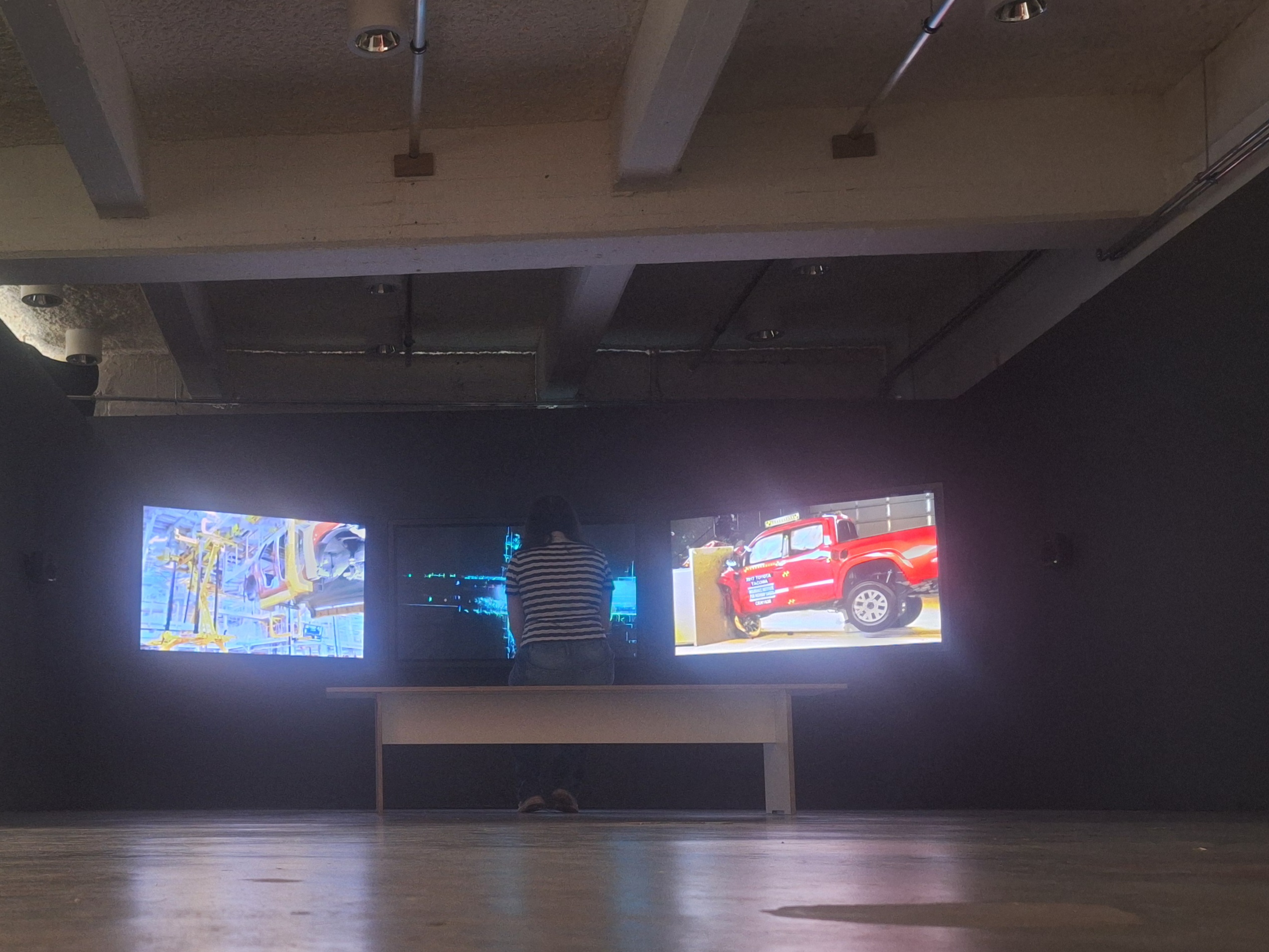
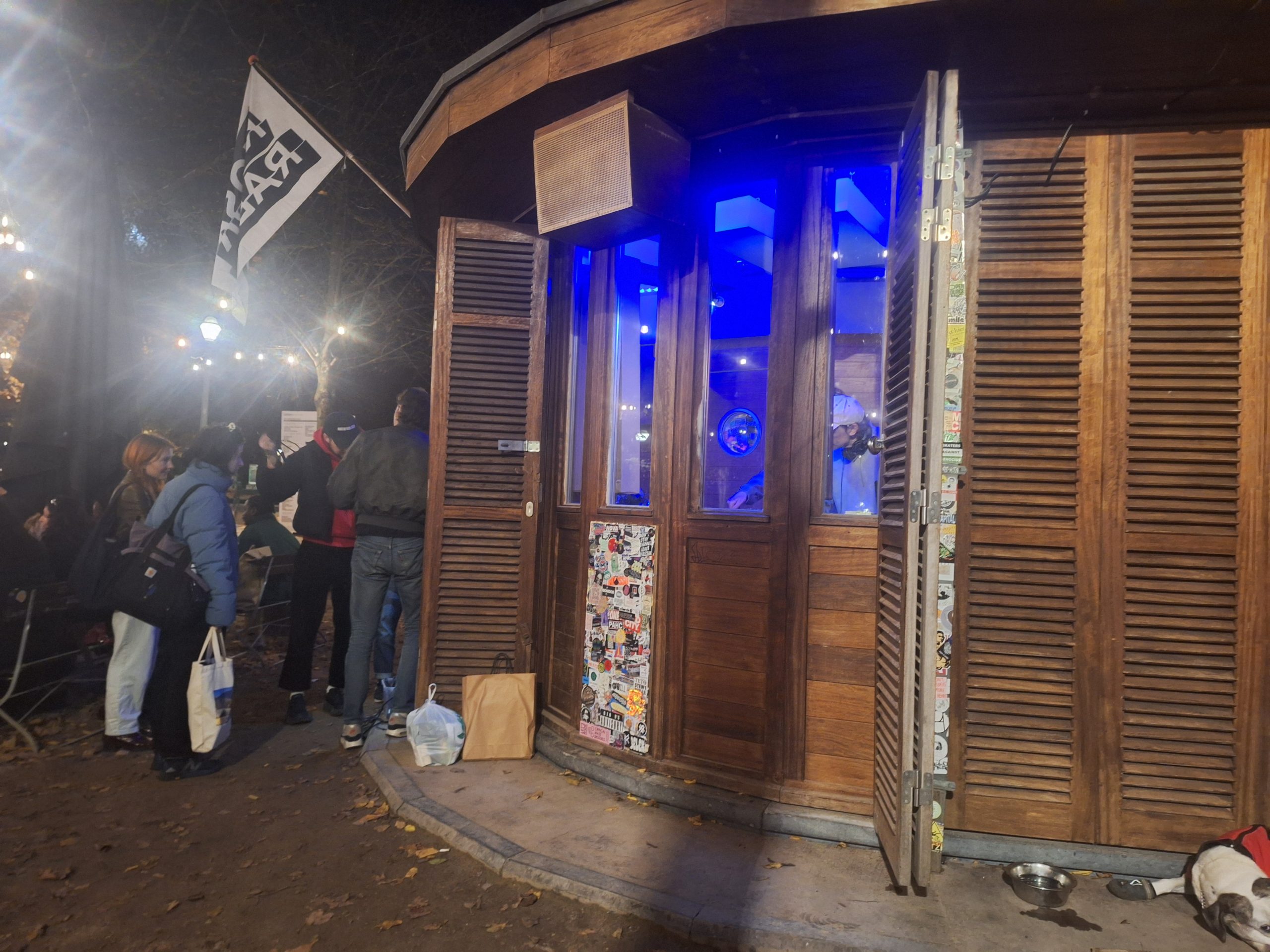
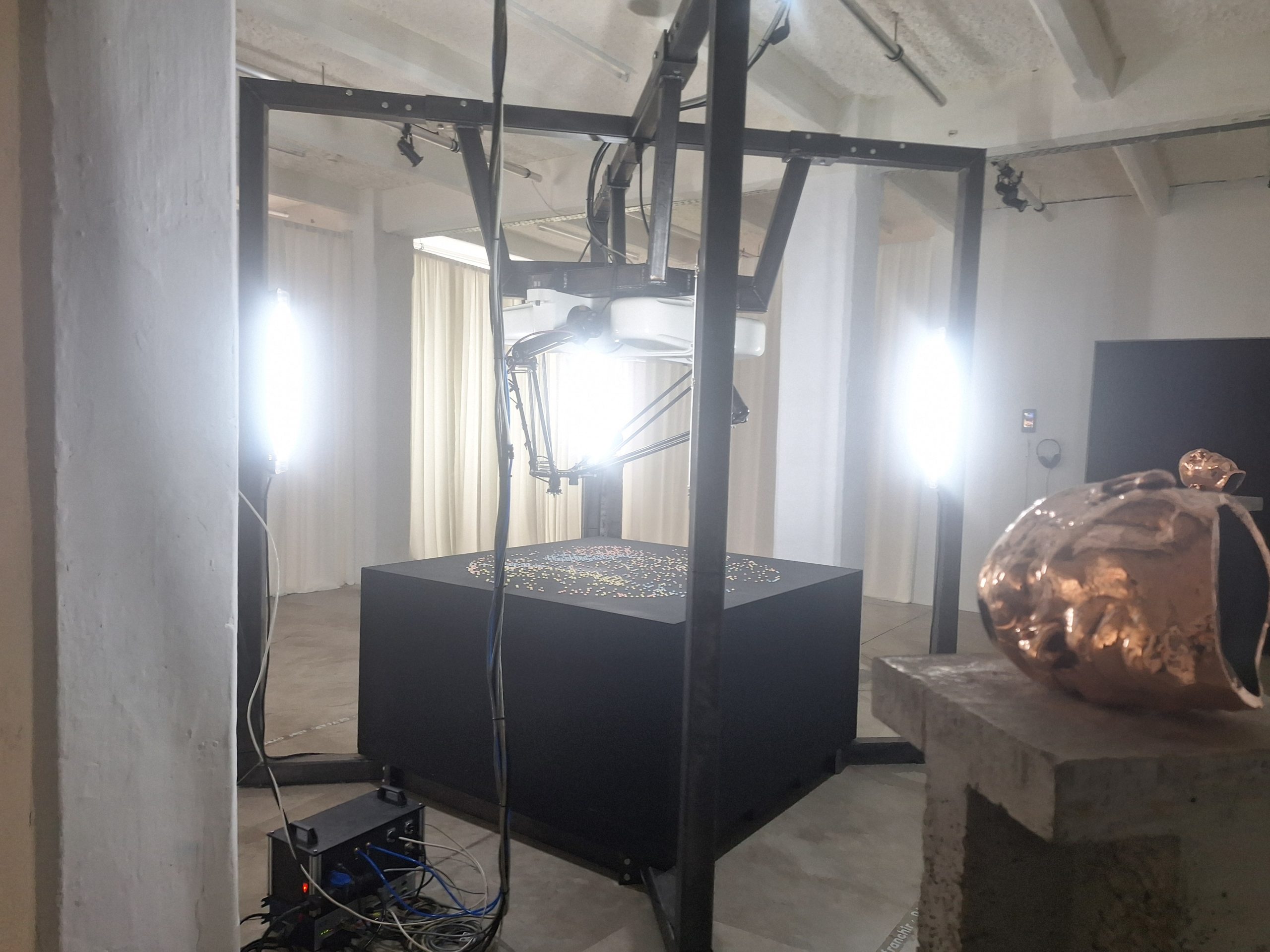
The Europalia works closely with the invited country and cultural partners to create a programme featuring a variety of mediums such as exhibits, performing arts, visual arts, film, music, literature, and debate with many well-known Spanish creatives taking part.
Christian Salez said: “All decisions are taken within the spirit of partnership, even on an artistic level, between both countries.”
Following the European Parliament election in 2024, populist parties, Patriots for Europe and the European Conservatives and Reformist, made up the third and fourth largest groups respectively in the European Union.
“We have noticed that there is an increase on the influence that the far-right has on news, especially, and the agenda,” Marcella Via, press officer of Corporate Europe Observatory, said about the effect polarisation has had on Brussels, “the media space is shrinking and shrinking.”
Marcella adds: “You have stronger right-wing groups and far-right groups, now they are attacking NGOs funding from the EU so, there has been a lot of NGOs, not just in Brussels but also wider EU, who have had to cut a lot of staff.”
In 2021, the European Commission said that threat analysis showed that right-wing extremism was on the rise with potential dangers arising from hate speech and xenophobia with Europol reporting that many right-wing extremist groups were emerging online and taking a more active role in attacks in 2023.
In 2025, the European Commission also reported that the number of minors involved in violent extremist activities seems to be growing ‘particularly fast’. In Belgium, 18% of the extremist threats were committed by minors.
Brussels’ international population makes up almost 40% of the city’s population.
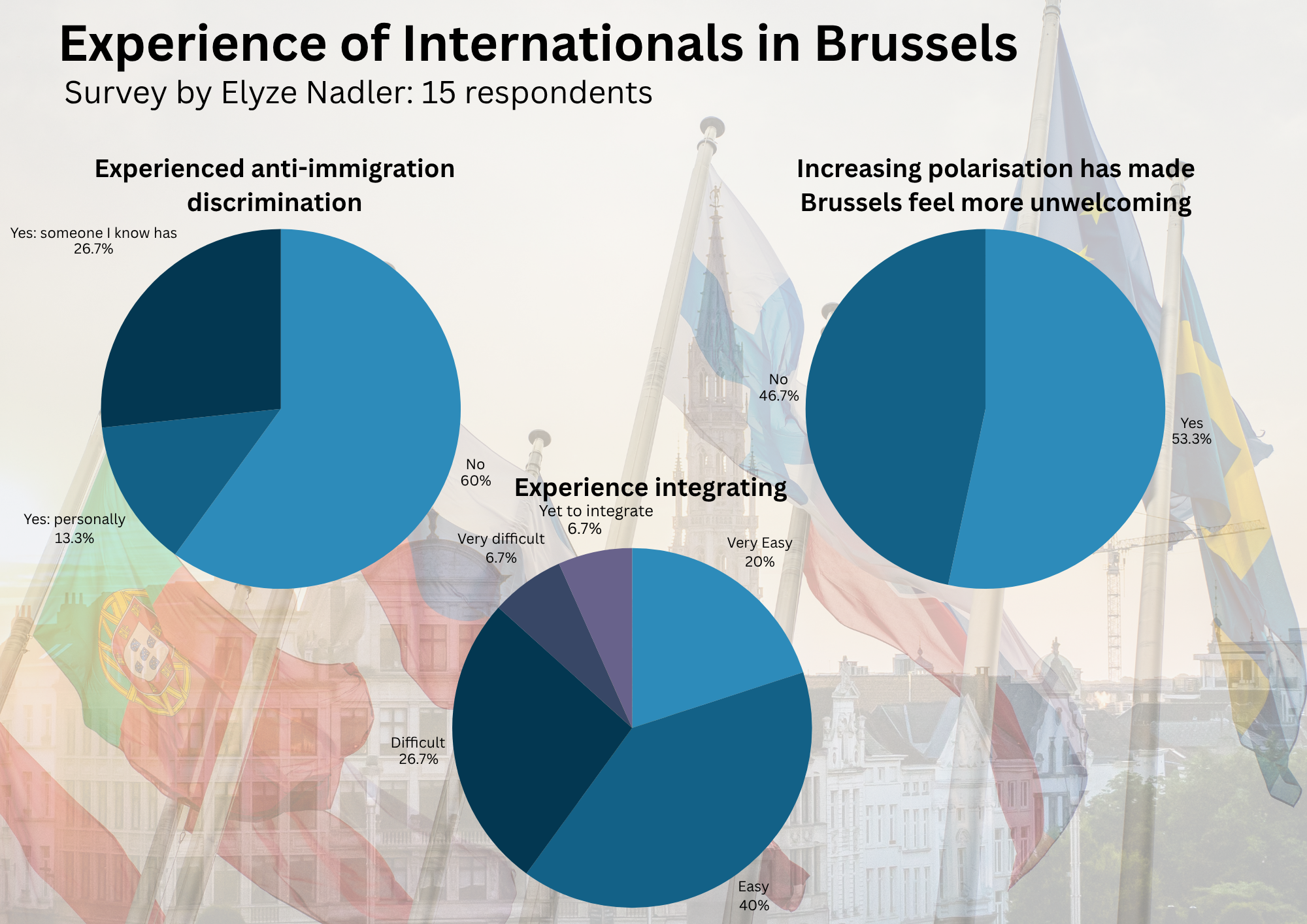
On a survey I created about the experience of internationals in Brussels, 40% of the respondents had or knew someone who has experienced anti-immigration discrimination and 53% said rising polarisation had begun to make them feel more unwelcome.
However, 60% of respondents answered that they found it easy or very easy to integrate into Brussels with only one response saying they didn’t feel integrated yet.
Marcella, an Italian expat herself, paints Brussels as an open city.
“From my experience, it was really easy to stay here,” She said, “in my case, I never really wanted to stay but then it was really easy to meet people, to find things to do, to switch jobs when I wanted to switch jobs. They are really welcoming [to] us here.”
Find below an interview with Marcella that goes more in-depth on the impacts of polarisation in the EU and her experience as an expat who moved to Brussels: