Charlotte Buma and Elyze Nadler
As the Russia-Ukraine war threatens to turn four years old, the sanctions placed on Russia continue with potential to grow.
On 7 January 2026, the Ukrainian president Zelensky held a speech at the Cyprus EU Presidency ceremony pleading for stronger sanctions against Russia and financial support for Ukraine.
With a strong Russian tourist base, large Russian communities living on the island and a close historical relationship in investments, Cyprus has been described as the ‘most Russified EU-member state’ by political analysts.
Cypriot government officials have raised concerns that the country would be greatly affected by imposing sanctions.
Since the 1974 Turkish Invasion of Cyprus, Cyprus has been divided into two administrations; the Republic of Cyprus, the only internationally recognised authority on Cyprus, and the Turkish Republic of North Cyprus (TRNC) which controls a third of the island but is only legally recognised by Turkey.
With only the Republic of Cyprus being counted as an EU member state, this means that just two-thirds of the island is implementing the sanctions.
Tourism industry
Cyprus’ economy is dependent on tourism with the Deputy Ministry of Tourism reporting that the industry makes up 14% of the Republic of Cyprus’ yearly income and 64.6% of jobs in Cyprus being in the travel and tourism sector.
Professor of Tourism, Zanete Garanti described tourism as “the bread of the island.”
In 2021, Cyprus was the second-most popular tourist destination for Russians with around 172,000 Russian going to Cyprus, according to official Russian border service data.
This was about 10% of the tourist arrivals that year.
Enlarge
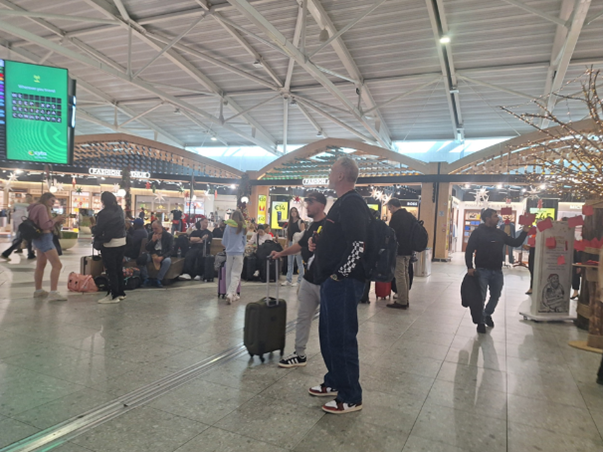
In 2022, EU sanctions led to the suspension of direct flights between Cyprus and Russia with official data from Hermes airport revealing over 330,000 Russian passengers were prevented from coming due to these bans in 2022 alone.
Russian Foreign Minister Maria Zakharova said that Cyprus’ decision to open visa centres in Russia were “another indication of Europe’s growing awareness of the sheer scale of economic losses stemming from the cessation of tourist inflows from our country.”
While the sanctions did affect the Republic, its effects were not as mighty as one might expect.
“Actually” Professor Garanti describes, “if in the paper they say we lost a lot of Russian tourists, they were still managing to come, but through the North side.”
At the same time the Cypriot government was pushing RyanAir to open more flights to other European countries. “So, in the end, the missing Russian tourism but increasing Polish, Latvian, Estonian actually balanced out the tourism.”
Enlarge
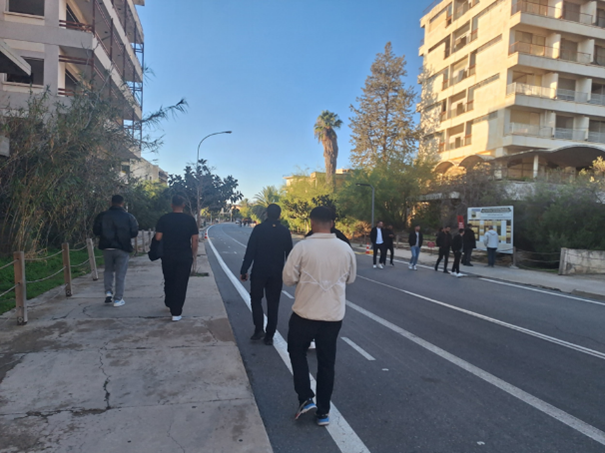
Similarly, tourism is an important pillar of the economy in the north being one of the most rapidly growing sectors.
Dr Ruth Nange said not being a part of the EU could be seen as “an advantage” for TRNC since more Russians visited the northern side after the sanctions, as well as the fact that some Brits opted to visit TRNC after Brexit.
For more information on the differences between the tourism industries in both sides and the inequalities not being part of the EU and internationally recognised creates, listen to this audio piece:
Russian communities
The Russian presence on the island is not just limited to tourism, there are also well-established Russian communities on the Republic of Cyprus.
Official figures show that there are over 40,000 Russians living in the Republic of Cyprus in 2025 with one in five foreign residents being Russian.
By 2023, almost 58,778 Russians from the Republic migrated over the border to Northern Cyprus to escape sanctions, according to the Tourism Ministry of Northern Nicosia.
Enlarge
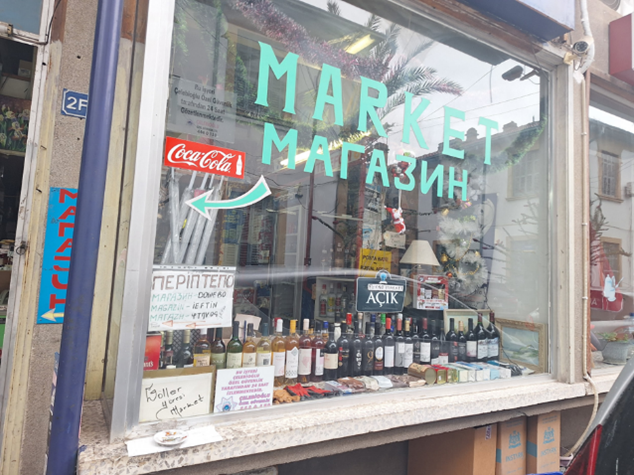
However, multiple Russians from Paphos said they had not heard of this happening.
Enlarge
Enlarge
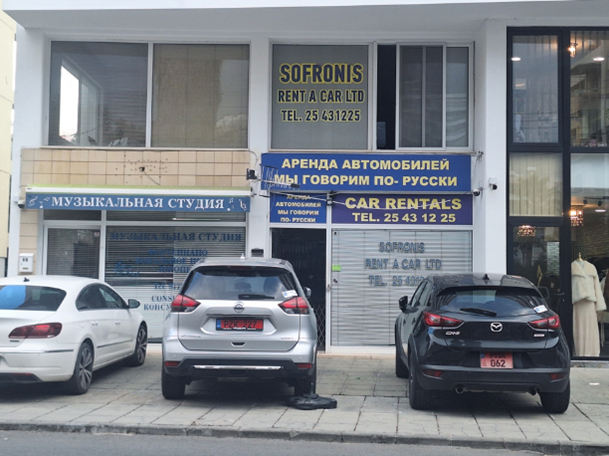
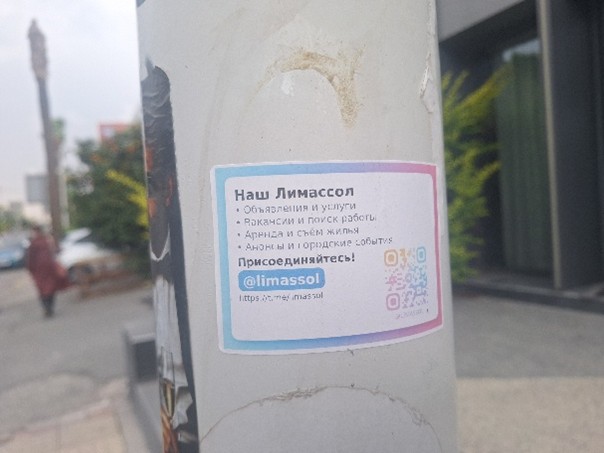
The biggest Russian community on the Republic of Cyprus is in Limassol with local Cypriots dubbing the city “Limassolgrad ” and “little Moscow”.
When walking though the city this immediately becomes clear as Russian language schools, supermarkets and signs are a common sight to see.
Integration is simple according to a Russian mother who has been living in Paphos for twenty years.
“With Cypriot people, it is so easy,” she said, “Everyone helps you.”
Learning the Greek language was not a necessity, as the kids were sent to an international school and there were so many Russians who had moved there.
Her daughter describes that the Russian community is big in Paphos, but there is many diverse groups around Paphos, for example, Armenians.
As they had previously integrated, the sanctions had not dramatically impacted their lives.
The biggest impact was on communication with family back in Russia.
The mother describes that communicating with her eldest child in Russia had become more challenging because there are very strict rules in both the EU and Russia about communication.
She was particularly upset that she and her eldest child could not go visit each other since the war had started.
They also described a more hesitant attitude towards Russian money in the south compared to the north since the Russia-Ukraine war started.
While the Russians we spoke to hadn’t felt any animosity, a Nicosian resident spoke to us about some frustrations particularly young Cypriots were having: “A lot of the Russians that move here can afford to live a way of life that most locals can not, therefore changing the living costs especially accommodation which is detrimental to the locals and it drives them away from the cities.”
Russian investments
Most of the frustration of the Cypriots with the Russian communities lies with the raised cost of living in the big touristy areas.
Limassol is especially popular with investors.
The call for investors is also a loud and clear voice when walking though the city, with “Invest in Cyprus signs” down the major roads.
Enlarge
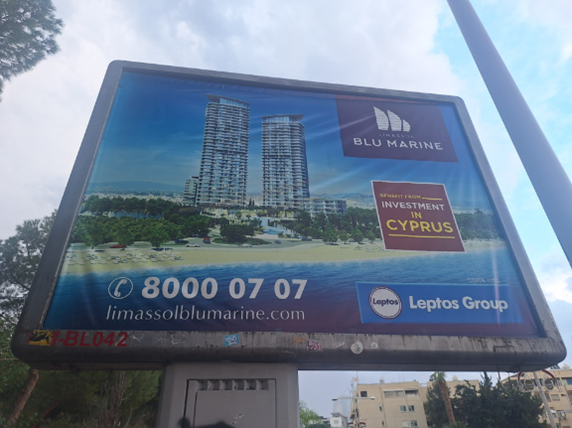
In 2020, Cyprus got a slap on the wrist from the EU for “selling” European passports.
Nicknamed “the golden passport deal”, by investing into the Cypriot real estate market, one could obtain a permanent visa or even a Cypriot passport.
While the passport deal was scrapped, the “golden visa” is still up for grabs.
According to the International Consortium of Investigative Journalists (ICIJ), Russia invested more than 2 billion euros into the Cypriot economy in the last two decades.
But as frustrations in the South seem to rise, the North seems to welcome all investments with recent legislations uping the limit in owned properties by non-Turkish Cypriots from one to either three apartments or two villas.
“In Famagusta there is an area called İskele, which is a little bit out of Famagusta, full of investors from Russia,” Professor Garanti said, “It is getting very similar to Limassol.”
Future of Cyprus
On paper, Cyprus has severed its ties to Russia, but the reality is different with Russian influence on the island still being strong.
However, as debates in Europe continue on how to deal with the Russia-Ukraine War, Cyprus’ Foreign Minister, Constantinos Kombos, has re-iterated Cyprus’ commitment to the diplomatic isolation of Russia.
Currently in a six-month presidency of the EU Council, Cyprus is also in charge of discussions of Ukraine’s accession to the EU with pressure applied from Kyiv to provide a fixed date.