Beyond the Slopes
Sophie Manusov and Quinty Setlight
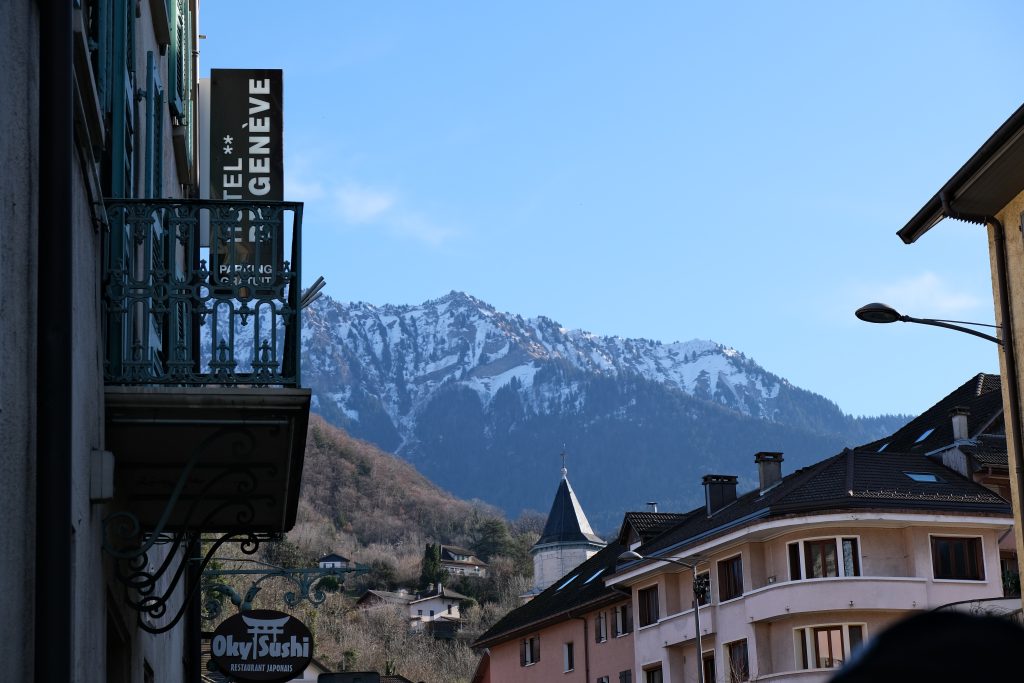
Many low- and mid-altitude ski villages are experiencing climate change up close. Due to financial considerations, the village of Faverges-Seythenex in the French Alps decided to close its ski resort. Residents of the village are still experiencing the consequences.
The ski season has started again, and tens of millions of Europeans travel to the Alps. Snowfall however has decreased compared to the past, undermining the tourism-based economic model on which residents of ski villages sometimes depend. Although other financial considerations also play a role, reduced snowfall is often seen by municipalities as the final straw leading them to close their ski lifts. This was the case in 2023 in the French village of Faverges-Seythenex, where the ski resort was used not only in winter but also during summer. Residents of the village are disappointed and continue to feel the consequences to this day.
Due to climate change, snow reliability in the Alps is decreasing. Snow now lasts 22–34 days less than in the past, and snow depth has dropped by about 40%, according to the International Cryosphere Climate Initiative. Artificial snow is a frequently used alternative, but it is not always possible due to high temperatures. According to Arjen de Graaf, commercial director of the Dutch Ski Association, artificial snow is nothing new. “It has been used on a large scale since the 1980s and its primary function is not to compensate for a lack of snowfall, but to improve ski quality. This is done by mixing natural and artificial snow.”
Geographer Pierre-Alexandre Metral told Euronews that more than 180 ski resorts had to close in France since the 1970s. That’s if we only look at one country, let alone the rest. Ski resorts all across the Alps are experiencing these problems. Especially low- to mid-altitude villages are being affected by climate change, but the size of the ski resort also matters. Smaller villages are hit harder because there is less money circulating in these municipalities.
Solutions
Climate change may be inconvenient, but according to Philipp Corradini, researcher at EURAC Research in South Tyrol, Italy, mountain villages can also use climate change to their advantage. In summer, the mountains become more attractive to tourists because of higher temperatures, but especially because “no one wants to sit on a beach in Spain when it’s 40 degrees,” De Graaf laughs. Due to extreme heat in popular holiday destinations, people are looking for alternatives in summer. “Ski villages can also try to increase their popularity during the so-called shoulder seasons, spring and autumn. This reduces their dependence on winter and makes them less vulnerable,” Corradini explains.
In recent years, Corradini has worked with colleagues on the BeyondSnow project, which examined how thirteen villages could best deal economically with climate change. “That differs for each village,” Corradini says. “For some, it makes sense to continue investing in infrastructure related to ski tourism for the time being; for others, it doesn’t. One village’s solution was to close certain slopes and keep the most popular ones open using artificial snow. Another village was able to invest in summer tourism.”
Closing ski lifts
“The closure of ski lifts cannot be attributed solely to climate change; it often also comes down to economic choices,” says De Graaf. “When a chairlift needs replacement, it costs a lot of money, and from an economic perspective it may not be worth it for a low-altitude area.” This mainly concerns small ski areas. Multiple causes can play a role, with climate change sometimes being the final straw that leads a ski resort to close.
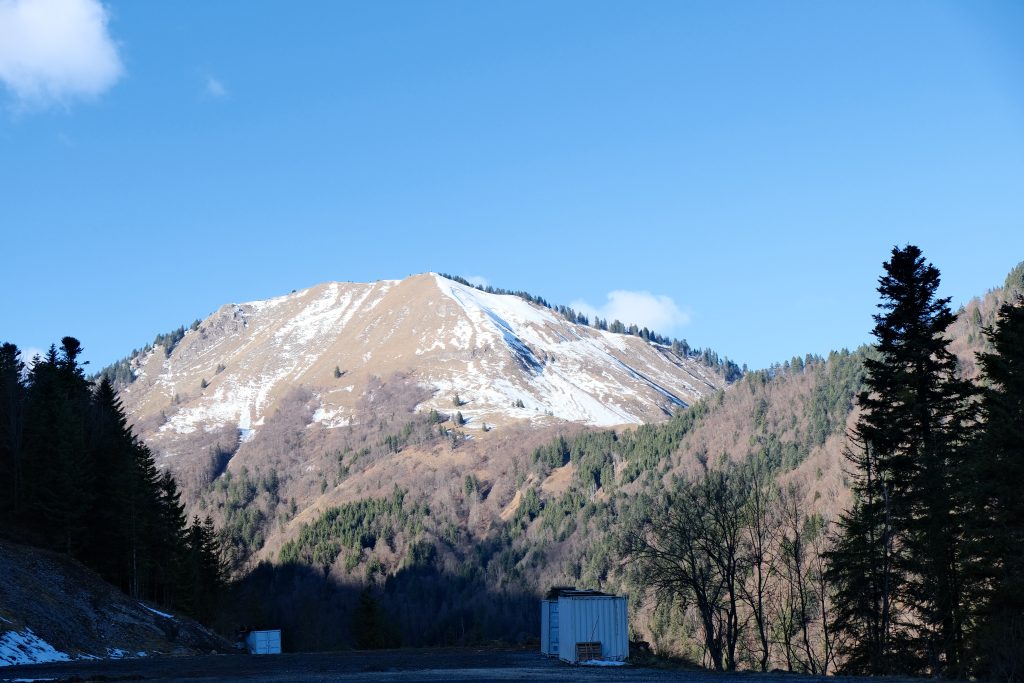
The village of Faverges-Seythenex is located in the Haute-Savoie in France. The ski lift leading to the small ski area of La Sambuy reached an altitude of about 1,850 meters. “If that is the highest point, ski tourism becomes quite challenging,” says Corradini. Summer tourism also played a major role in the area, and the lift therefore used to operate during summer as well. However, the lift has been permanently closed since 2023 and was dismantled two years later, bringing both winter and summer activities on the mountain to an end. In the following video, you will get to know the village and hear a few personal stories from residents who have been affected by the closure.
Costs
The decision to close the ski station of La Sambuy was ultimately taken by the municipality of Faverges-Seythenex. According to Martine Beaumont, deputy mayor at the time, the choice was driven primarily by financial concerns. For years, the ski station had been running at a loss of around €300,000 annually, rising to nearly €500,000 in its final years. “Something had to be done,” Beaumont explains. “Continuing like this was no longer sustainable for the community.”
Initially, the municipality explored the possibility of keeping the lifts open during summer only, as La Sambuy was also used for hiking and other warm-season activities. However, maintaining the infrastructure year-round, even for a limited summer season, proved just as costly. Fixed staff had to be paid throughout the year, while the number of visitors remained too low to make the operation profitable.
Unlike many Alpine ski resorts, La Sambuy is not directly connected to a mountain village with hotels, shops, or restaurants at the base of the lifts. According to the municipality, this made it difficult to generate sufficient economic activity on site. Only a handful of socio-professional businesses were directly dependent on the ski area, and only seven people worked at the station itself. Most of them were reassigned to other jobs within the municipality or found work elsewhere.
Climate change also played a role. Shorter winters and unreliable snowfall meant the ski area could open less frequently, further reducing income. “The financial problem is directly linked to the fact that we could open fewer and fewer days because of a lack of snow,” Beaumont says. In that sense, climate change was not the sole cause, but it reinforced existing economic pressures.
Priorities
A key argument for the closure was that only a small part of the population made use of the ski station. According to the municipality, fewer than ten percent of residents regularly skied at La Sambuy. At the same time, Faverges-Seythenex has a relatively low average income and a high proportion of single-parent households. “We had to ask ourselves whether it was justified to keep investing public money in an activity that benefits so few people,” Beaumont explains.
The funds that were previously used to support the ski station are now being redirected to social and cultural projects. One example is a music education program that gives all children in the municipality access to music lessons and instruments, fully funded by the local government. School meals have also been kept affordable for low-income families. “For us, access to food and culture is more important than skiing,” Beaumont says.
No way back
Not everyone agrees with how the decision was made. Former municipal councilor Janie Tremblay, who was against the closure, says that other options were not seriously considered and that residents were not involved enough. Although there were consultations, no local referendum was held. The municipality says this was a conscious decision, fearing that mainly people with a direct interest would take part, which could influence the result. Tremblay also doubts whether there is a clear plan for the mountain’s future. “People were told new projects would come, but two years later, very little has changed,” she says. With the lifts gone and nature slowly taking over again, the promised alternatives seem far away.
In March 2026, municipal elections will take place in Faverges-Seythenex. Some residents hope a new mayor may bring a different vision for La Sambuy, possibly one that would have kept the ski lift. However, with the lift now fully dismantled, the decision is effectively irreversible. Whatever the political outcome, the mountain has already entered a new phase. For Faverges-Seythenex, the question is no longer whether La Sambuy can return to what it once was, but how the village moves forward in a future without the ski station.