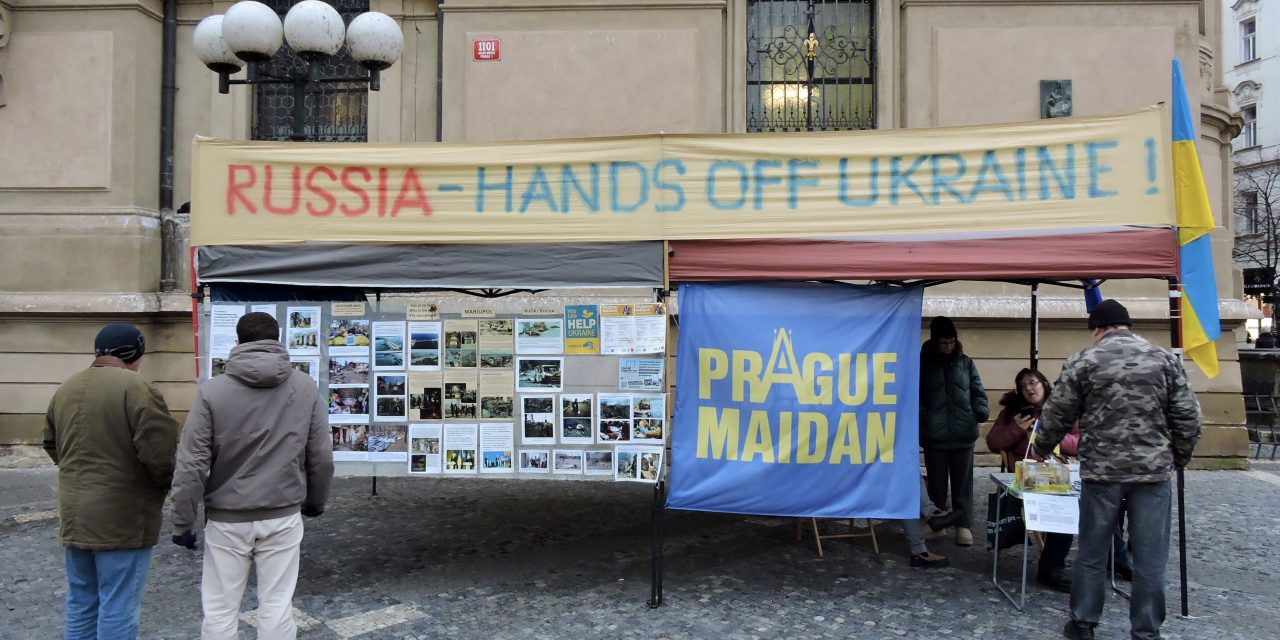
In the nearly four years since the beginning of Russia’s full-scale invasion of Ukraine, the Ukrainian students who fled the war found their new home in Prague and formed an active community here. But the changing political climate in the Czech Republic, as well as ongoing peace negotiations, makes them uncertain about their future. One thing the Ukrainian students know for sure: they want to work for the benefit of their home country.
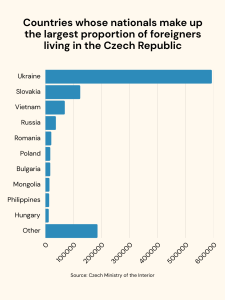
“I don’t have any friends in Ukraine, maybe a few of them. Some of my friends live in Poland, and most of them are also here in the Czech Republic. So if I go back to Ukraine, I need to start my life from the beginning. Now my community is here,” explains Diana Harnyk, one of the around 6,000 Ukrainians studying in the Czech Republic.
With a lot of public and institutional support, cultural and linguistic similarities between Ukraine and the Czech Republic, as both are Slavic countries, the integration process for Ukrainian students wasn’t hard. In the nearly four years from the start of the full-scale invasion, they feel quite integrated into Czech society and can enjoy a normal life here.
“It’s actually much easier to study here in Prague, even if it’s in Czech language, because in Ukrainian system you typically need to be at university from eight to five, and you don’t really have time also to work or do other things on the side,” shared Diana, who now besides her political science and international relations studies, manages to work as HR consultant and be part of the youth organisation Generation For Ukraine that she founded together with her friends.
“The organisation grew from just a small group of friends doing some small projects to get a sense of community,” smiles Diana. She shares that the organisation aims to connect Ukrainian students, bridge the gap between them and the Czechs, and advocate for a free and European-oriented future of Ukraine.
Activism – the value of the community
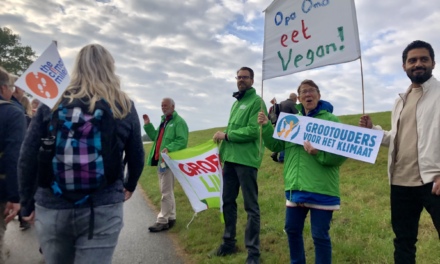
Activism and the desire to help their own country and its people connect most Ukrainian students in Prague. “One thing about Ukrainians is that they don’t want to be victims in the world. They want to help and make some contribution even to another country. So that’s why I feel that I want to be in this active part of the Ukrainian community, work in our organisation, and promote our culture,” shares Diana.
Not only she, but many Ukrainian students see activism and social initiativesas a way to not be seen as victims and fight the negative narratives about Ukrainians.
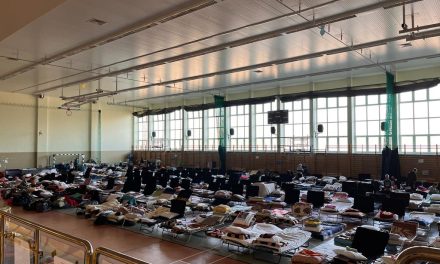
“I feel like it shows to the Czech society that we didn’t just come here to sit and get some social benefits, but that we are also being active in our own ways and contributing to social life,” says Nastya Aharkova, another Ukrainian student living in Prague. Together with her mother, grandmother, and two dogs, she came to the Czech Republic as a refugee after the full-scale invasion started. For the first few months, she was hosted by a Czech family and later moved to Prague for a project ProUkrainu.cz.It is a news outlet for Ukrainians, which she and her mother started together with other Czech journalists.
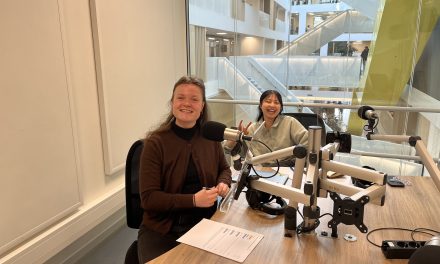
“I can talk and talk about ProUkrainu project. It’s like a child to me,” jokes Nastya, who, in addition to her studies in the Politics, Philosophy, and Economics program, works in this news outlet as a journalist. According to her, this helps to feel even more connected with the Ukrainians living in the Czech Republic, as she can hear their experiences firsthand.
For Nastya, the main reason for being active in the community is the need to help her home country even outside of its borders. But she adds that there are more factors: “We want to make Ukrainian voices heard abroad. So, organising events, bonding and collaborating with Czech students is partly from the need to integrate, but also from the need to be heard.”
The future is as uncertain as ever
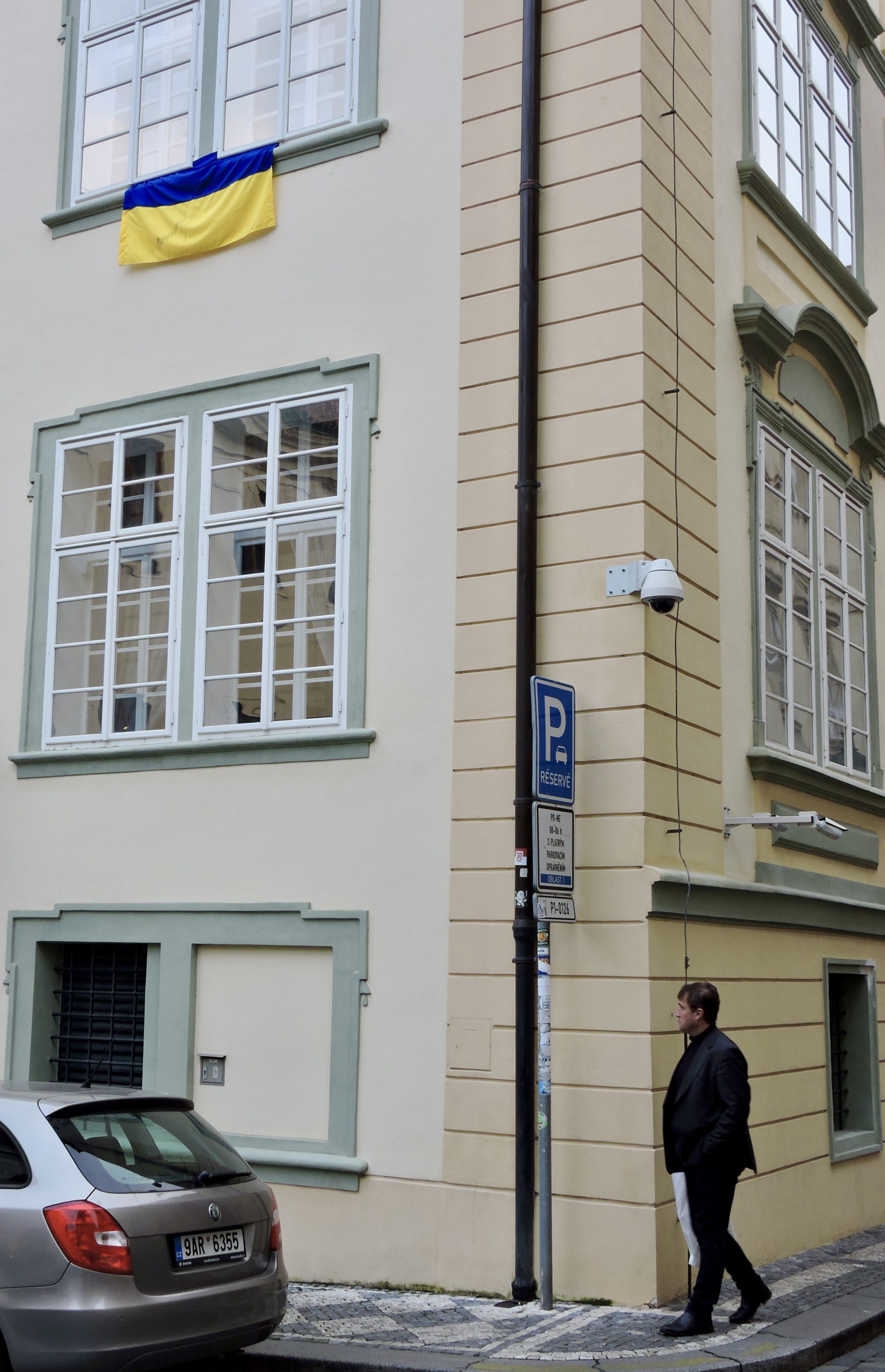
Even though the waving Ukrainian flags in every corner and the various events organised by local NGO’s show that the public still stands together with the Ukrainians, the opinion polls say otherwise. With the declining support for the long-term Ukrainian stay in the Czech Republic, and the newly elected governing parties having anti-Ukrainian sentiments, the future seems even more uncertain then usually.
“I felt the support then, and I still feel it now,” contradicts Nastya. But she admits that during the Parliamentary Czech elections in autumn, the topic of Ukrainian refugees was abused by certain populist politicians, and it was not pleasant to watch. “This government just started its work, so we don’t know how it will go. I’d say that the support of the previous government, the social support that is still felt, and EU laws that the Czech Republic needs to follow help to feel safer,” shares Nastya.
The future lies with Ukraine, even from Prague
For many Ukrainian students, the instability of today’s geopolitical situation and the future of their country leaves their plans open-ended. “It’s always uncertain for us Ukrainians. So, people learn to live with it. At least for me, you learn to value the moment because you can easily lose it. This uncertainty makes it hard to plan for longer periods of time. Now I know that for the next three years I’ll be in Prague, and for the rest, we will see. But I want to continue working as a journalist, or as a policymaker, definitely something connected to helping Ukraine,” shares Nastya.
“Some of my friends are planning to go back to Ukraine, but others love the life they built in Prague, so they just want to somehow combine the two countries. That is me as well,” smiles Diana. And even though at the moment she doesn’t see herself returning to Ukraine, she still dreams about working for her home country: “I can tellyou that my future job will be connected with activism and my country, promoting the Ukrainian cultural values and so on.”
Despite the uncertainty of today’s times, Ukrainian students still stay positive and dream big for their own and their country’s future. “Like half of my friends, I would say they are just dreaming of going back. It’s a question of time and opportunities. They have really big ambitions. They want to help and rebuild the country,” shares Diana.
She also smilingly adds, “I remember my friend told me that he wanted to be the future president of Ukraine. And we were also thinking, okay, maybe our organisation is not just an organisation, maybe we’ll be some new political party in the future. Now it’s just a joke, but we never know.”