Following a deadly attack on a Manchester synagogue on October 2 of last year, that killed two worshipers, and a rise in reported hate crimes, Jews and Muslims are trying to do what feels increasingly difficult: get to know each other and find common ground amid fear.
‘We’ve always been aware that there could always be trouble at any point. But this really made it so much more real’, – said Joyce Kilner about Synagogue attack. That day Joyce and her family were getting ready to leave for Heaton Park Hebrew Congregation to celebrate holiest Jewish holiday Yom Kipur, the same synagogue where the terrorist attack happened, when a Muslim man rammed the gates and attacked worshipers with a knife, killing two of them.
‘They weren’t like the ordinary Muslims that I would have come across in my working day. These were terrorists’, – she added.
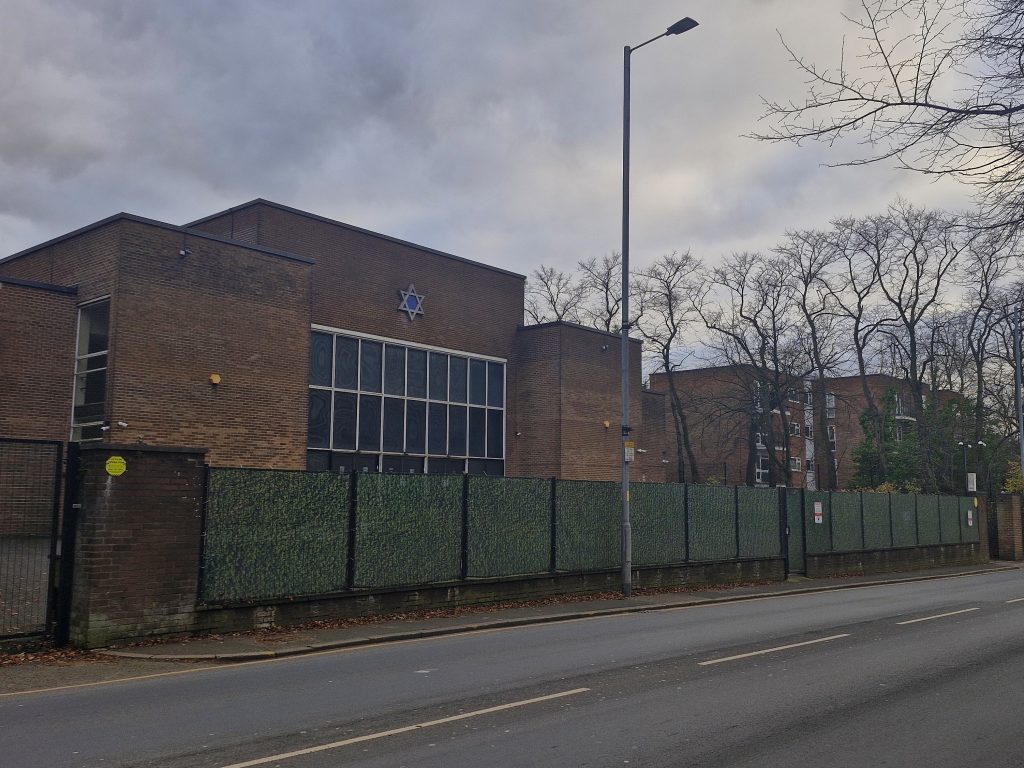
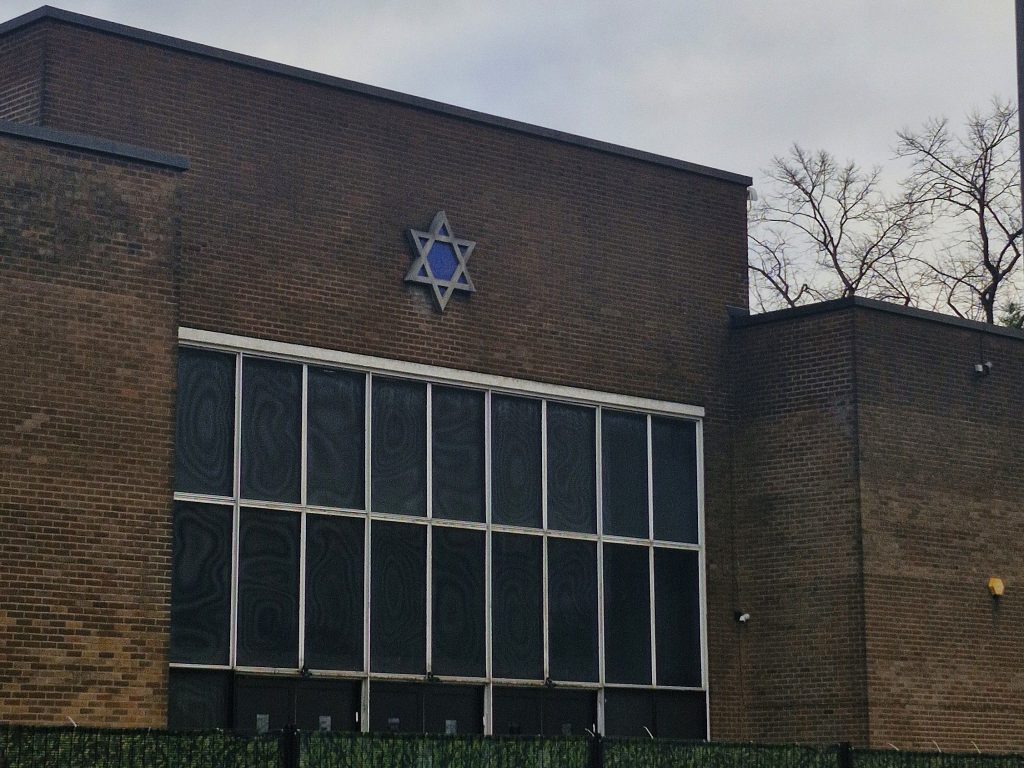
Heaton Park Hebrew Congregation
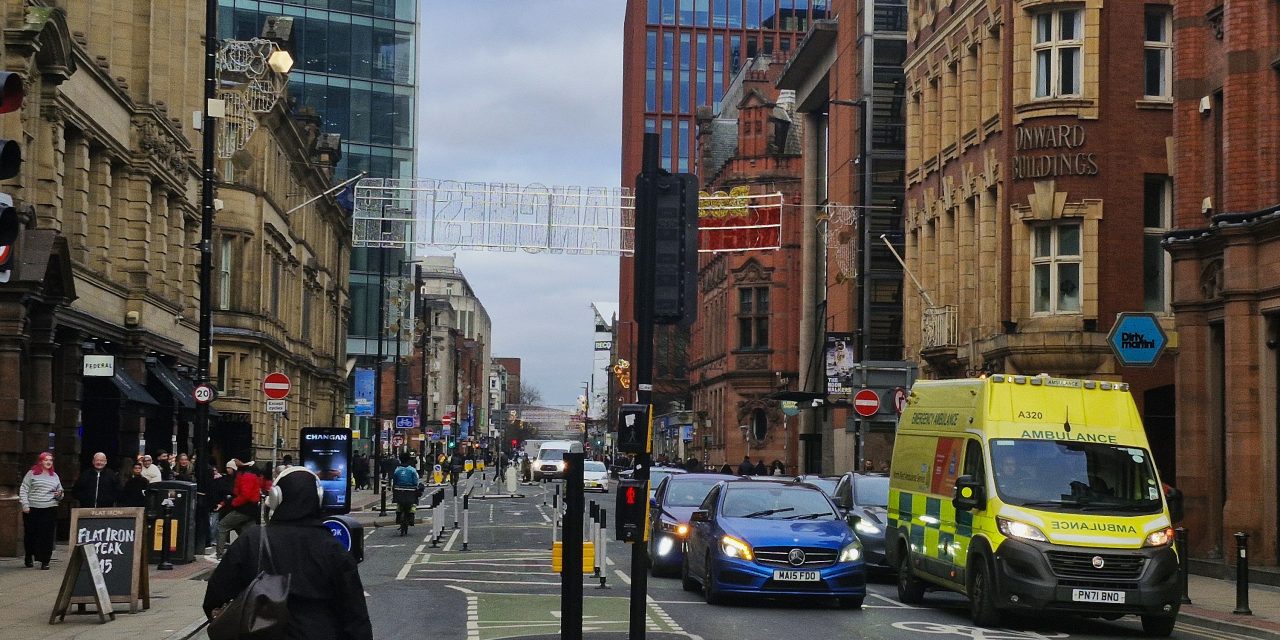
For 30 years Joyce worked for ‘a very religious Jewish man who was an optician’. The office was in Cheetham hill, a very prominent Greater Manchester multicultural neighborhood, known for its variety of cultural restaurants, mosques and synagogues and where Jews and Muslims live close to each other. While she worked there, she came across that Jews and Muslims are quote similar to each other.
‘Like our names are very similar. Also, a lot of the rules that we have, like the Jewish people, we bury our dead the next day, within 24 hours with a person dying. Muslims do exactly the same thing’, – she said.
‘There was a sort of understanding between the two people, the two different religions. We would often have conversations about things like the Jewish people would do and they would say, well, we do that as well’, – she added.
Bringing two communities together
‘The Muslim Jewish Forum of Greater Manchester’ last year celebrated 20 years of establishment. Their purpose Mohammed Amin, an organisations co-chair, said ‘is to bring Muslims and Jews closer together’. Through social gatherings like picnics, iftars (Muslim fast-breaking evening meal), Hanukkah parties, trips abroad, lawyers events, Muslims and Jews get to know each others culture and laws.
‘A lot of people have said to me, Muslim Jewish forum, it’s all about social events and enjoying yourselves and eating, yes, on purpose, because that’s how people get to know each other. And that to me breaks down barriers. If you’re sharing picnic food with somebody, more likely to chat to them and get to know them’, – said Forums co-chair Heather Flether.
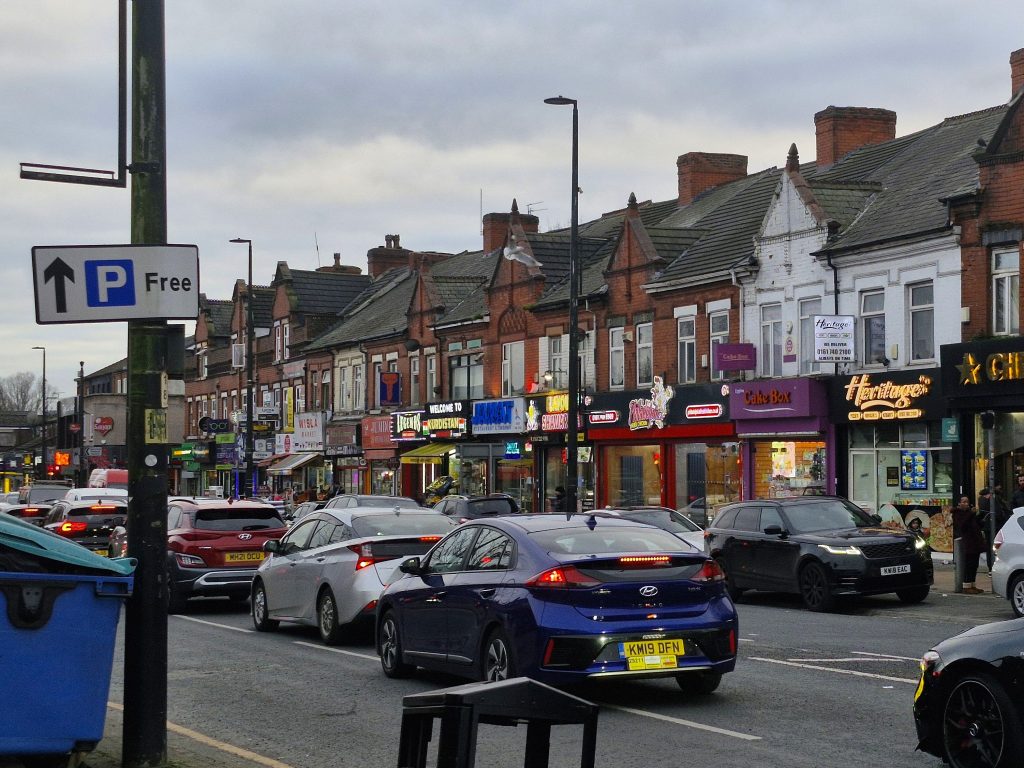
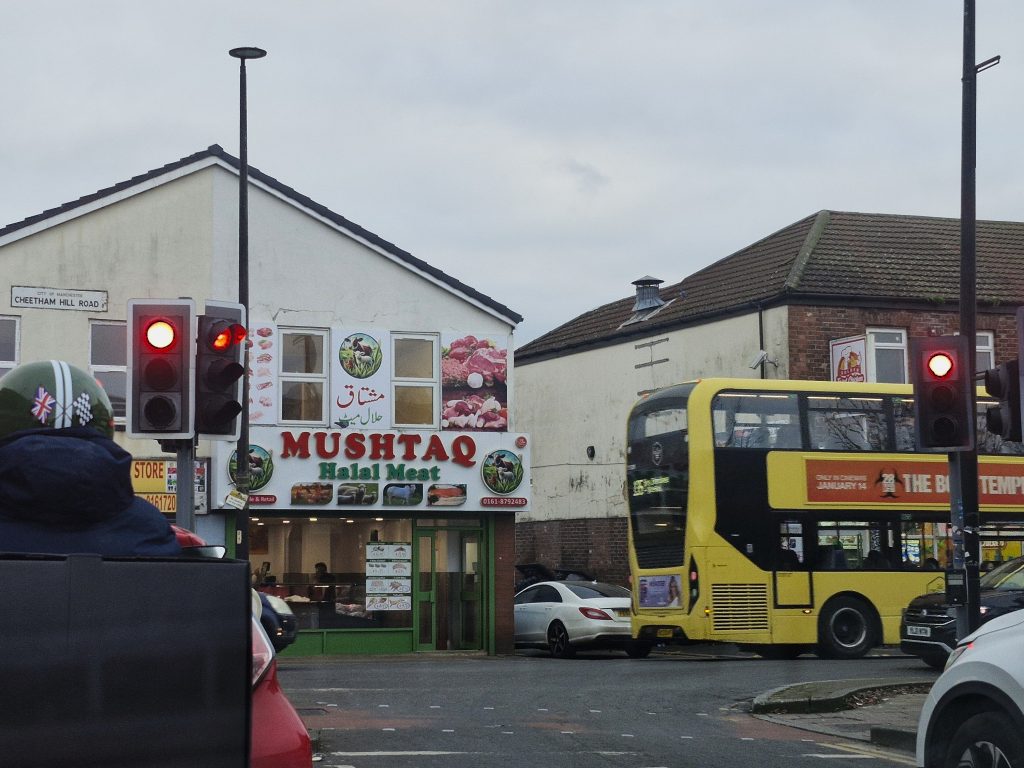
More Muslim side of Cheethan hill
The Forum in their Constitution deliberately does not mention Israel and Palestine. Asked about the reasons for it M. Amin said, Muslims and Jews in UK ‘have enormous numbers of things in common and agree on almost everything except Israel and Palestine, where they are deeply divided and fundamentally disagree’.
‘We never talk about anything else and it would be immensely divisive’, – he added
Asked what it was like between Jews and Muslims in Greater Manchester before creation of ‘The Muslim Jewism Forum of Greater Manchester’ H. Fletcher said, there was no hatred, however Muslims and Jews ‘didn’t bother with each other’.
‘I mean, I used to stand in a queue. It was then the Abbey National, now Santander on Cheetham Hill. And there was always Muslims and Jews in the queue. Muslims talk to Muslims and Jews talk to Jews’, – she added.
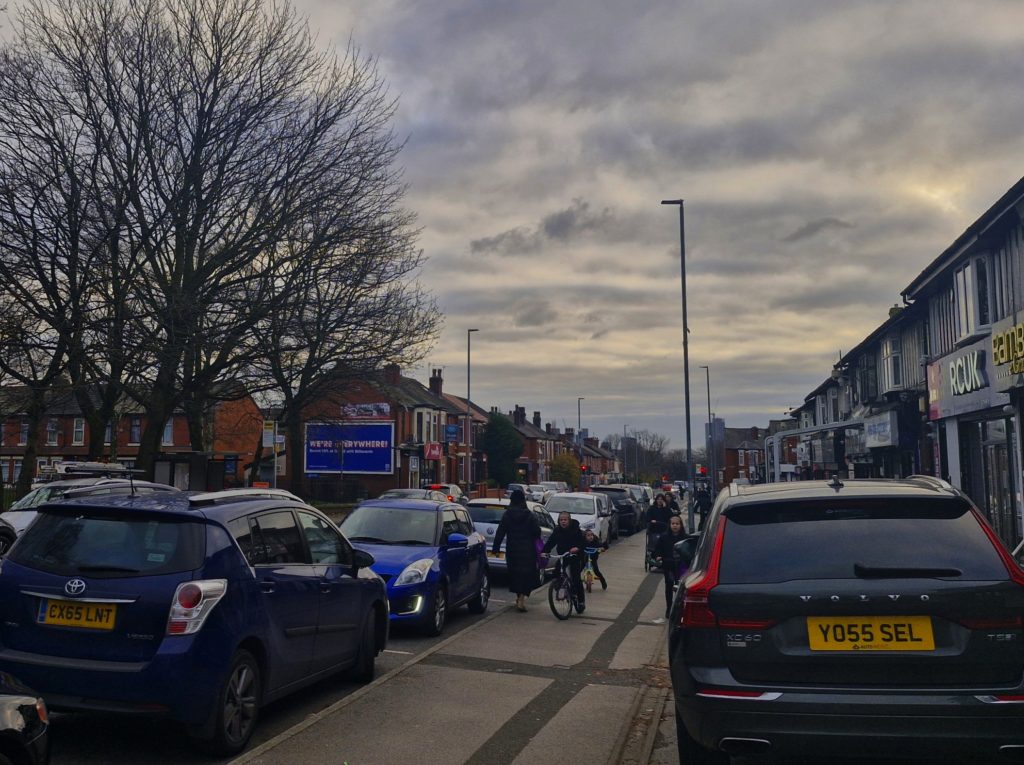
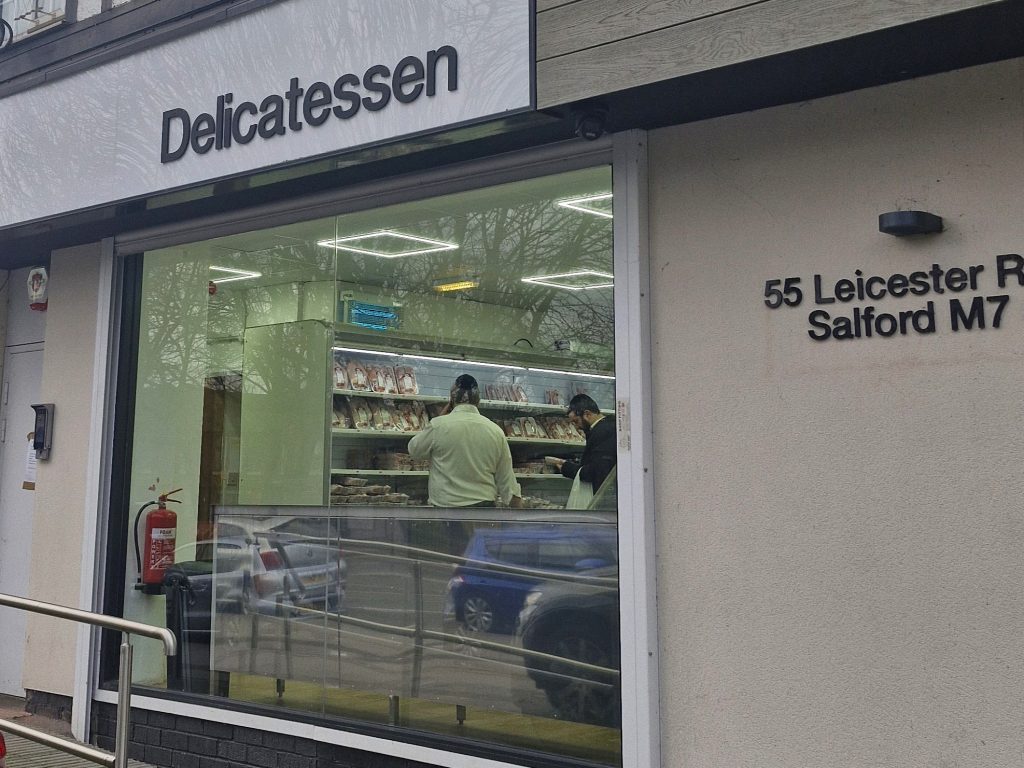
The Jewish side of Cheetham hill
‘People lived parallel lives. Obviously, there will have been some cases where Muslims and Jews were friends in the same way I had friends at school. But by and large, it was just separateness. There was no kind of organizational connection. And that, think, is quite important, particularly because it sends a message out to other people. People become aware of it when there is a tragedy, for example, the attack on the synagogue on October the 2nd in Manchester’, – M. Amin said.
‘Spread honey not hate’
‘I’m a Muslim, I love my faith, but I’m not a terrorist. Islam means peace’, – said Qaisra Shahraz the Founder, Curator and Executive Director of MACFEST, Muslim Arts and Culture Festival.
Qaisra Shahraz created the festival after 2017 attack on Manchester Arena that killed 23 people, to tackle Islamophobia and bring Muslim and non-Muslim communities together through arts and culture.
MACFEST uses a slogan ‘Spread honey not hate’. According to Q. Shahraz, the slogan means to use sweetness and respect rather than sow division and hatred.
‘Get rid of this division. So do it through the arts. Most people love the arts. Listen to poetry, watch a film, musical together, look at an art exhibition together, sit and eat together’, – she said.
The festival represents at least 15 communities and three, four faiths. Moreover, the festival is supported by the Jewish community.
‘We have three members who are Jewish by the way. Because of my background in interfaith work, my personal friendship, and you know what? They love MACFEST. They are great supporters and fantastic ambassadors of the festival. I’m using the festival also to promote this interharmonious links. Two of our sponsors are Jewish [organisations]’, – said Q. Shahraz
According to Qaisra Shahraz, since October 7th it has been sometimes ‘tough’ for the festival to remain neutral and be non-political.
‘For my own team, I had to say, do not post anything on our WhatsApp group. Remember this, our festival is about promoting harmony between communities, this is a tough time. We have our own personal views on what’s going on. We feel strongly about it, but we cannot let that divide us’, – said Q. Shahraz.
‘I think this war has led to more divisions in society, anti-Semitic and more hatred towards the Jews’, – she added.
However, according to Q. Shahraz, islamophobia is also on a rise since 9/11 and now Nigel Farage ‘has been doing a lot’.
‘Hatred of any sort is a disease. It destroys, it’s destructive’, – she said.
She added that both communities need to ‘stick together rather than demonize each other’.
Debate has become angry
According to Jon Garland professor at University of Surrey, society in UK has become more polarised after Brexit, which ‘almost seemed to catalyse a lot of the polarization that’s gone on’ and because of that hate crimes occur more.
‘It seems as though we have become more polarised on all sorts of issues, including the Muslim one, Jewish issues. Debate is more angry, more fractured, nastier’, – he said.
J. Garland added that Gaza, terrorist incidents, Tommy Robinson (far-right activist and anti-Islam campaigner) also add to spike in hate crimes against Muslims and Jews in UK.
‘I’ve been researching hate crime for a long while, least 25 years. This is the worst time. I feel as though the voices of those who are concerned and worried about hate crime are getting lost’, – he said.
According to J. Garland, for something to change ‘everything needs to improve’ – from political to community level.