Amsterdam feels like an unrestrained city, a place where rules blur and tourism flows endlessly. According to the CBS, that image attracted 14,4 million tourists last year, but it also created pressure. On neighbourhoods. On housing. On public space. Slowly, the city began to question whether growth alone should define its success.
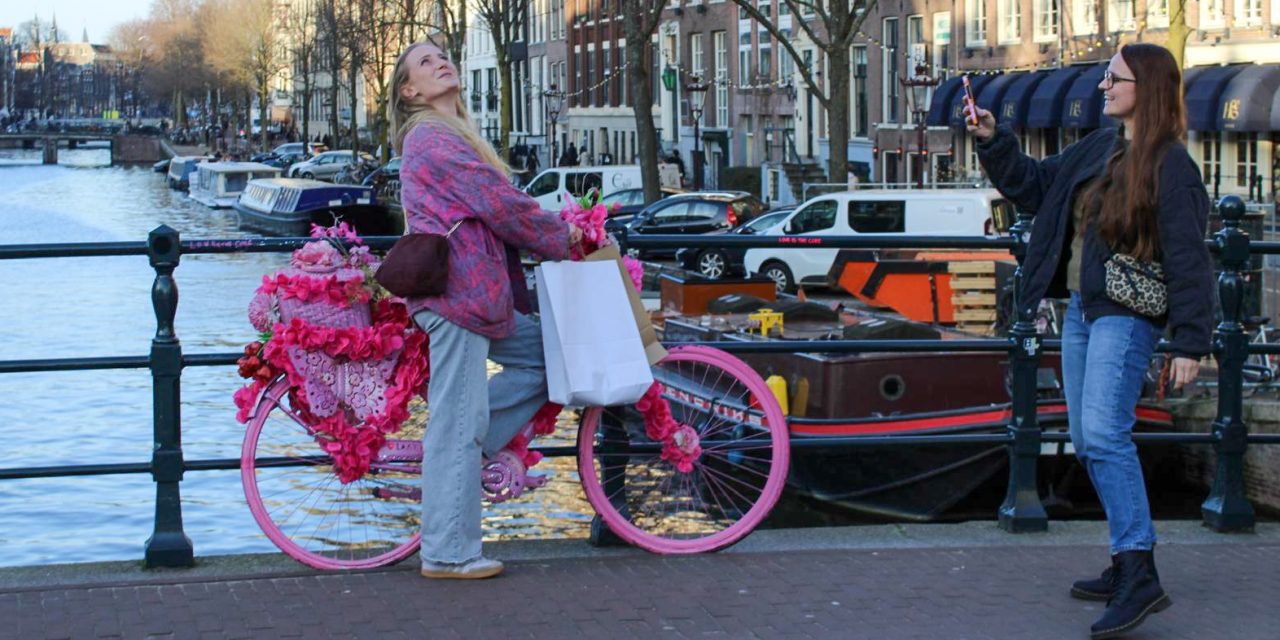
From a distance, it can look like a brochure: Tourists wander through the Red-Light District, pause outside coffeeshops, and stroll along the boutiques of The Nine Streets. However, as you come closer, the details begin to appear. A local bakery opening early in the morning. A bike covered in the most beautiful flowers standing on the bridge of a canal. Art hidden behind a familiar façade. This is all seen as culture, authentic. But what happens to the authenticity when it becomes part of a marketing plan?
Renew Your View
In 2024, Amsterdam&partners, in collaboration with the Municipality of Amsterdam, launched a new campaign as part of the Visitor Economy 2035 strategy. The message is simple but ambitious: renew your view. This campaign does not aim to attract more visitors. Instead, it hopes to attract different ones. “We’re not trying to bring new visitors to the city,” says project leader Fleur Wienhoven. “We’re mainly looking at the people who are already coming”.
Changing Image
For years, Amsterdam has been internationally associated with freedom. Nevertheless, that meaning, Wienhoven argues, has blurred. “Freedom started to be confused with ‘anything goes.’” The campaign attempts to reframe that narrative. “Freedom is about being who you are, but you still have to respect the city.”
The focus shifts from numbers to value. From mass tourism to meaningful presence, according to the official marketing website of Amsterdam.
Creative Initiatives
The renewed narrative was not created behind closed doors. Amsterdam&partners collaborated with more than 150 residents, entrepreneurs and cultural organisations, building on initiatives that already existed in the city rather than inventing a new identity. The campaign unfolds in two phases. The first highlights local projects, such as Warren Gregory’s flower bikes and the story behind them. The second introduces friction through unexpected visuals and locations that encourage viewers to look again. Together, these perspectives aim to present a broader image of Amsterdam. “Everyone contributes from their own perspective, and together it becomes one picture,” says Wienhoven.
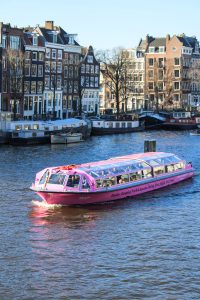
Canal cruise in Amsterdam, photograph made by Tess Ebregt
Authenticity Becomes Marketing
City branding attempts to capture something genuine. Yet authenticity is fragile. It lives in spontaneity and imperfection. Once framed or promoted, something shifts. Wienhoven acknowledges that tension. “Everything was done in consultation with the participants,” she says. At the same time, she recognises the speed of exposure: “We also know how fast social media works.” A flower-covered bicycle can quickly become an attraction. A neighbourhood initiative can turn into a destination. Visibility brings opportunity, but also risk.
Several residents express optimism. Raquel, who lives in Amsterdam West, says she does not feel the campaign threatens the city’s character. According to her, authenticity lies in the people and their daily lives, not in whether a story about them is shared.
The campaign does not claim to protect authenticity from change. Instead, it tries to redirect attention away from the most commercialised spaces and toward a broader image of the city. Whether authenticity can survive visibility remains an open question.
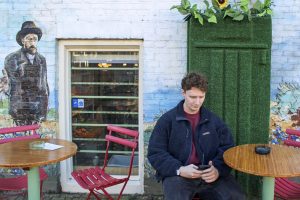
Art around Amsterdam, photograph made by Tess Ebregt
Amsterdam in the Near Future
It is difficult to predict how Amsterdam will look in five years. This depends on more than authenticity. It depends on policy, on residents feeling heard, and on whether this narrative becomes more than a campaign. “Behavioral change is very difficult to measure. That takes years,” Wienhoven admits. For now, it remains a sketch or a possibility rather than a conclusion, a city attempting to reshape its reflection while millions are still looking at it.