When walking over almost any Dutch market, a food stand can be found that for people outside of the Netherlands might feel familiar but that they have probably never heard of before. The food, called “Vietnamese” loempia, invites to think about what that product even is and how it made its way into the Dutch mainstream.
On supermarket shelves, the market or in restaurants, next to bitterballen and croquette – “Vietnamese” loempias seem to perfectly fit into the Dutch snack culture and the love for fried foods. But behind the label lies a complicated story of loss and adaptation of multiple cultures. An originally Chinese dish, that in local dialect is called “lūn-piá” (in traditional Chinese: 潤餅) marks the beginning of the migration route and its transformation into the loempia as they are known in the Netherlands now.
From the South of China to the Dutch market stall
In an article of the South China Morning Post written by Janice Leung Hayes, an independent food journalist, she explains the historical background of the loempia from its roots all the way back to the Jin dynasty in China to its role on the Dutch market today. Chinese Indonesian trade, and with it the travel of the loempia, has been happening since the 15th century and has continued during the Dutch colonization of Indonesia. Over time it became the product that was then brought to the Netherlands by the Indonesian and Indonesian Chinese diaspora, after Indonesian independence. After entering the Netherlands, the story became more nuanced over time, when in the 1970s Vietnamese boat people came to the Netherlands and started selling their own version of the loempia. Many of them started selling Vietnamese loempia to survive when finding work was difficult and using the already popular concept of loempia seemed profitable, as Thuan Nguyen states in an article by the Algemeen Dagblad.
Not just a street food snack
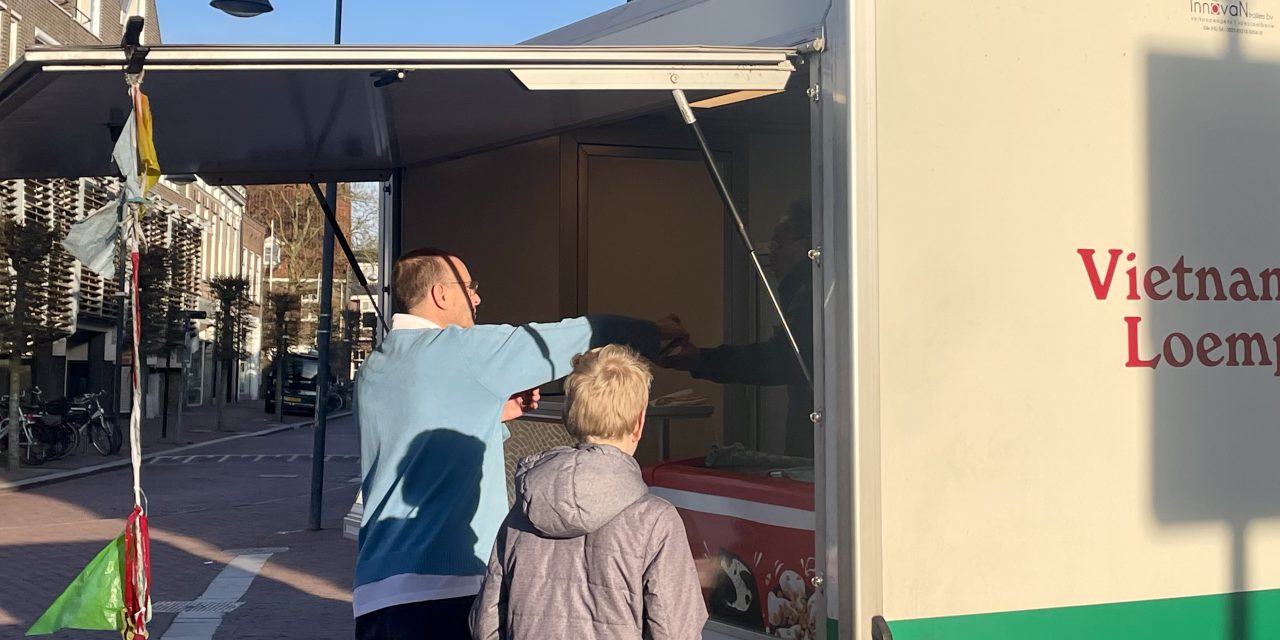
Food changes and adapts over time with the local tastes and ingredients and so did the loempia. In an interview with a Vietnamese loempia Vendor, Mr. Le Phong, he shared that he has been working at the stand for 40 years and when asking why he doesn’t sell “original” Vietnamese spring rolls (in Vietnamese: Chả giò or nem rán) he said “it’s not like people don’t like it if they try, but this is just its own, it’s a street food”. In an article of Vietnamese newspapers Thanh Niên, they focused on the Dutch loempia phenomena and the role of representation through food by staying close to the ingredients of the Vietnamese equivalent. When Thanh Niên talked to Ms. Mai who is also running a Vietnamese loempia stand, she highlights the importance of calling the loempia “Vietnamese” for that matter. The wrapper, which is similar to the Chinese Indonesian loempia, is the most obvious difference compared to typical Vietnamese spring rolls. However, Mr. Le Phong also mentioned that “there are typical ingredients missing in the filling, for example bean sprouts or pork meat”.
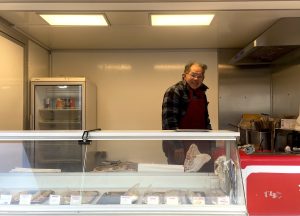
Mr. Phong at his Vietnamse loempia stand in Wageningen (picture taken by Mai Ly Spranger)
What’s left of the “Vietnamese” loempia’s long history
But how do Dutch people perceive and consume “Vietnamese” loempias nowadays? According to Rui Jun Luong from the Asian Raisins Foundation, a Dutch organization that aims to combat East and Southeast Asian racism and to spread awareness, “in general a lot of people don’t think about these topics [cultural hybrid foods] at all. It’s just something that exists like this in The Netherlands, it’s accepted.” She also shares that in her opinion the loempia’s acceptance lie in the fact that “It is available for them to consume. It’s mainstream, it isn’t very expensive, but it tastes good. It’s convenient.”.
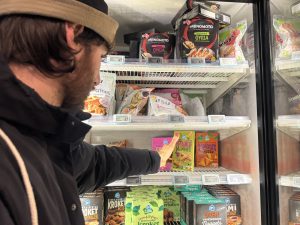
Albert Heijn’s frozen Vietnamese loempia product from their product line “Wereldse Hapjes” (in English: Worldly Snacks) (picture taken by Mai Ly Spranger)
It goes to show that the “Vietnamese” loempia have become a popular part of Dutch food and snack culture. However, in becoming that, it can be questioned how the history and meaning of similar stories from diasporic people and their foods are being processed and acknowledged in the Netherlands.