Centuries ago, Low German was spoken by everyone throughout Northern Germany. Nowadays, High German is seen as the standard language, and Low German is no longer naturally passed on in many families. Reaching new generations of speakers is difficult. But despite the struggle, the language is far from its death, you just have to know where to look.
What the numbers say
Data from 2016 compared with data from 1994. In 1994 only four choices were given. The categories of reasonably well and only a few words used in 2016 are the equivalent of a bit, the single category used in 1984.
In 2016 the Institut für Niederdeutsche Sprache (INS) did a study about the current status and use of Low German. It is difficult to determine how much people understand and speak a language. The categories in the figure above are subjective impressions as respondents have to classify their skills themselves. However, there is a clear decrease visible in both Low German speaking and understanding. The percentage of people that understand Low German very well has almost halved. The percentage of people that speak it very well shrunk more than three times. In both years, significantly more people can understand Low German than speak it.
The INS is working on a new study for current data. Nele Otten, who runs the Low German library from the INS, hopes that it will show that Low German is slightly on the rise now. Partly because she hopes that then politicians will prioritize protecting it. Germany signed the “European Charta for Regional or Minority Languages”, therefore they recognize Low German as a regional language and promised to protect and promote it. Still, in 2025 Low German was not mentioned in the coalition agreement at all, reported the Niederdeutschsekretariat.
Looking at the past
To understand the struggles Low German faces now, we need to dive into the history first. Middle Low German, the precursor of Low German as we know it now, was the language of The Hanseatic League. The shift to High German being the standard took centuries, explains Thorsten Börnsen, the managing director of the Länderzentrum für Niederdeutsch. ‘Language is always political’, he says. ‘It is all about who has the power.’ As the importance of the Hanse started to decline, the trading power started to shift from the North to the South. Börnsen: ‘Rich merchant families sent their sons to Southern Germany in order to learn High German, because it became more important as a business language.’ As they returned, they started spreading High German. First throughout the upper class, then to the middle class, and so on. Eventually, the invention of radio and television played a big role. ‘Suddenly everybody, even in the smallest village, had the opportunity to listen to High German every day’, Börnsen explains.
The terms Low German (Plattdeutsch) and High German (Hochdeutsch) come from the area’s where it is spoken. High German originated in the south, where there are mountains. Low German comes from the upper, flat part of the country. Even though both the languages are called German, they differ strongly.
Listen here to Nele explaining more about the linguistic differences.
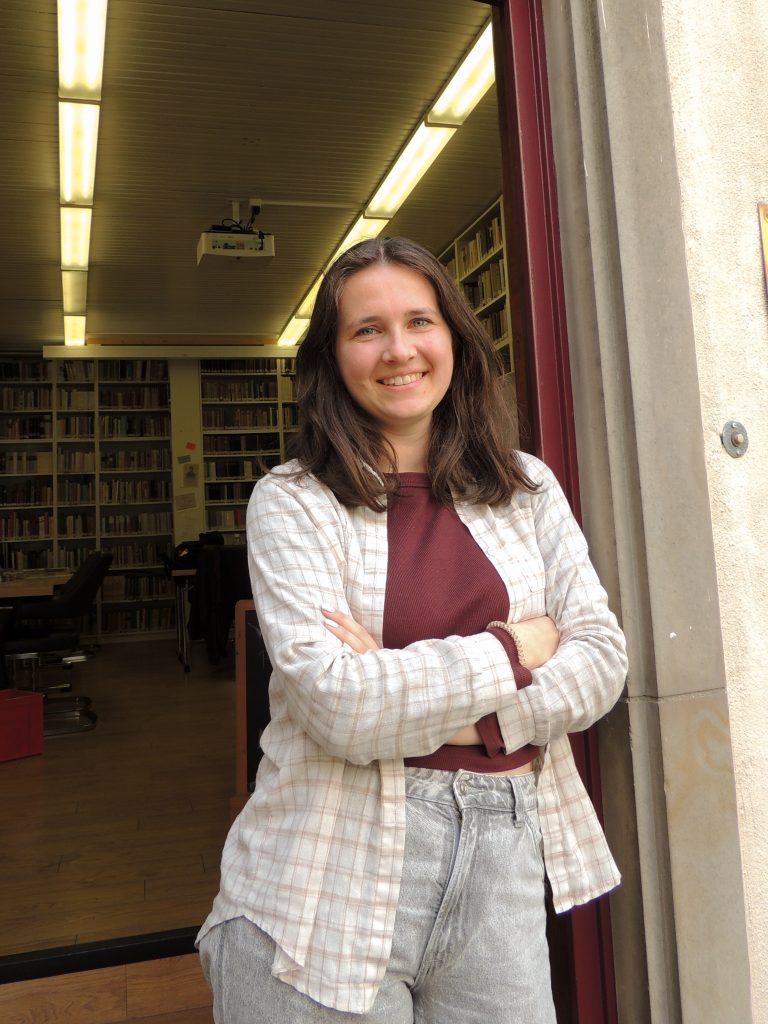

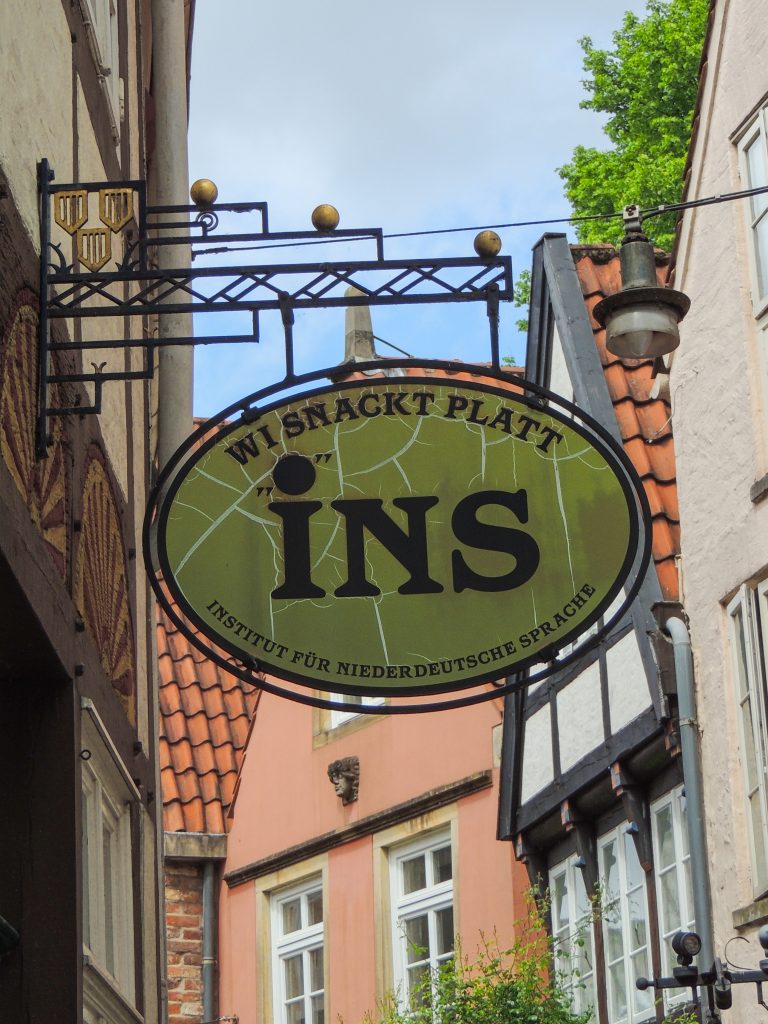
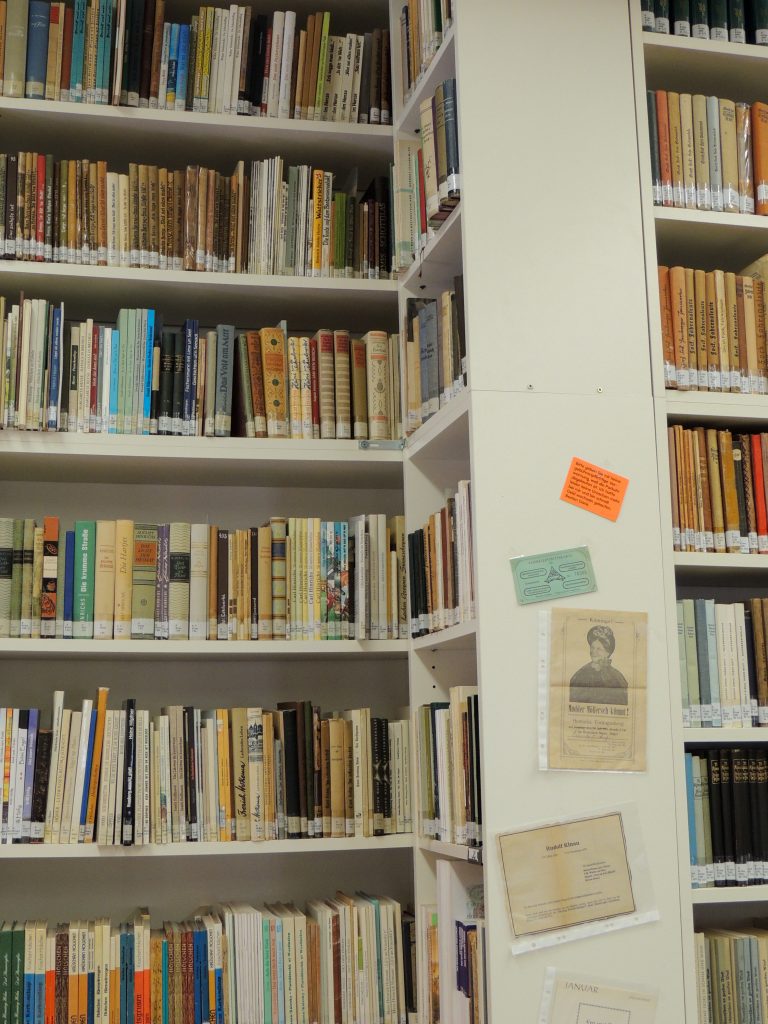
Photo’s: Daphne Kooy
Slowly but surely, High German became the standard, even up to the point where it was discouraged to talk anything other than it. ‘In the 50s, 60s, and even in the 70s, it was forbidden to talk Low German in schools’, Börnsen says. ‘They thought it would be an obstacle for learning High German. There are tons of prejudices about Low German, like that it is spoken only by farmers or people in the countryside, and that they are far from being educated. That is not encouraging you to speak your mother language.’
As a result, people stopped passing it on to their children and grandchildren. Ulrike Stern is a research associate at the Competence Centre for the Teaching of Low German. Stern calls those who didn’t learn the language from their parents ‘the generation in between’, or ‘the lost generation’. She sees it as a pity, but doesn’t blame the parents at all. ‘They wanted the best for their children’, she explains. ‘And of course if you learned in your own life that the language you spoke gave you difficulties, you try to teach your children the other language.’
For Stern, it is important to reach ‘the lost generation’. Nowadays children have options to learn Low German in school, but adults don’t have many possibilities to learn the language later in life, Stern explains. That is why in 2024, the Competence Centre released ‘Platt mit Beo’, a language learning app. It is targeted at people with an interest in the language, but little or no prior knowledge. Both Stern and Börnsen emphasize the accessibility of this format, as you can use it whenever and wherever you want. ‘It is a good bridge’, Börnsen nods. ‘Especially for people who are just nosy and curious, they just want to try it out.’
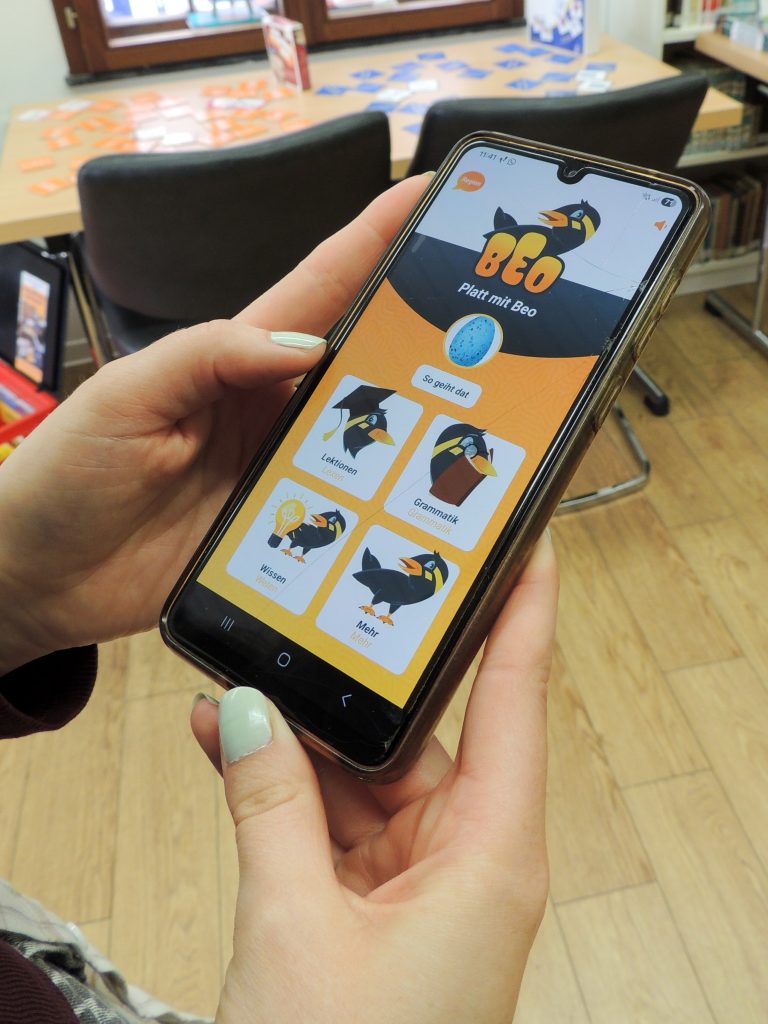
Beo is German for Myna, which is an endangered bird that can talk really well. It was a deliberate choice to use a bird rather than a human, to prevent accidental stereotypes about what “Low German speakers” look like.Together with Beo, you learn words, phrases and grammar, but also context and information about the language. If you get something right, Beo chirps happily. If you give a wrong answer, he scolds. You can choose to learn East or West Low German, and there are plans to add more regions in the future.
Since the release the app has been downloaded over 85.000 times, so the interest in Low German is there. Börnsen notices that the attitude toward the language is changing. ‘People are more self-confident about their language. In the 70’s or 80’s you would have hidden that you were a native speaker. But now people are quite proud of it, and they want to learn it.’ He sees this in Bremen with ‘hipster bars’, that are called “Moin Moin”, or “Voterkant”. ‘The vocabularies become trending’, Börnsen smiles.
But also the older generation now sees that their mother language is appreciated more. Börnsen: ‘You have to imagine that at one point it was not allowed to speak our language in schools, and now it is taught at universities. There is an enormous gap and increase of good reputation.’
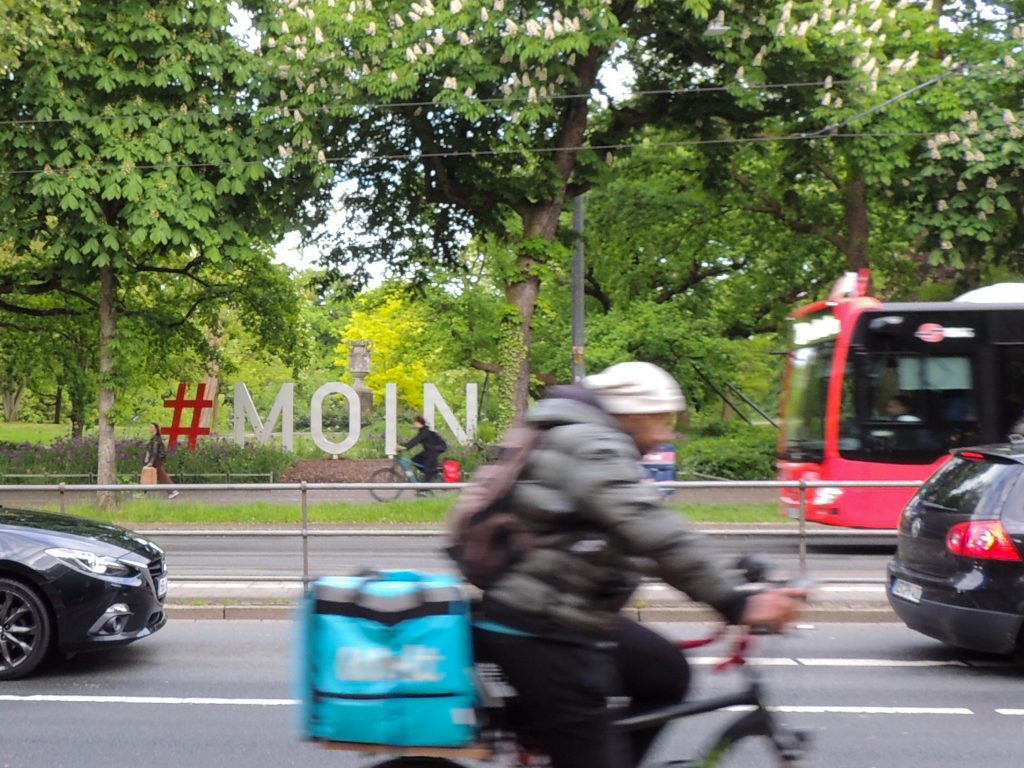
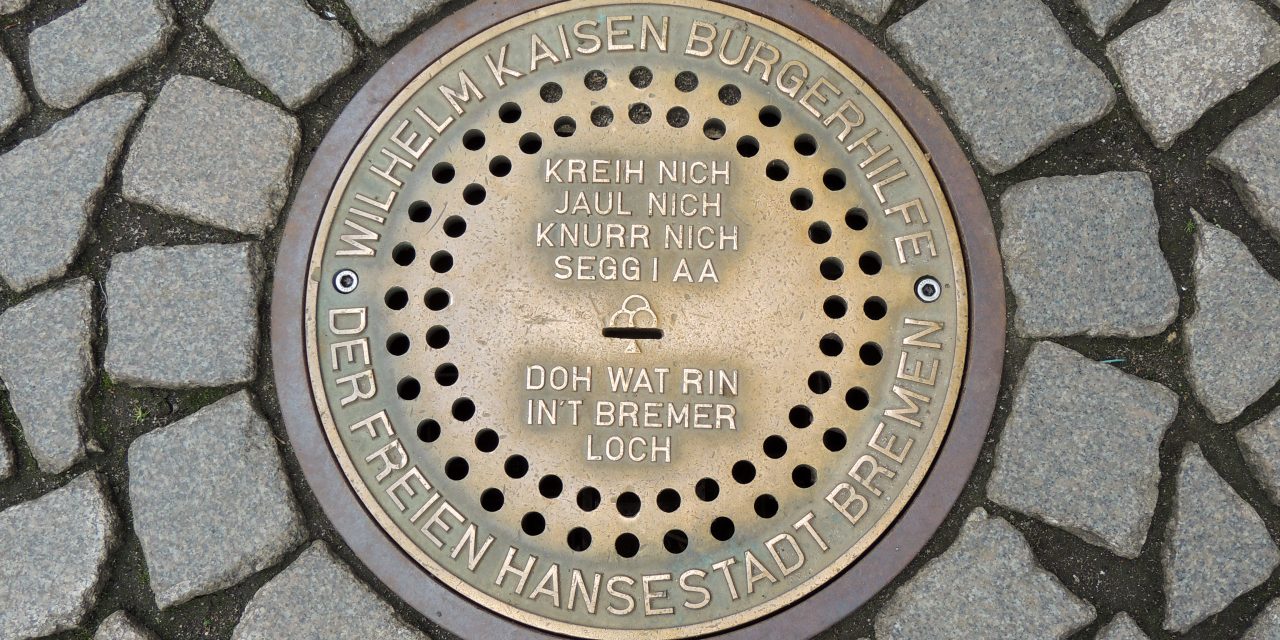
It is impossible to miss this word when you’re in Bremen, “Moin”. It is a Low German greeting that even tourist shops are filled with nowadays.
Listen here to learn more about it.
The shift in interest and attitude helps, but there is more needed to make sure the next generations keep talking Low German. ‘We badly need educational schools’, Börnsen says. ‘The language is not sufficiently transferred from one generation to another within the family. So, we need the support of all kinds of public education.’
Börnsen is not the only one who thinks this is important. In the study from the INS, people were asked which institutions are especially responsible for promoting Low German. Schools and kindergartens were mentioned way more than families and Low German speakers. Stern sees a problem in this. ‘To be honest, that doesn’t work’, she says. ‘When a teacher says you have to learn something, it doesn’t work. In the last years, young people have been very interested in the language, Low German is cool. But as soon as you have it as a school subject, it’s not cool anymore. Especially if the teacher isn’t cool’, she laughs. Despite this, Stern sees that schools and kindergartens are ‘left’, to pass on the language. ‘We lost the chance to have the language there where it belongs: in the family’, she nods.
‘The language isn’t dead, it is a coma patient. But we don’t know if one day it will wake up.’ -Ulrike Stern
At the University of Greifswald, where Stern teaches, it has been possible to study Low German as a master or minor for over 30 years. Since 2021 it is also possible to choose the language as a teaching subject within the primary school teacher program. If and how Low German is taught differs per school and state, and it can therefore be challenging for teachers and schools to figure out the best approach.
If Stern looks at the bigger picture, her main aim is a ‘language journey’. This means getting children familiar with languages around them at a young age, because this is a language sensitive phase. She emphasizes that the goal shouldn’t be that they will only speak Low German and nothing else. ‘When we teach Low German, we teach history, we teach geographics, we teach environmental education. It is more than just a language, it’s also a big part of our culture.’
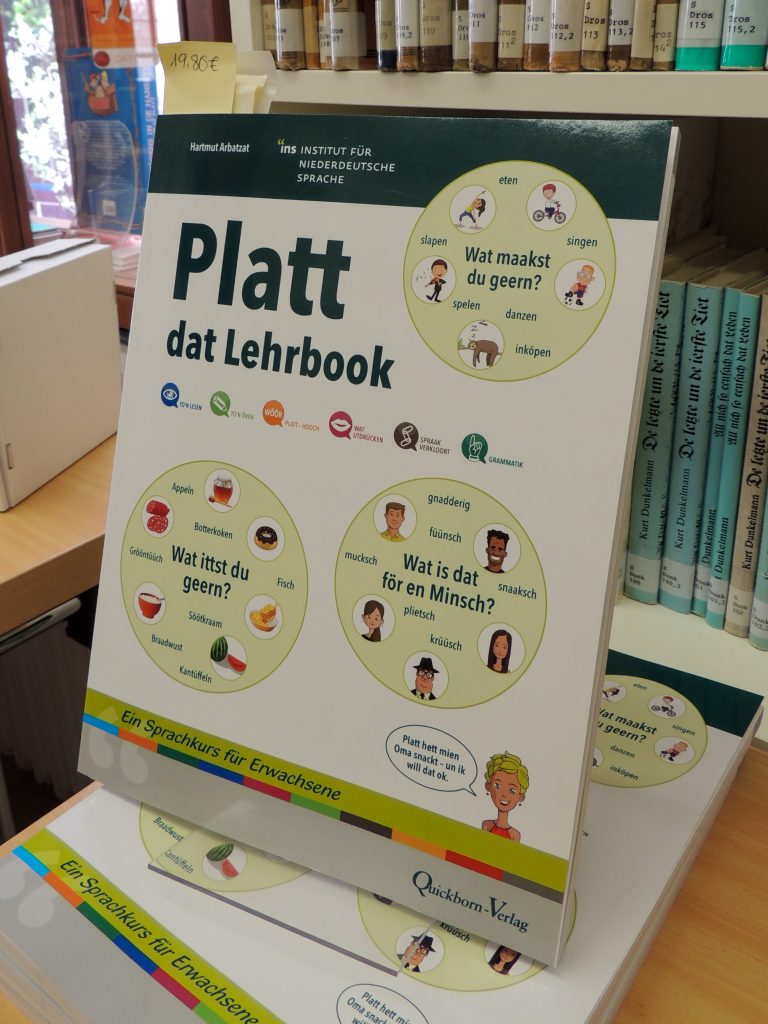
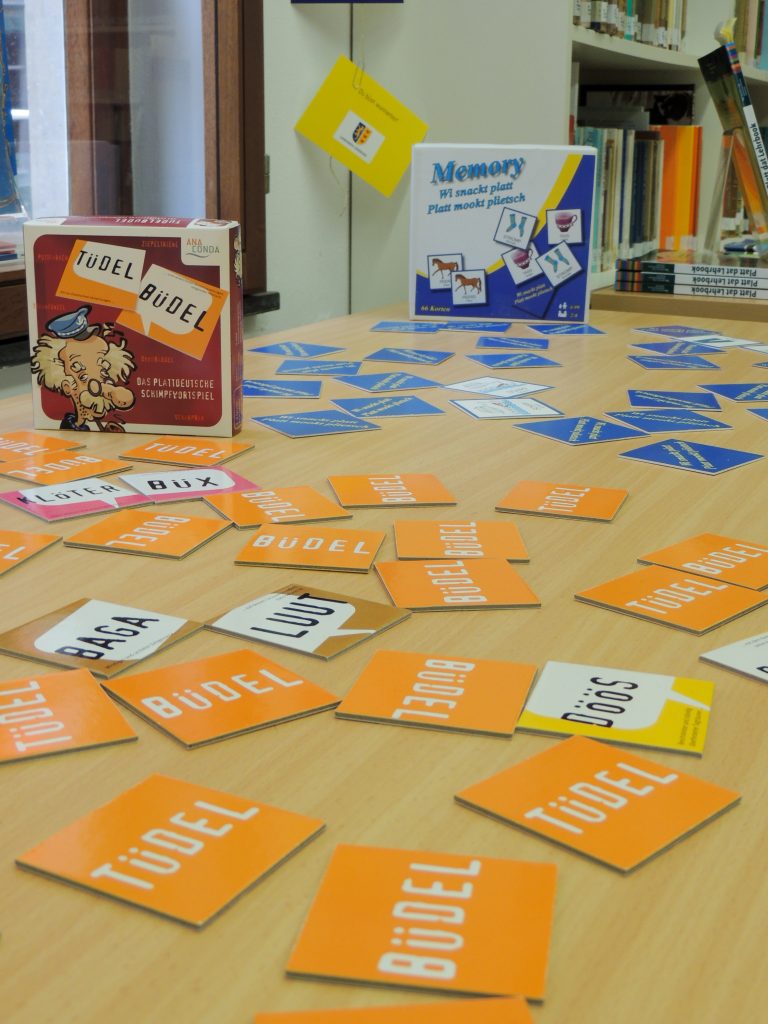
When asked why it is so important to invest in the regional language, Börnsen doesn’t have to think long. ‘It’s cultural heritage, it belongs to our culture and history. We have tons of poems, books and lyrics in Low German, nobody would understand them anymore.’
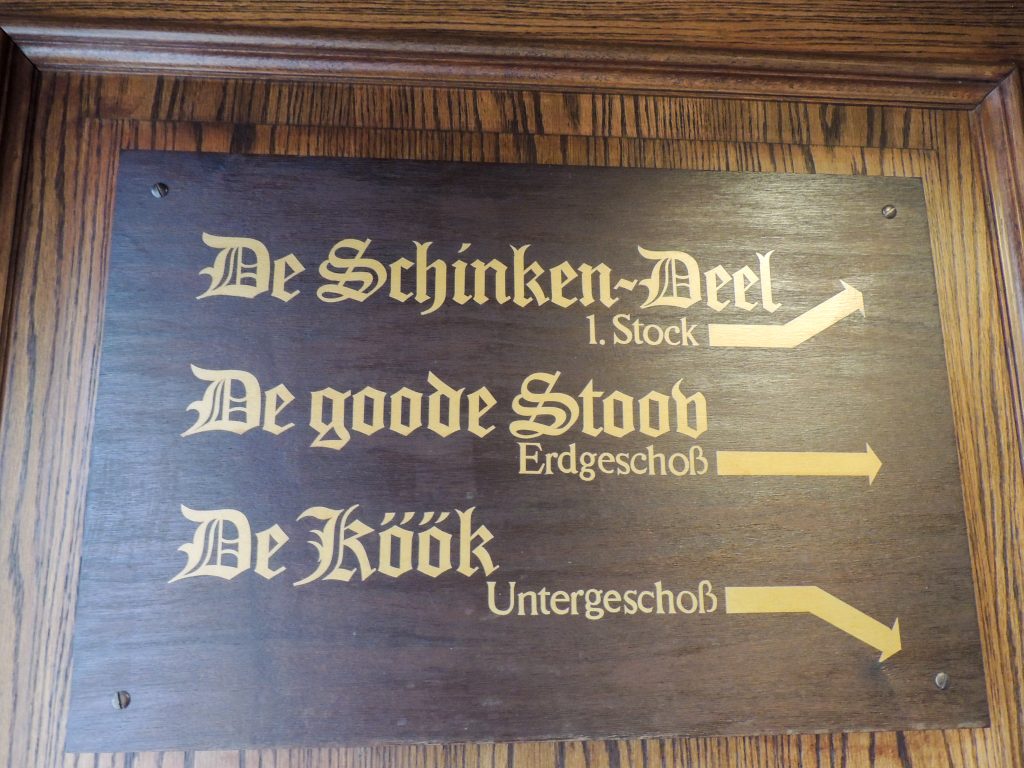
His goal? ‘Protect the language’, he says, ‘and, which is even more important, develop it further.’ He explains that protecting is not enough, because it means you just put a fence around what’s already there. But the language also needs to grow. Börnsen gives as an example that there needs to be vocabulary developed for international crises. ‘In order to survive, we have to be a modern language.’
‘I would be grateful if the prejudices in the heads of the people would slowly go away’, Stern answers when asked about her goals for the upcoming years. ‘But that is not something we can reach within one generation. It’s not a sprint, it’s a marathon.’
Want to read more? Check out this magazine article to find out how 27-year-old Nele Otten from the Low German library in Bremen reaches the young generation.