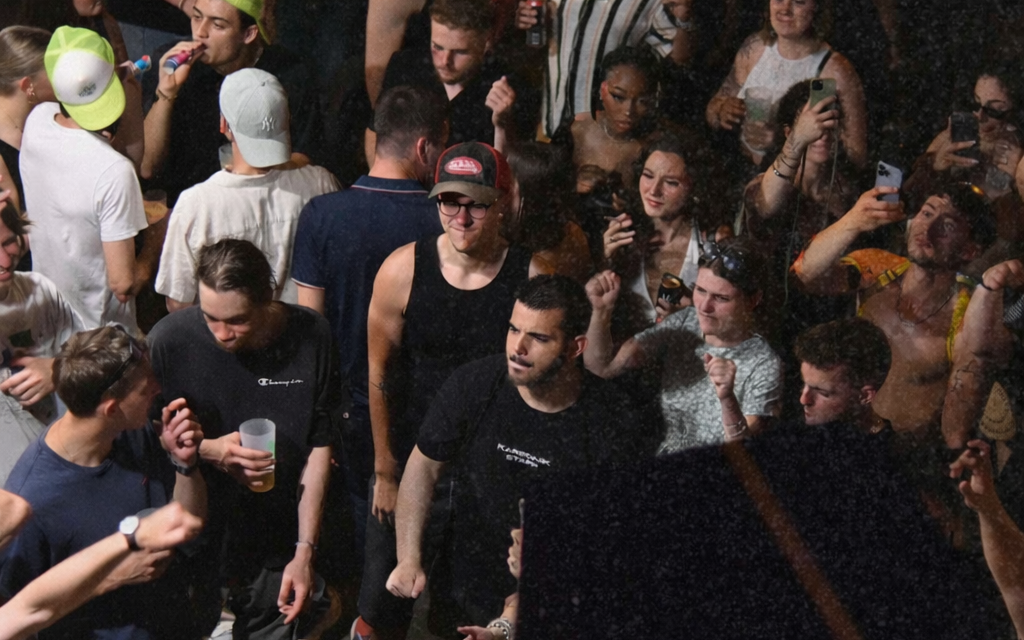
On a cold night in Utrecht, the bass at Thunderdome shakes the entire arena. Thousands of fans dressed in black jump together under flashing lights. A few months later, in Biddinghuizen сер Defqon.1 welcomes tens of thousands of visitors for four days of hardstyle music. Meanwhile, events organised by Gearbox Digital continue to fill large venues with fans of harder electronic sounds.
For decades, the Netherlands has been one of the most influential countries in electronic music. From EDM and techno to hardstyle and hardcore, Dutch artists and festivals have helped shape the European scene. However, countries such as France, Belgium and Germany have recently strengthened their position through growing festival markets and expanding electronic music communities. This raises an important question: do the Netherlands still hold a leading position in European electronic music?
Recent industry data suggest that they do. According to Buma Cultuur’s Export Value of Dutch Popular 耣r Music 2025 report, Dutch music exports reached a record value of €247.6 million in 2025, a 12% increase compared to the previous year. Live performances accounted for nearly €197 million of this amount, while dance music represented 69% of the total export value. These figures highlight the continued international demand for Dutch electronic music and festivals.
For Kashmill, a 20-year-old French hardstyle DJ from Tours with around 600 followers on social media, the Dutch reputation is easy to understand. Although he has only performed once in the Netherlands, he regularly attends Dutch festivals as a visitor.
“Even if I have only played once in the Netherlands, I often go back as a spectator. At Defqon or Gearbox, everything is planned in the smallest details. You can feel that electronic music is part of the cultural DNA’TA of the country,” he says.
His experience reflects a broader trend. Dutch festivals are known for their large-scale productions, professional organisation and international audiences. Events such as Defqon.1, Thunderdome and Amsterdam Dance Event attract visitors from across Europe and beyond, reinforcing the Netherlands’ reputation as a major centre for electronic music.
Tymur Jansen, a 22-year-old volunteer from Utrecht, witnesses this international dimension every summer.
“People come every year from everywhere: Australia, Italy, the US,” he says. “Some of them have been coming for 10 or 15 years in a row. It’s not just a party, it’s more like a tradition.”
According to Jansen, one of the Netherlands’ greatest strengths is the diversity of its electronic music culture.
“For me, the Netherlands is like a federating state for electronic music. Hardstyle, hardcore, techno and EDM all have their place here. It feels connected.”
Nevertheless, competition is increasing. France has experienced significant growth in hard techno, Belgium remains internationally recognised through Tomorrowland, and Germany continues to play a central role in Europe’s techno culture thanks to Berlin. Social media platforms have also accelerated the spread of trends, allowing artists from different countries to gain international visibility much faster than before.
Still, the Dutch advantage may extend beyond current trends. The country benefits from decades of investment in festivals, strong infrastructure, experienced event organisers and an audience that has supported electronic music for generations. Rather than relying on a single genre, the Netherlands hosts a broad ecosystem that connects multiple electronic music communities.
While personal experiences alone cannot determine whether the Netherlands is still Europe’s leading electronic music nation, they support broader industry data showing the country’s continuing influence. The combination of internationally recognised festivals, record music exports and long-term investment in event infrastructure helps explain why the Netherlands continues to occupy a central position within the European electronic music landscape.
The Netherlands may no longer dominate the European electronic scene as uncontestedly as in the past, but the evidence suggests that it remains one of its most important centres. Through its festivals, industry expertise and international influence, the country continues to play a leading role in shaping electronic music culture across Europe.