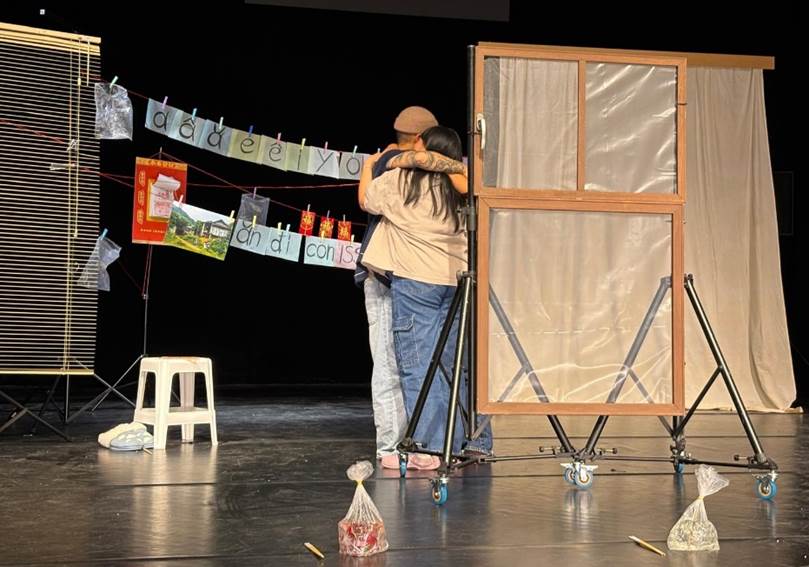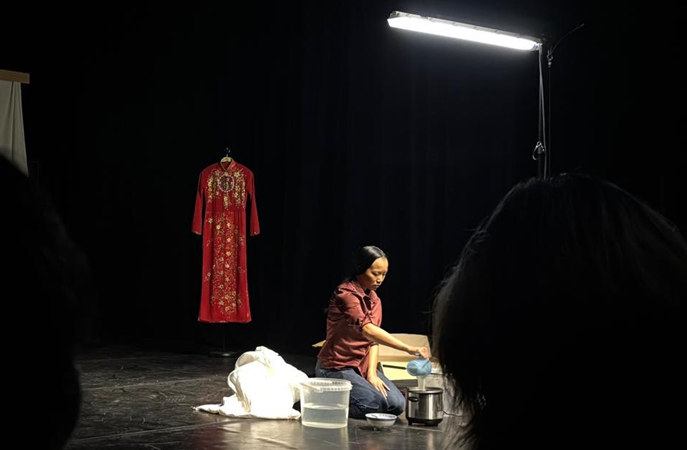
“How long do you have to keep quiet, so that the silence becomes deafening?”, a question that truly filled the width of the room and reflects the emotional tension on stage as well as for many in the audience who are part of the Vietnamese Diaspora. It is the last performance of the theater piece Hörst du mich? | Khi nào ta nghe thấy nhâu? in Berlin. The piece centers intergenerational speechlessness in Viet-German families and invites the diaspora to reflect and reconnect. In Berlin, where the biggest Viet-German community lives, the play sets a strong example of the growing visibility on the stages of Germany.
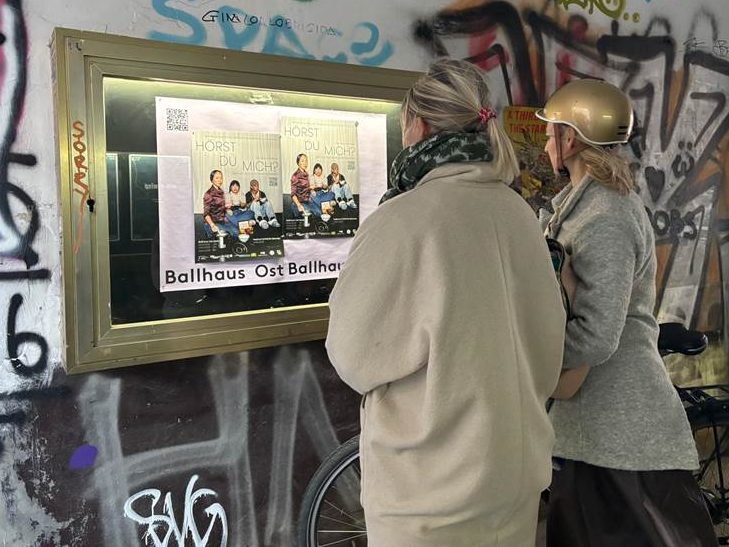
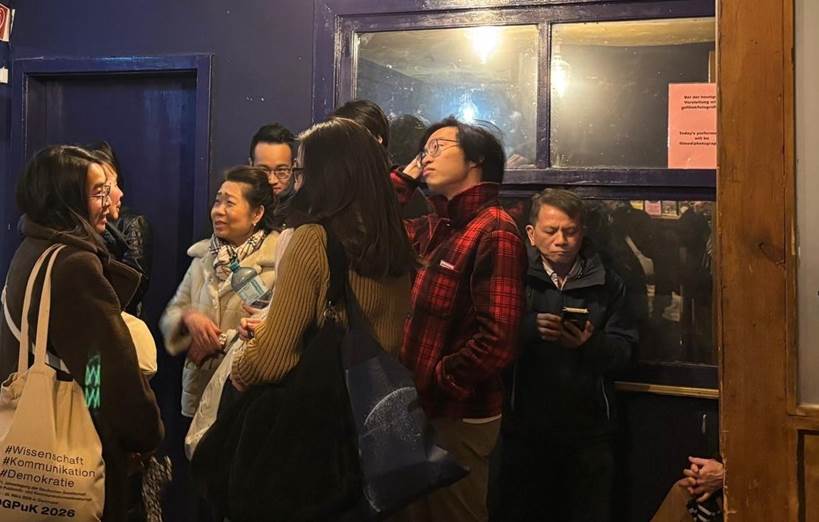
An hour before it starts on this Sunday, the 4th of April 2026, the front room of the Ballhaus Ost Berlin fills up with people who come alone, with friends or with their parents. Title and introduction of the piece suggest an emotional and challenging upcoming 75 minutes. The play, produced by Benjamin Truong and written by Quang Nguyễn-Xuân, offers a special and joined experience directly aimed at an audience that isn’t known for taking over the stage. In recent years however, the cultural scene gained increasing momentum for Viet-German creatives. Even within the play, wider known Viet-German artists are featured, for example singer/songwriter ANOTHER NGUYEN. For a minority that has a long and extensive history in Germany, it seems like the often-labelled model minority, now more and more shares stories from the Viet-German experience, be it in TV, music, literature or theater. The term model minority is mostly used to highlight the societal comparison between minorities measured in economic, academic and cultural success, while often using racist stereotypes and hierarchies.
50 years of a Growing Community
Since the 1970s, Vietnamese people have come to Germany, especially to East Germany. According to Noa K. Ha of the Federal Agency for Civic Education in German: Bundeszentrale für politische Bildung/bpb), the Vietnamese diaspora in Germany developed in several waves. In the 1970s and ‘80s, especially in West-Germany refugees from Vietnam arrived as so called “Boat People”. “Around the same time, another wave arrived in the 1980s as contract workers from Vietnam, sent to the GDR under socialist state agreements. Other forms like educational migration since the 1950s or post-reunification migration since the 1990s also became an essential part of the first- and second-generation diaspora and contributed to the art and cultural scene of the Viet-German community. The scene began to emerge in the 1980s but has especially started visibly growing in the 2000s and ‘10s with mostly photography and visual arts. One of the first diasporic-led theater plays followed in 2009 with the performance “Vùng biên gió’i – Grenzgebiet” in the Staatsschauspielhaus Dresden.
Vietnamese Diaspora on the stages of Germany
Now in recent years visibility has grown for the Viet-German diaspora as it has been addressed in a production by MDR, the central German Broadcasting agency, from 2025 called “Endlich sichtbar – Von Vietnam nach Deutschland” (in English: Finally Visible – From Vietnam to Germany). In an interview with Quang Nguyễn-Xuân the importance of the plays topic for the community became clearer. Quang highlights that the topic itself is a “good start to process the Viet-German topics since it [the topic of intergenerational speechlessness] is a rather common experience.”. In addition to centering the personal experience Quang also mentions the role of building bridges or points of connections to have the piece be “not only in a self-referential bubble but acknowledge that we live in a society.”
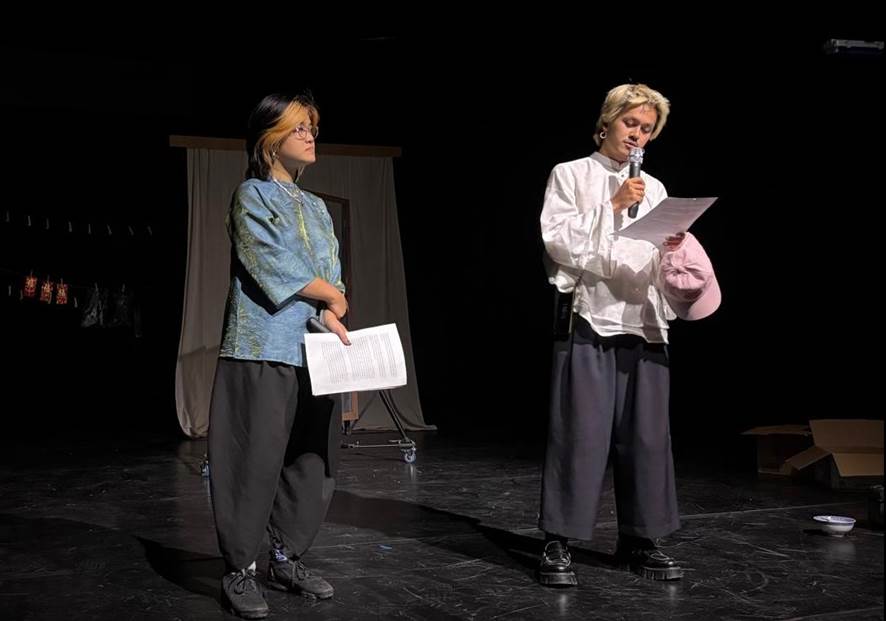
Inspiration on how to establish a Viet-German theater scene Quang takes from the Turkish community as Quang and Benjamin Truong are sharing a long-term collaboration “to make consistent Viet-German theater like the Turkish-migrant community did in the Ballhaus Naunynstraße or later on in the Gorki theater to create a lively discussion space in theater, a post-migrant theater space”. The Turkish-community came to stay which is something Quang thinks the Viet- German community is not far away from. That this is happening in Berlin is for Quang especially important, as Quang said it is “simply where I live and exactly where I also have my community.” There are several reasons why this visibility is growing now, according to Quang. Compared to the Turkish and other migrant worker communities, the Viet-German community has a less homogenous migration background, a lower number in people and very different experiences in racism for example. However, the lack of initial artistic representation and identity questions have led to the current increased momentum in cultural output from the second-generation Viet-German community.
With this new wave, half a century of lacking intergenerational communication becomes visible. Not only for the communities themselves but also for others. With many current Viet-German artists shaping the German cultural scene, this theater is part of a growing foundation of Viet-German history and representation.