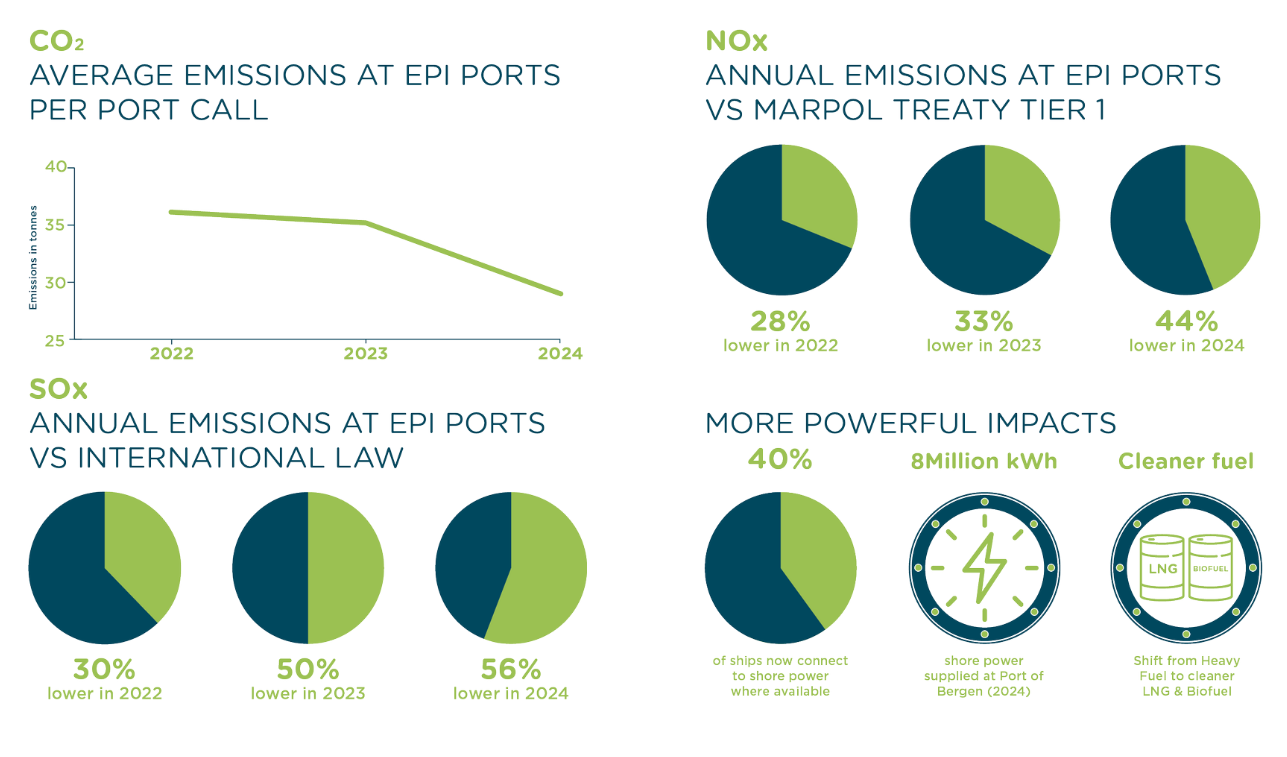
Source: epiport.org/impact
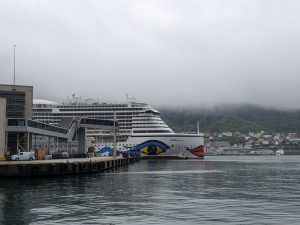
So although Bergen is not suffering from the rise of AirBnB and GetYourGuide in the same way that Venice and Barcelona are, it is still something they have to deal with. One approach that’s currently being discussed is the implementation of a tourist tax. That way, cruise lines would have to pay a specific amount of money per person in order to be allowed to head for Bergen. Eirik Berge from VisitBergen is generally welcoming the idea of a tourist tax, but he stresses the importance of it being fair. The latest version intends a flat-rate of 100 NOK (about 10€) per person, which does not sound like a lot at first, but he questions if cruise lines that transport over a thousand people would be willing to pay that amount of money. But rising prices due to inflation did not stop the rise of tourists as expected, which he sees as another sign of Bergen having a strong natural pull for visitors.
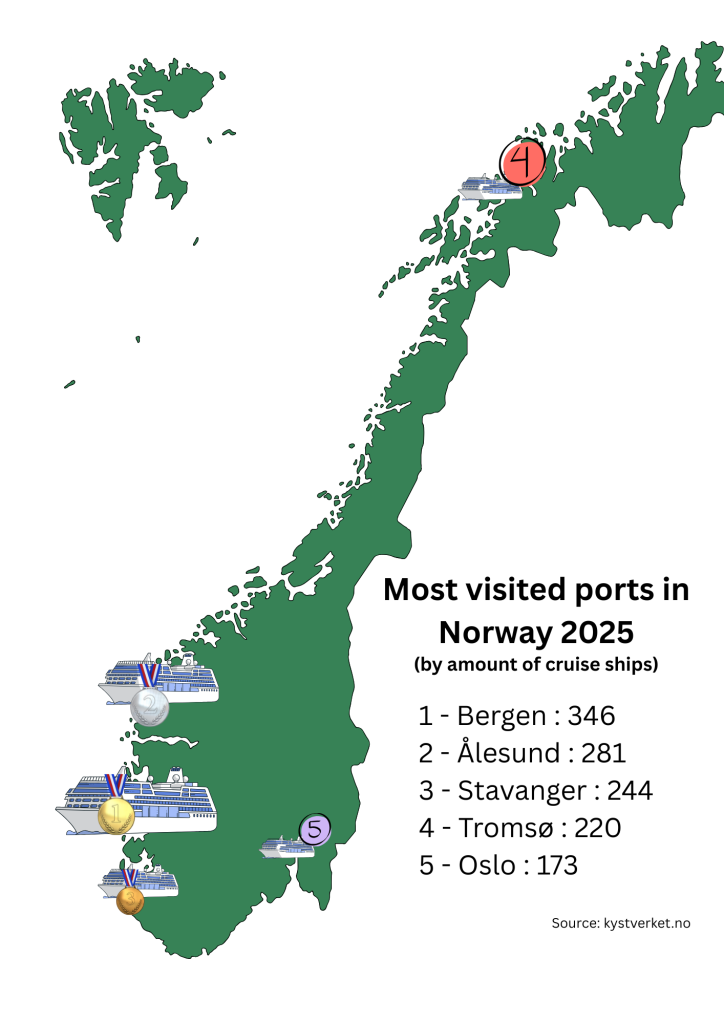
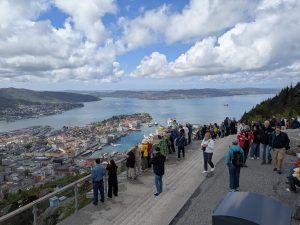
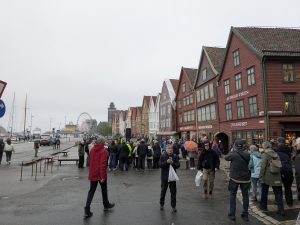
What made Bergen a good cruise ship destination in the first place, is apparent when looking at its natural conditions. It’s surrounded by mountains providing both a beautiful landscape and preventing huge waves from the North Sea, which makes ship traffic easier. Also, Nils Møllerup from the Port of Bergen notes that due to the fact that ships have to fit under a bridge in order to get to Bergen, that naturally prevents ships with a height over 63 meters entering the line of sight. Since the return of tourists after COVID-19, he noticed Bergen did not have to spend money on marketing for more people to show up. That is why they decided to change the city’s reputation as “the gateway to the fjords” to now being the destination itself. By letting the historical district of Bryggen and the nearby mountain Fløyen attract people on their own, Bergen could spend their money on infrastructure to handle the many new visitors.
If you want to know how Bergen regained control of its port from German merchants, pick up “Beyond Hansa”!