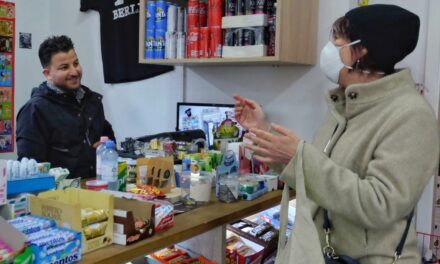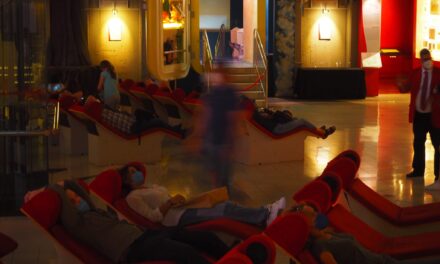
“For seven-year-old Shreya, getting a window seat on a plane and watching the clouds felt impossible. Europe wasn’t even part of the dream,” says Shreya Rathore, who moved from Rajasthan to Bruges nearly four years ago. “Today, I’ve built a life for myself in Bruges without my parents’ or husband’s help.”
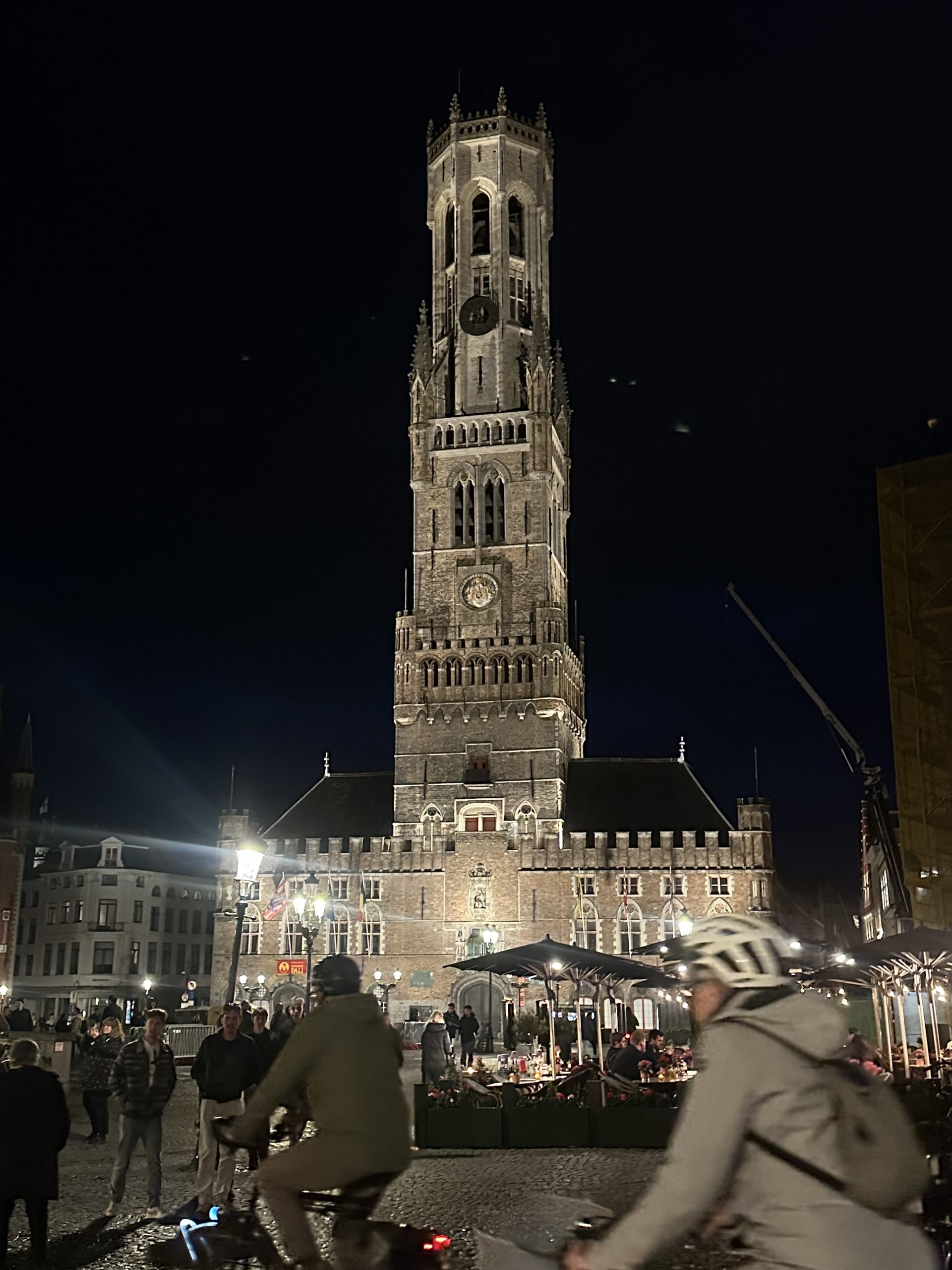
The Belfry stands still. Lives around it shift; Photographed by Khushi Verma
Long before Bruges became a fairytale frozen in time, it was a city forced to reinvent itself. When the Zwin waterway gradually silted up and trade routes shifted elsewhere, prosperity followed. The city that had once stood at the centre of Northern European commerce suddenly found itself negotiating survival. We’ve all heard the story. Yet hidden within that story is another, less familiar one.
The same forces of trade that pushed Bruges to adapt also created unexpected spaces for women to do the same. In a race to adapt faster than most cities of its time, Bruges created a paradox.
Historians often describe the Hanseatic League as a network of ships, merchants and goods. Yet its success depended equally on legal systems that wanted commerce to continue despite disruption. Bruges became a major Kontore not only because of geography, but because its institutions were unusually flexible. Its trade endured political crises, economic decline, and even death.
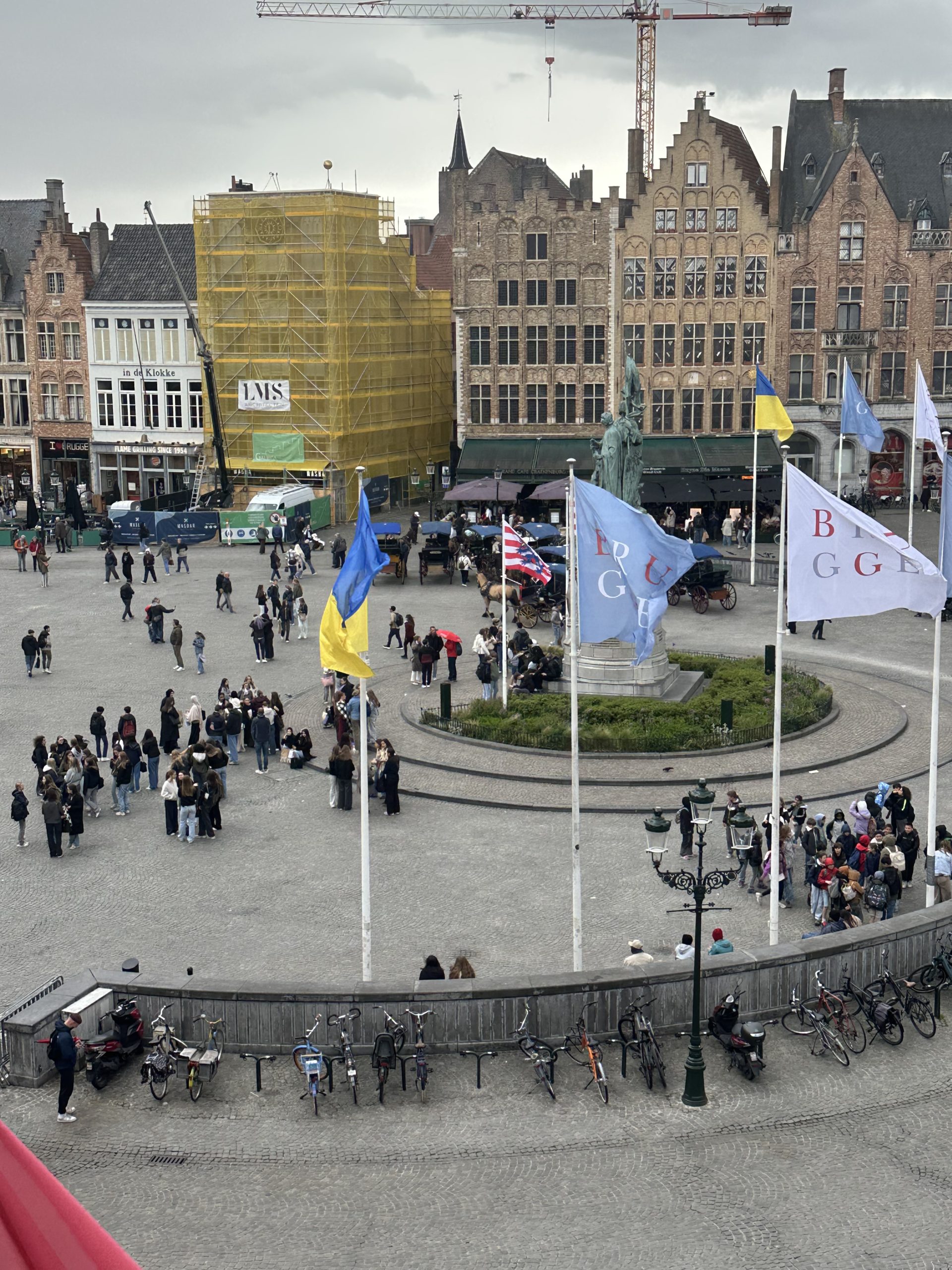
Once a space for the Hanseatic hub. Now a space for building futures; Photographed by Khushi Verma
In the late medieval Hanseatic network, Bruges operated as one of the most important commercial hubs in Northern Europe. Across the four main Kontore: London, Bruges, Bergen, and Novgorod, the Belgian city ranked second only to London in economic significance. Even within the wider Hanseatic world, including cities such as Lübeck, Hamburg, Cologne and Gdańsk, Bruges remained one of Europe’s busiest centres of regulated trade.
What made Bruges remarkable, however, was not simply its wealth.
It was the loopholes in its legal structure.
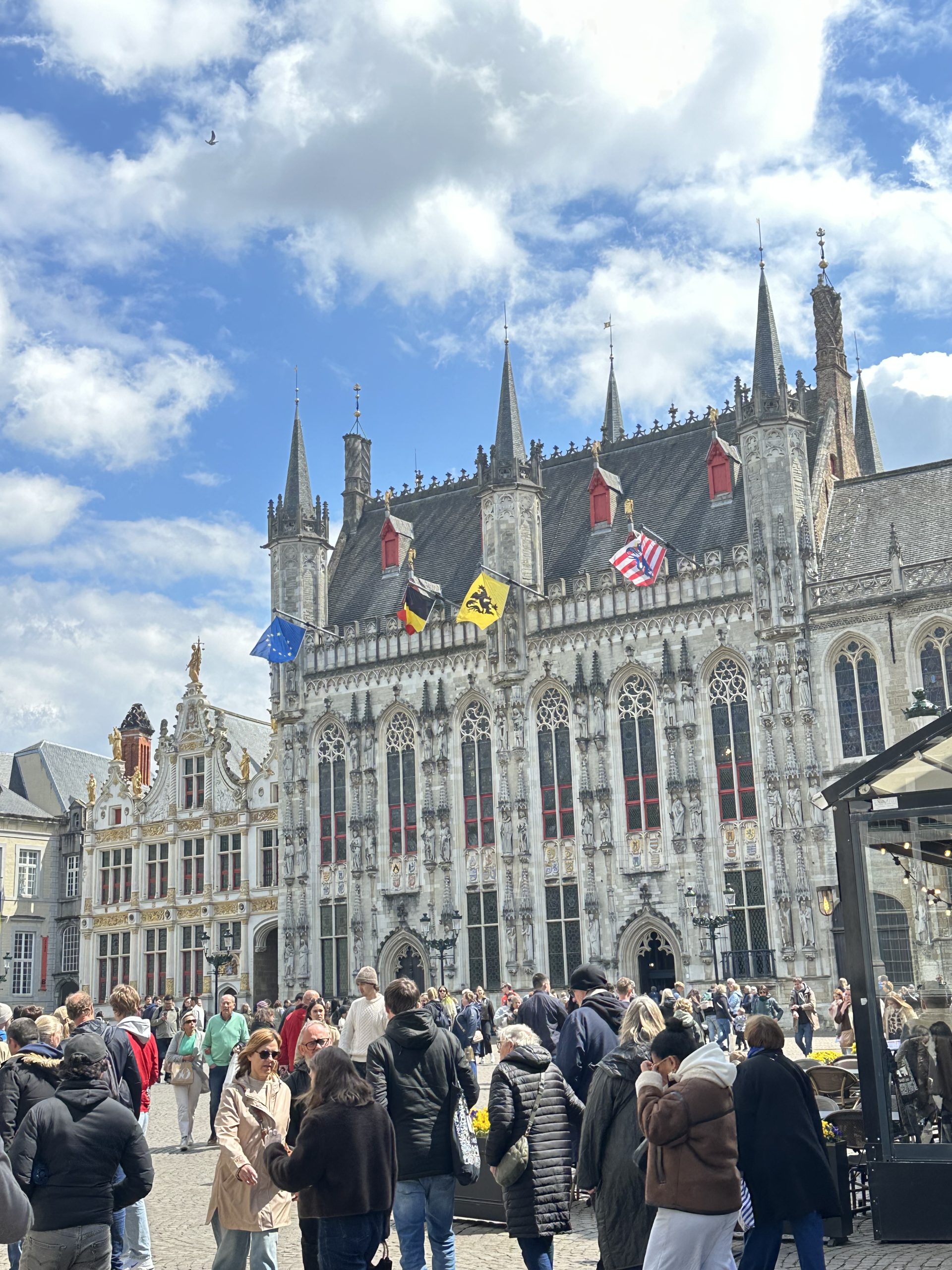
Burg Square. 4 flags, 1 square, 8 centuries; Photographed by Khushi Verma
Unlike many European cities of the period, Bruges developed commercial systems so focused on trade continuity that it unintentionally created spaces for women to operate within them. While this in no means intended to “grant equality,” in protecting commerce, it unknowingly granted access to widows.
Bruges offered one of the most robust legal frameworks for married female traders in the Hanseatic world. Under Witwenrecht (widow’s right) embedded in Lübeck Law and applied through Bruges’ Kontor system, widows could inherit their husband’s trade rights, property and commercial responsibilities. Although not recognised as independent merchants, these resilient women were legal continuations of economic identity.
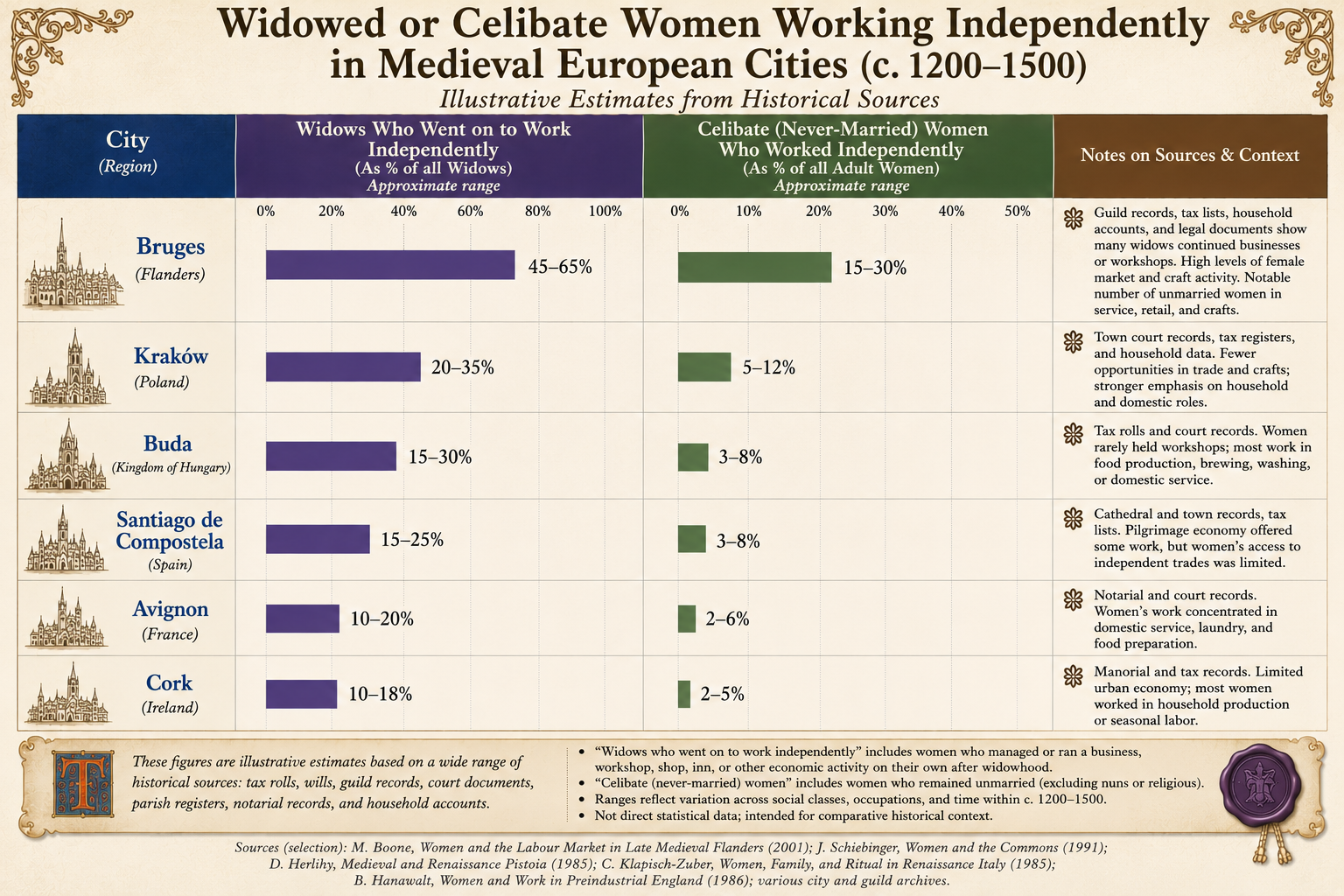
Elsewhere, widows remarried. In Bruges, they traded; Data Visualisation by Khushi Verma
In practice, this created something rare in medieval Europe:
Women could run businesses not in defiance of the system, but because of it.
Historians have identified Bruges as exceptional in this regard.
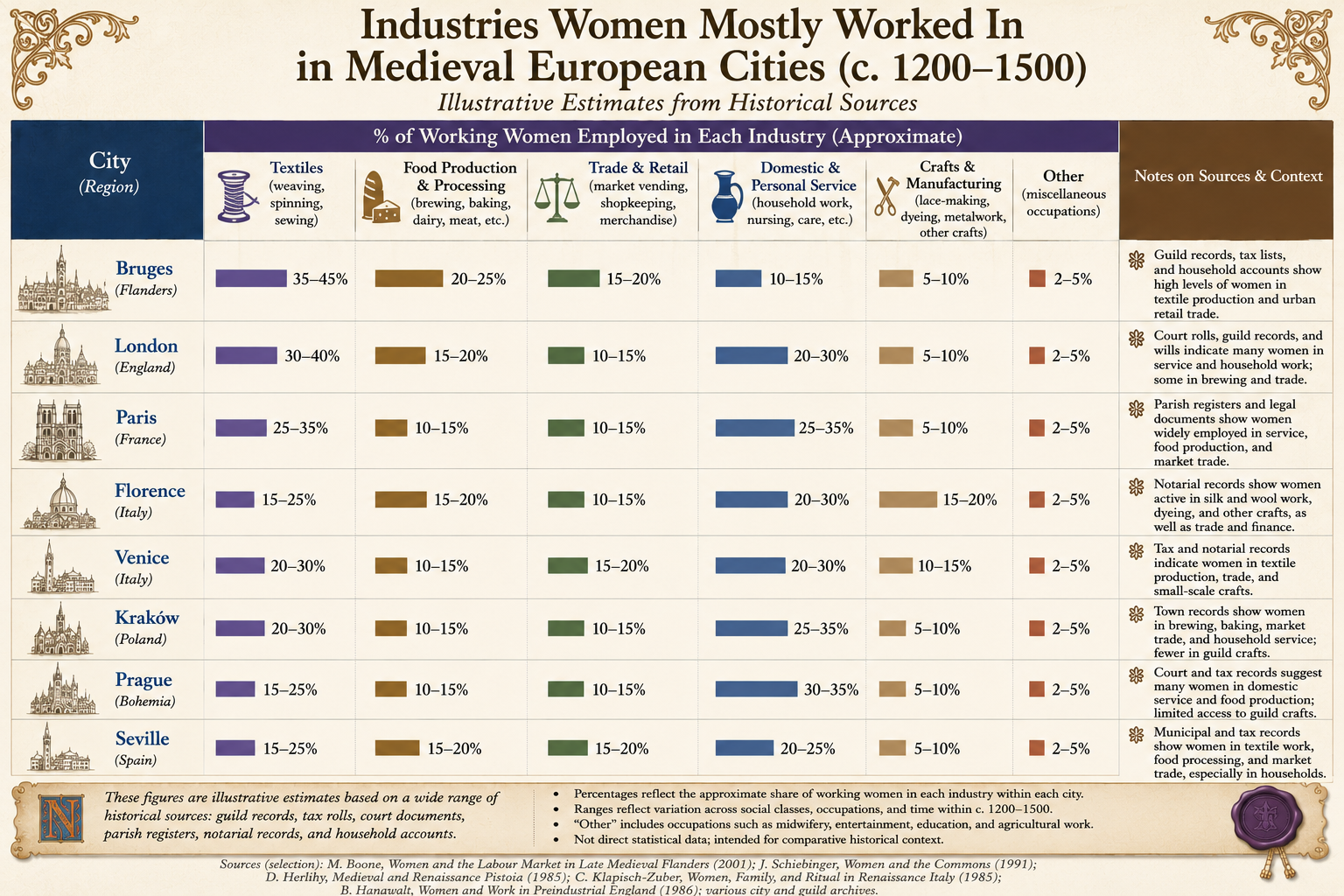
Bruges gave women more space in commerce than domestic patriarchy; Data Visualisation by Khushi Verma
While many European cities treated female participation in commerce as a temporary necessity, Bruges gradually institutionalised it.
If trade needed to continue, women were often allowed to continue it.
In doing so, before it even realised, Bruges had invented a legal economy so dependent on uninterrupted trade that it accidentally left doors open to a place where women quietly kept rewriting the futures they were expected to accept.
These opportunities were born of necessity, not generosity. Commerce had to flourish, contracts had to be honoured, and businesses had to run.
In 1245, Countess Margaret of Flanders founded the Princely Beguinage Ten Wijngaerde, home to the Beguines, women who lived between categories. At a time when female existence was legally tied to either marriage or the monastery, the Beguines in Bruges occupied a third space: independence without permission.
Before the word “feminism” even existed, Bruges became one by accident. Women were already manoeuvring inside systems not designed for them.
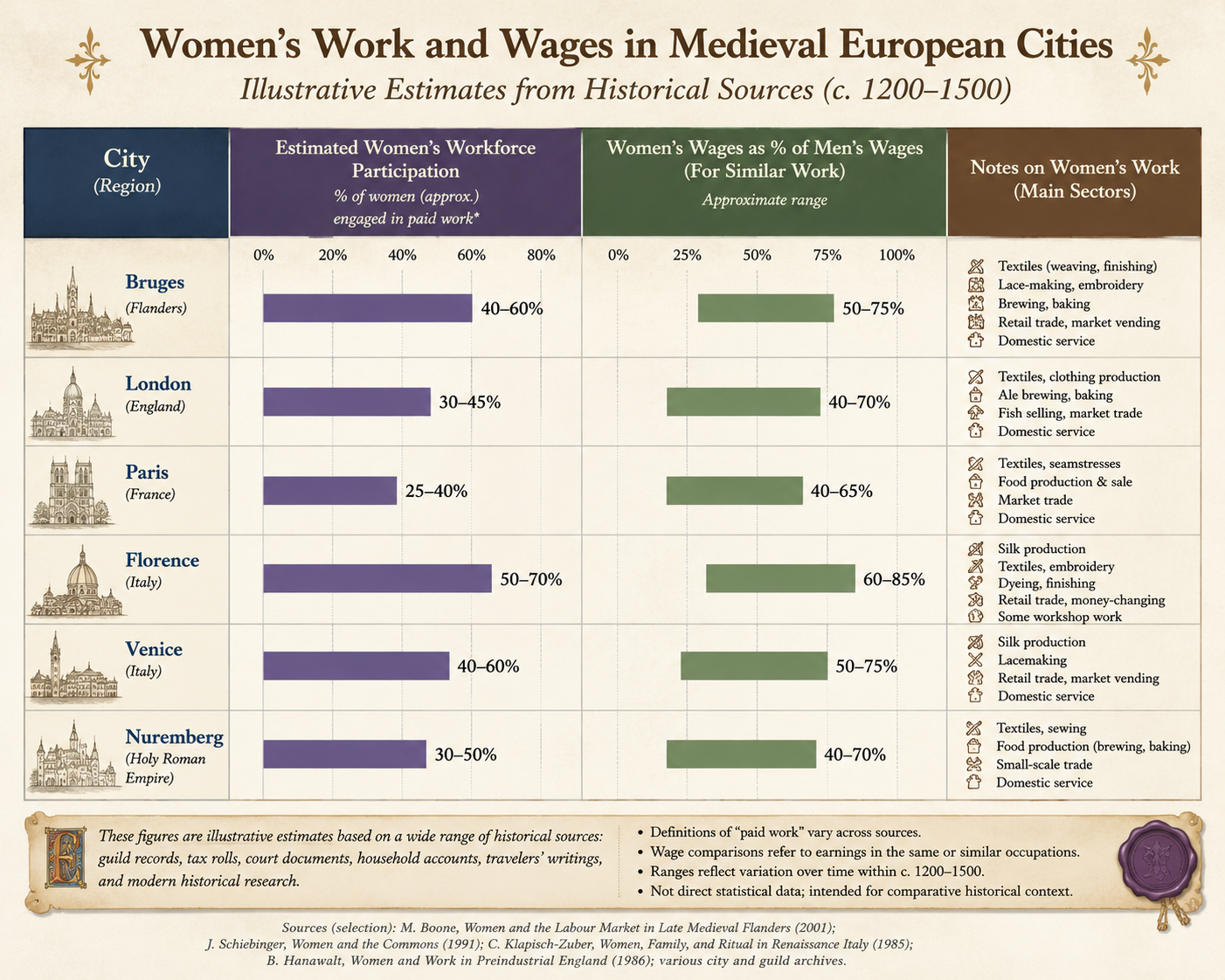
While Florence paid better, Bruges employed more; Data visualisation by Khushi Verma
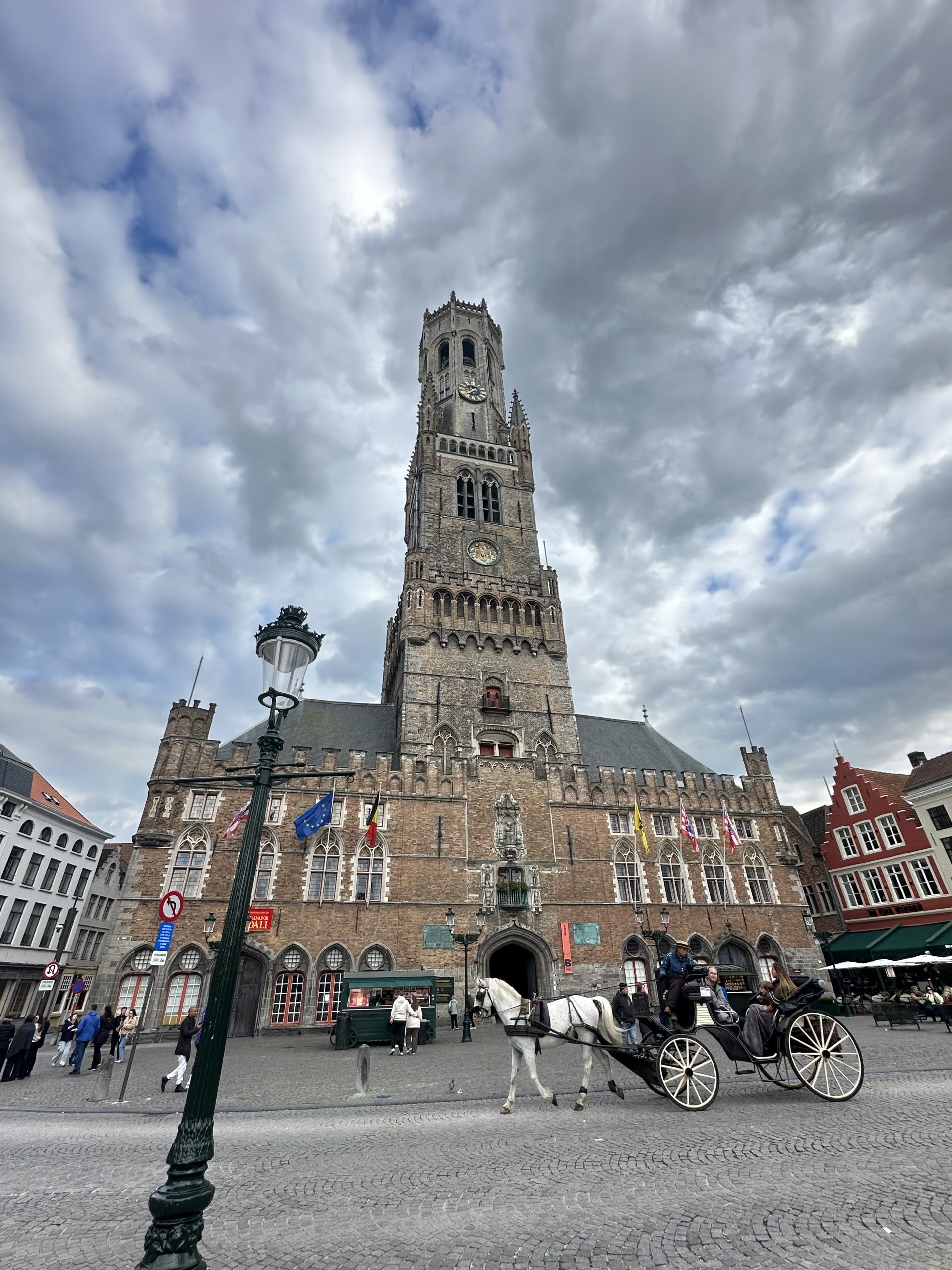
Bruges didn’t just preserve the past. It preserved a path for hopes too; Photographed by Khushi Verma
Eight centuries later, those doors remain open in different ways. Hidden behind the postcards and canal tours in this fairytale town are many stories of strength and reinvention. Living between the tourists who come looking backwards and the residents who have built a life in this city already are stories of people, like Shreya, who arrive in Bruges to move forward.
“I used to feel so suffocated in Rajasthan,” says Shreya.
Growing up in a small Rajasthani village, Shreya was married off young. She spent years in a life she felt she had little control over. After her husband’s death and mounting pressure to remarry from relatives, she knew she had to escape.
“I realised nothing was going to change unless I changed my surroundings,” she adds. “One night, I packed my bags and left for Delhi.”
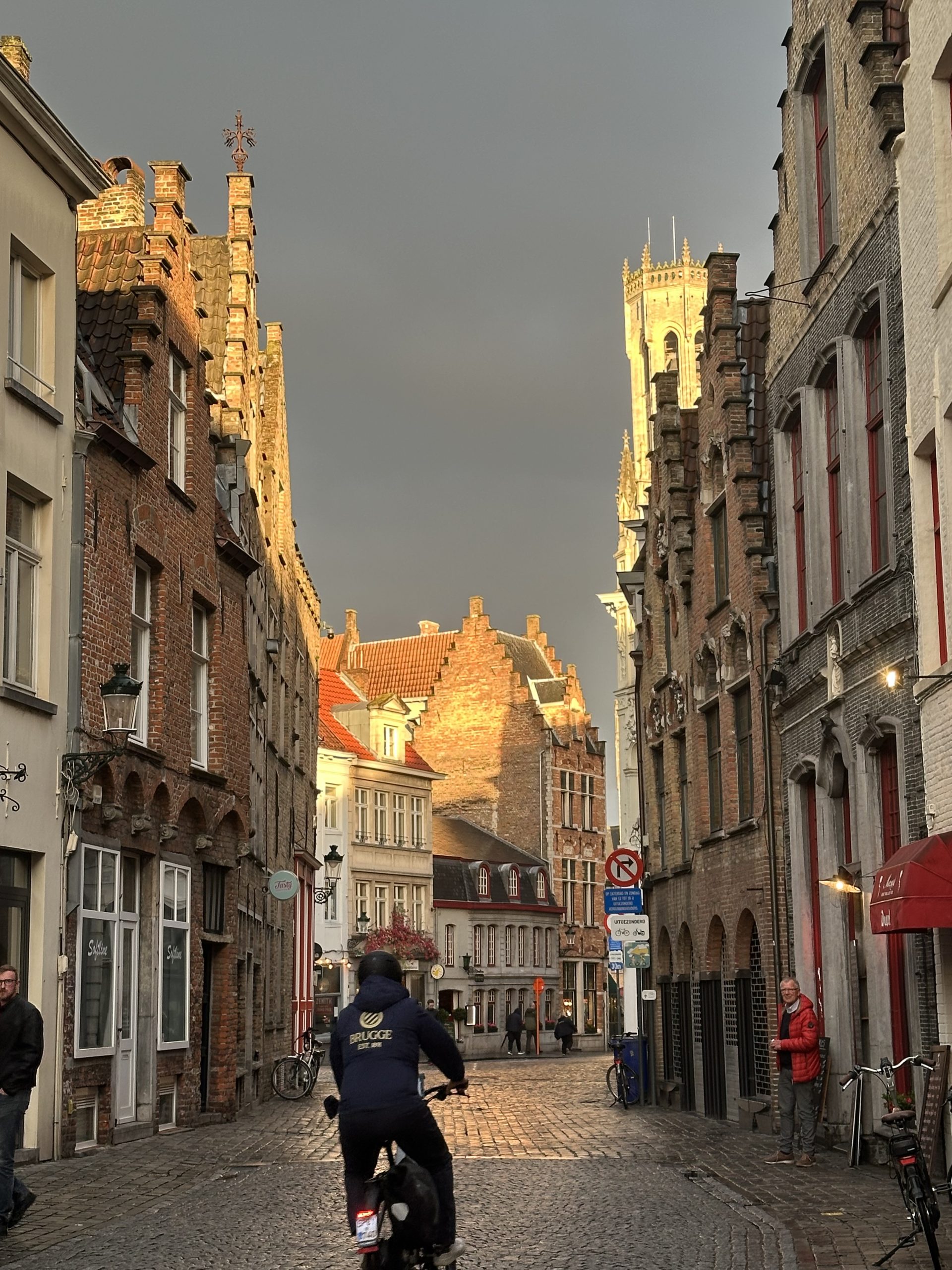
The Fairytale Town for some. Foreword for others; Photographed by Khushi Verma
After years of unstable work, an opportunity brought her to Bruges.
“I had seen Bruges in the Bollywood film PK and always felt drawn to it. But I never imagined that I would be living in it on my own terms today,” she says, “This city has given me every ounce of happiness I have ever known. I never looked back towards my old life again.”
Shreya isn’t the only woman who reinvented her life in Bruges.
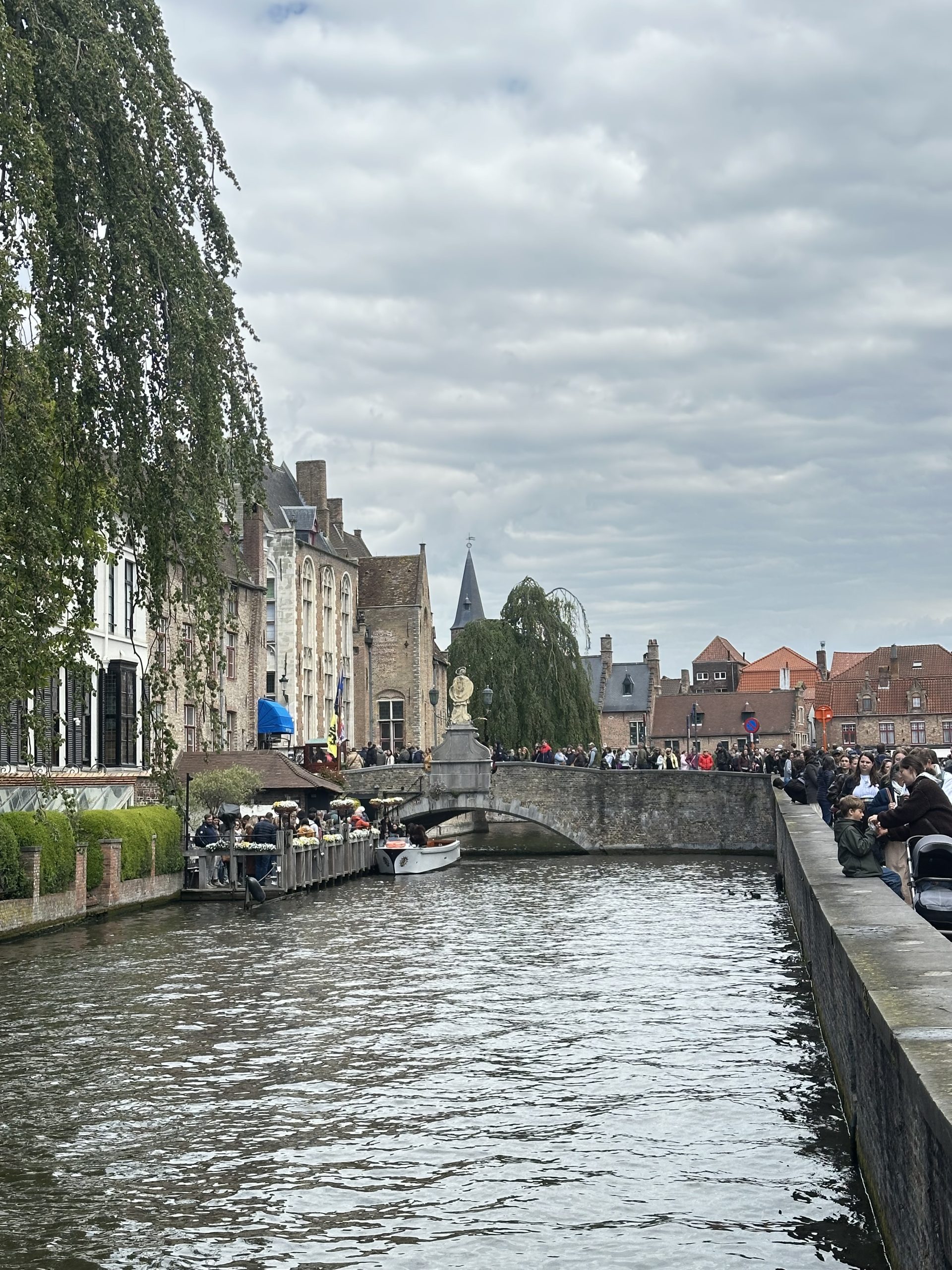
The canal kept moving. So did Maria; Photographed by Khushi Verma
Maria Kuhaievska arrived in Bruges from Ukraine after war transformed ordinary life into uncertainty. What began as a visit quickly became something more permanent.
“My mother told my sister and me we were coming to see the beautiful city where her best friend lives,” Maria says. “But I think deep down we all knew there was more to it than that.”
As the war intensified and her father remained behind to enlist in the military, Bruges became the place where her family attempted to rebuild. Since they didn’t have a lot of money, they were offered support and accommodation by her mother’s best friend and her husband.
“At first, everything felt beautiful,” she adds, “Then reality caught up. My dad is still in Ukraine, and I think about him every day. But studying here and creating a routine helped me realise life could continue.”
For women like Maria, Bruges isn’t merely a heritage city. It is a place where normality became possible again.
“I didn’t stay in Bruges to simply become a part of it,” says Maria, “I stayed because I can freely breathe here.”
The details differ, but the instinct remains the same: when a planned future closes, women negotiate with the circumstances and rebuild. Shreya crossed continents after losing the life expected of her. Maria rebuilt normality after war erased everything familiar.
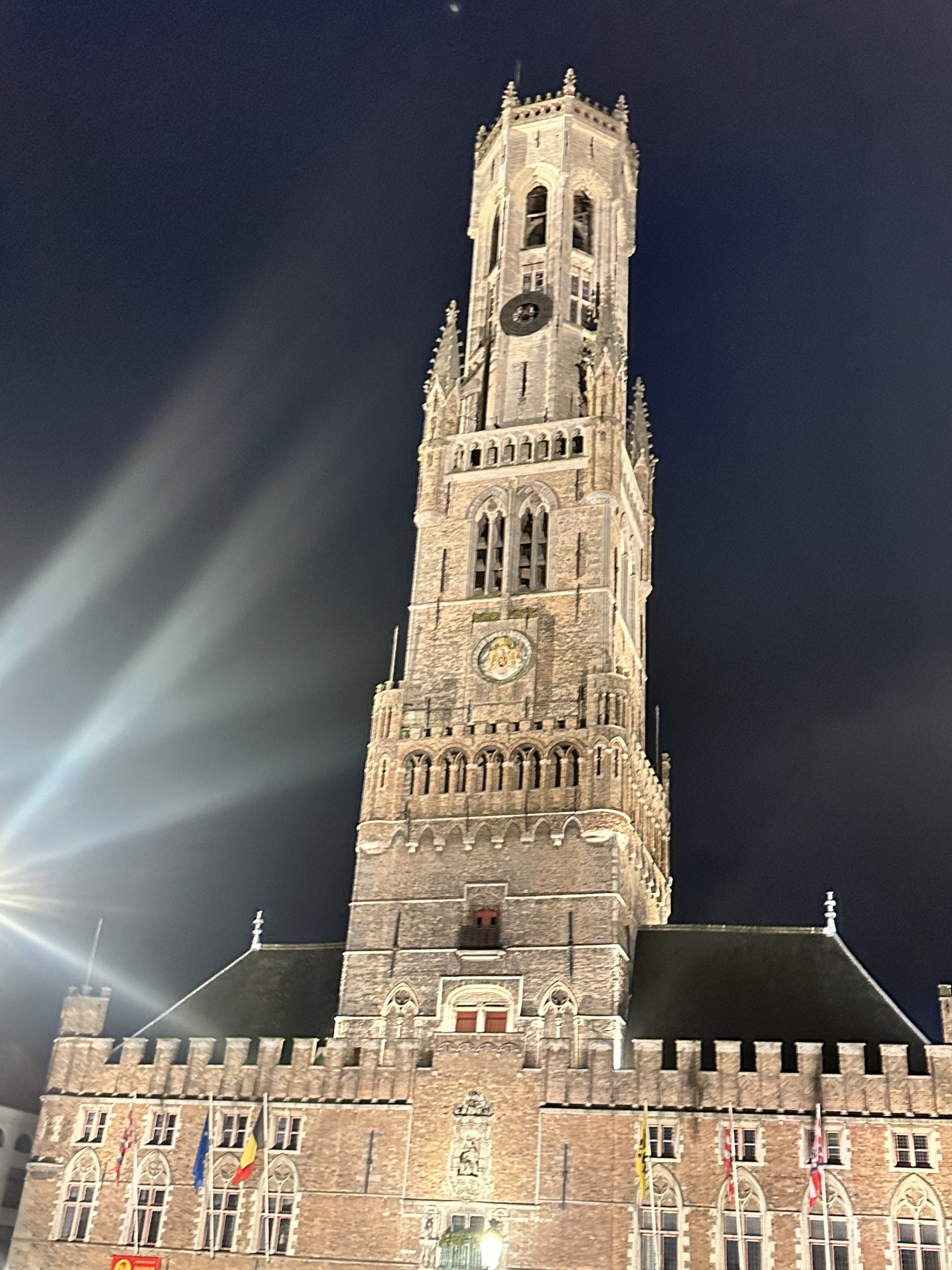
Still on time after 800 years; Photographed by Khushi Verma
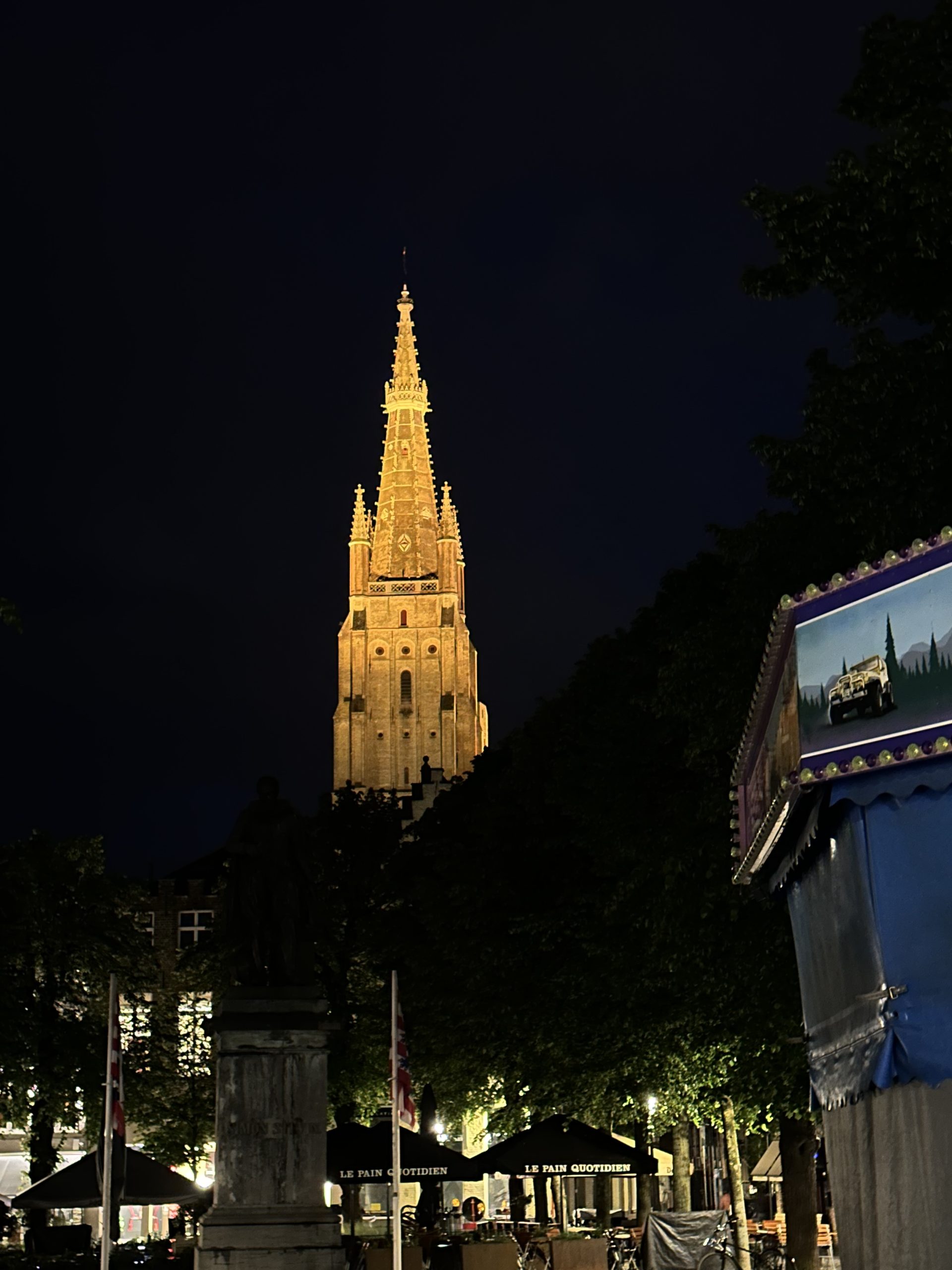
Medieval spire. Midnight lights. Modern life; Photographed by Khushi Verma
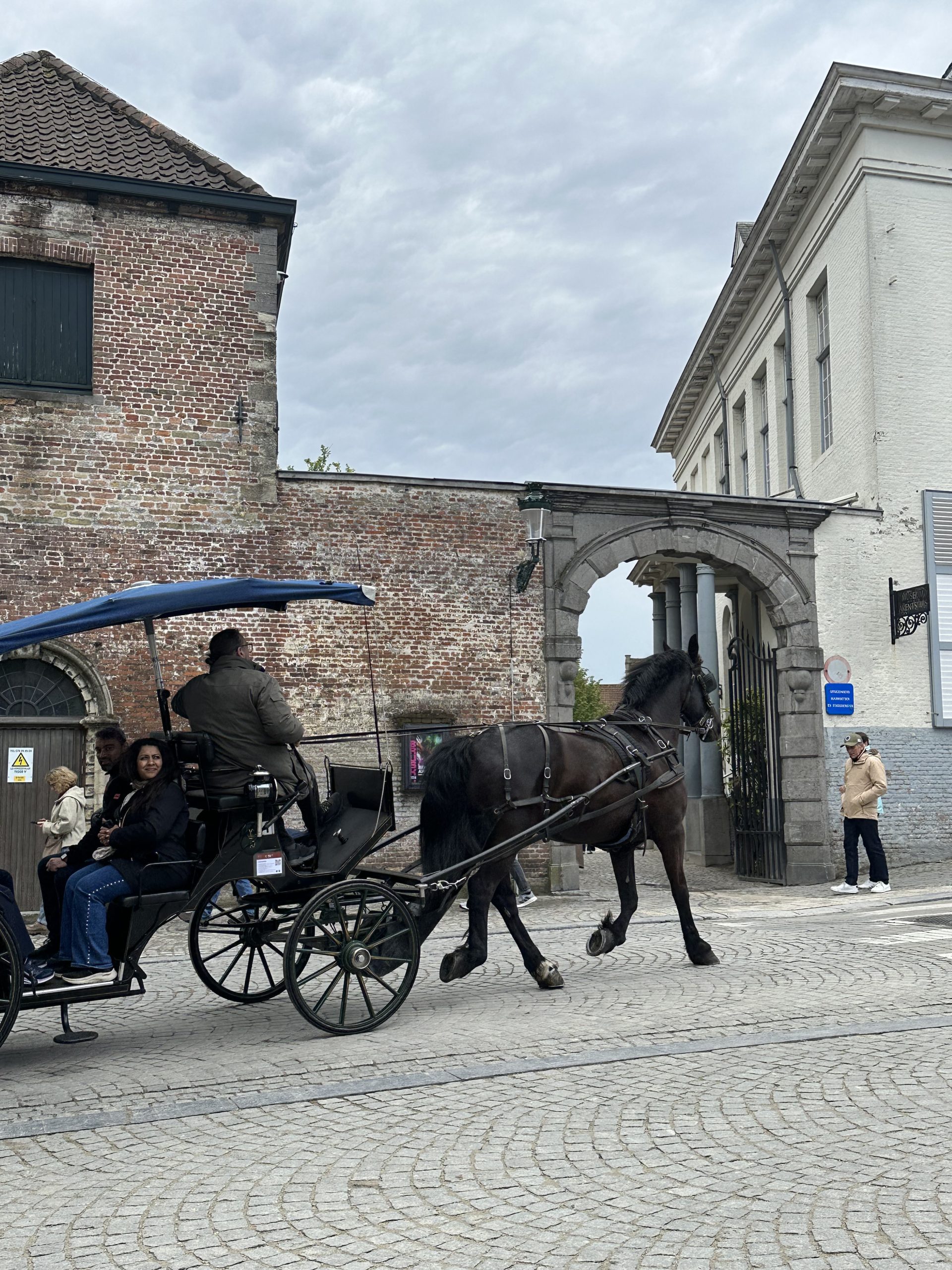
Same cobblestones. Different journeys; Photographed by Khushi Verma
Even tourists like Clara unknowingly participate in freedoms that many medieval women could scarcely imagine. She travels alone, spends her own money and crosses borders freely. Centuries ago, women in Bruges fought for far smaller freedoms under far greater constraints.
Modern independence often feels ordinary precisely because somebody else spent centuries making it possible.
There is a bittersweet irony at the heart of Bruges. The same city that reinvented itself after economic decline has repeatedly become a place where others reinvent themselves too.
While undoubtedly one of the prettiest cities in Europe, Bruges becomes more than a postcard city when examined closely. Perhaps even a city frozen in time, like Bruges, remains alive because people keep arriving here with hopes to begin again.
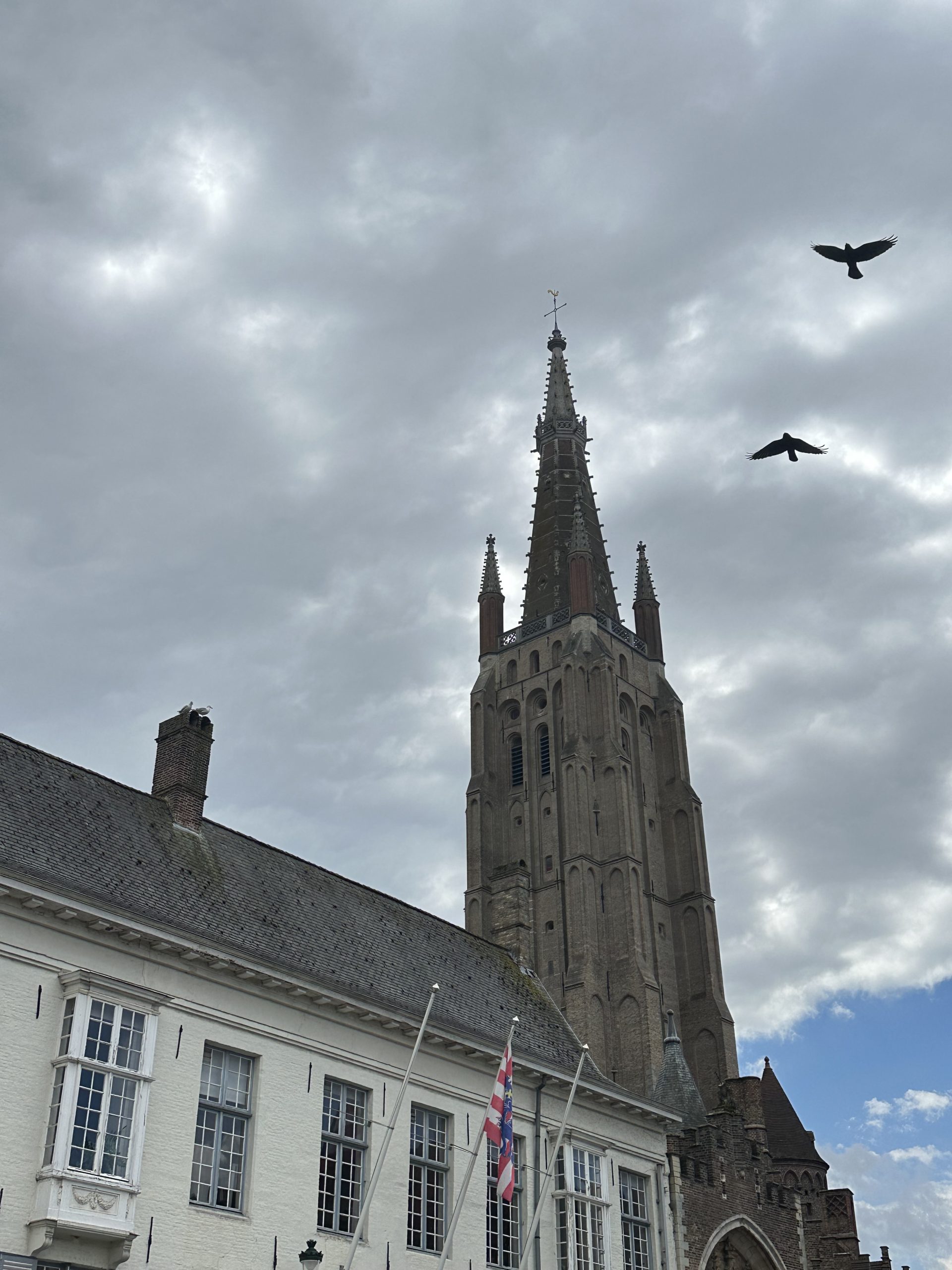
Some fly in for a day. Some to stay; Photographed by Khushi Verma
For centuries, merchants came to Bruges with spices and beeswax, hoping to secure a better future. Today, students, migrants, and women arrive with ambition and hope for the same reason.
The goods may have changed.
The journeys have not.
And maybe that is Bruges’ real legacy. Not that it preserved its past beautifully, but that throughout its history, it has continued to leave room for people determined to build something beyond it.
What does Bruges look like when you’re neither a tourist nor a resident but someone living in between? Here’s Roel’s Bruges:
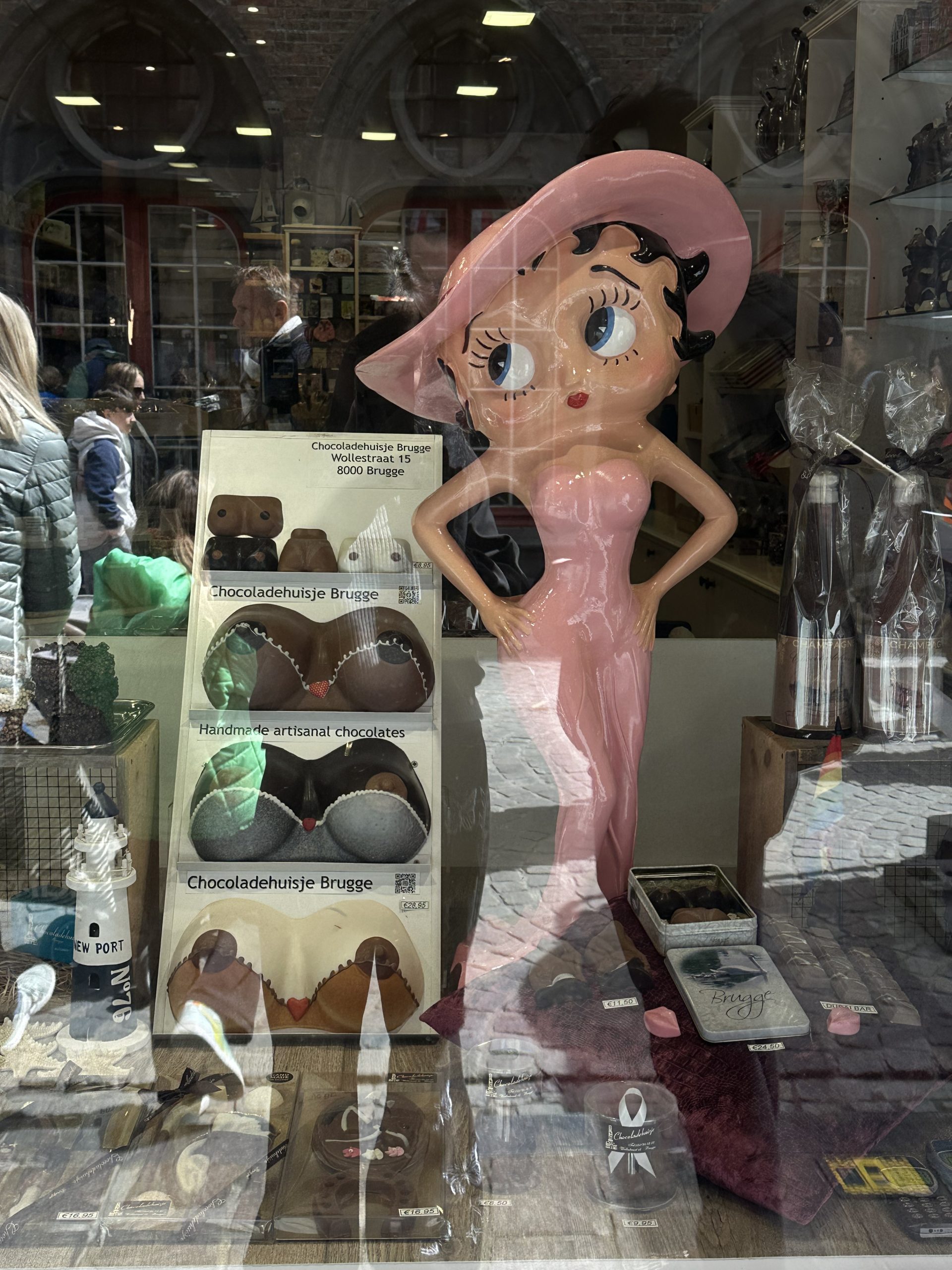
Inside a chocolate shop window in Bruges; Photographed by Khushi Verma
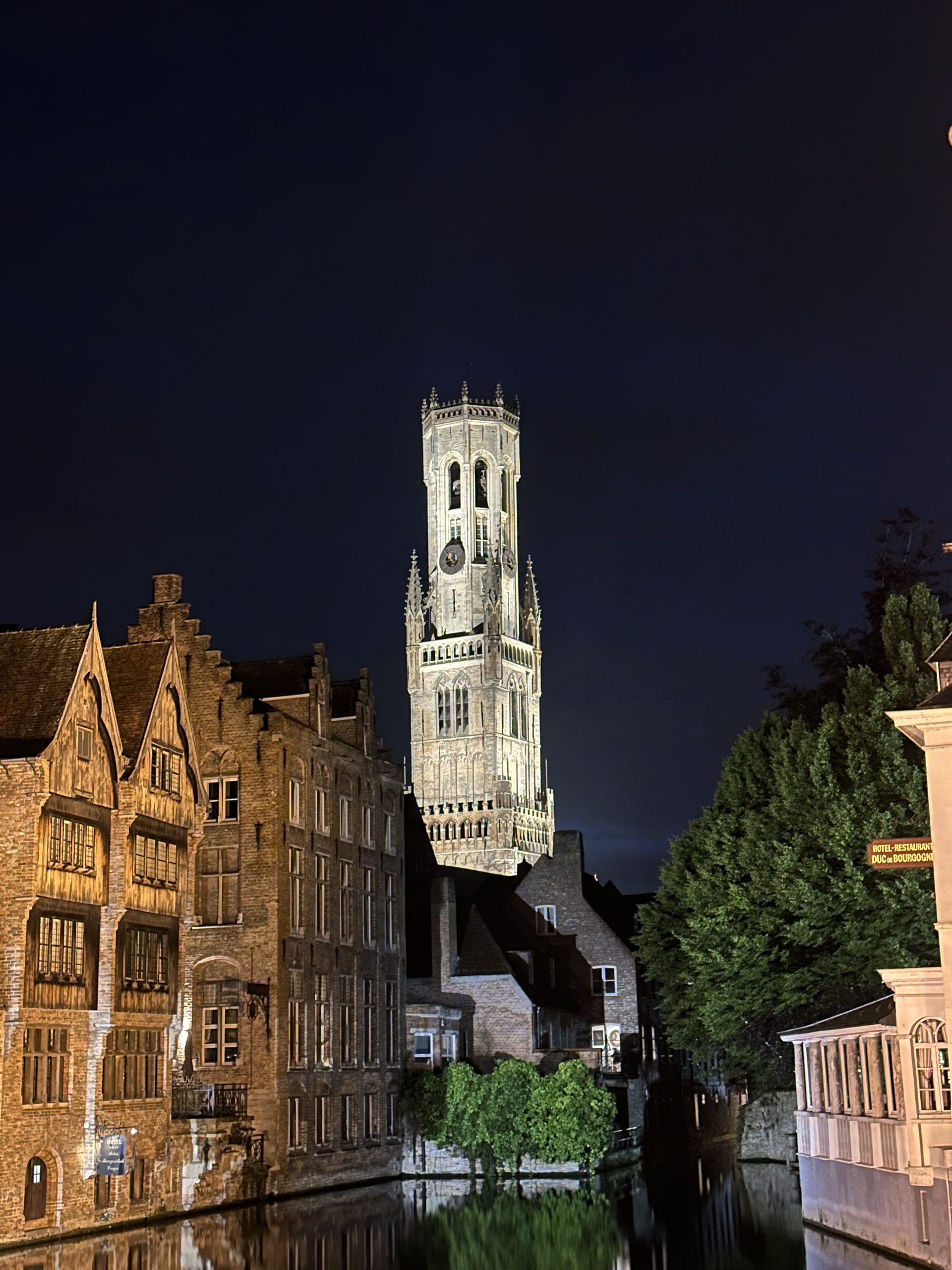
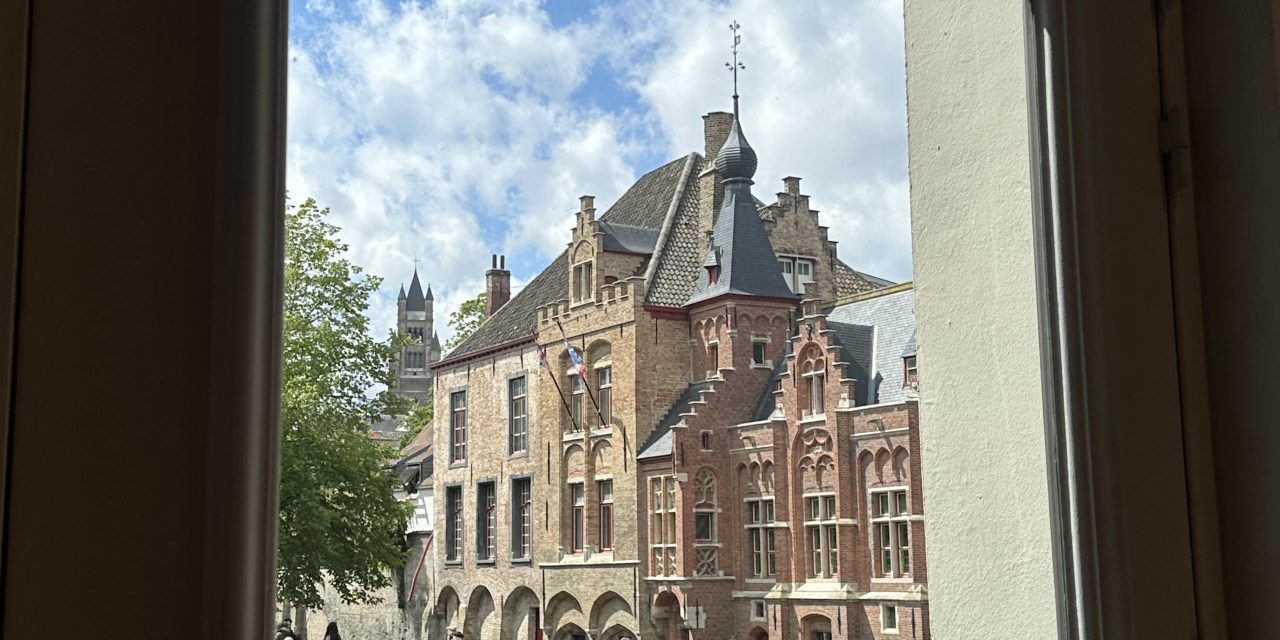
Same view. Different stories; Photographed by Khushi Verma
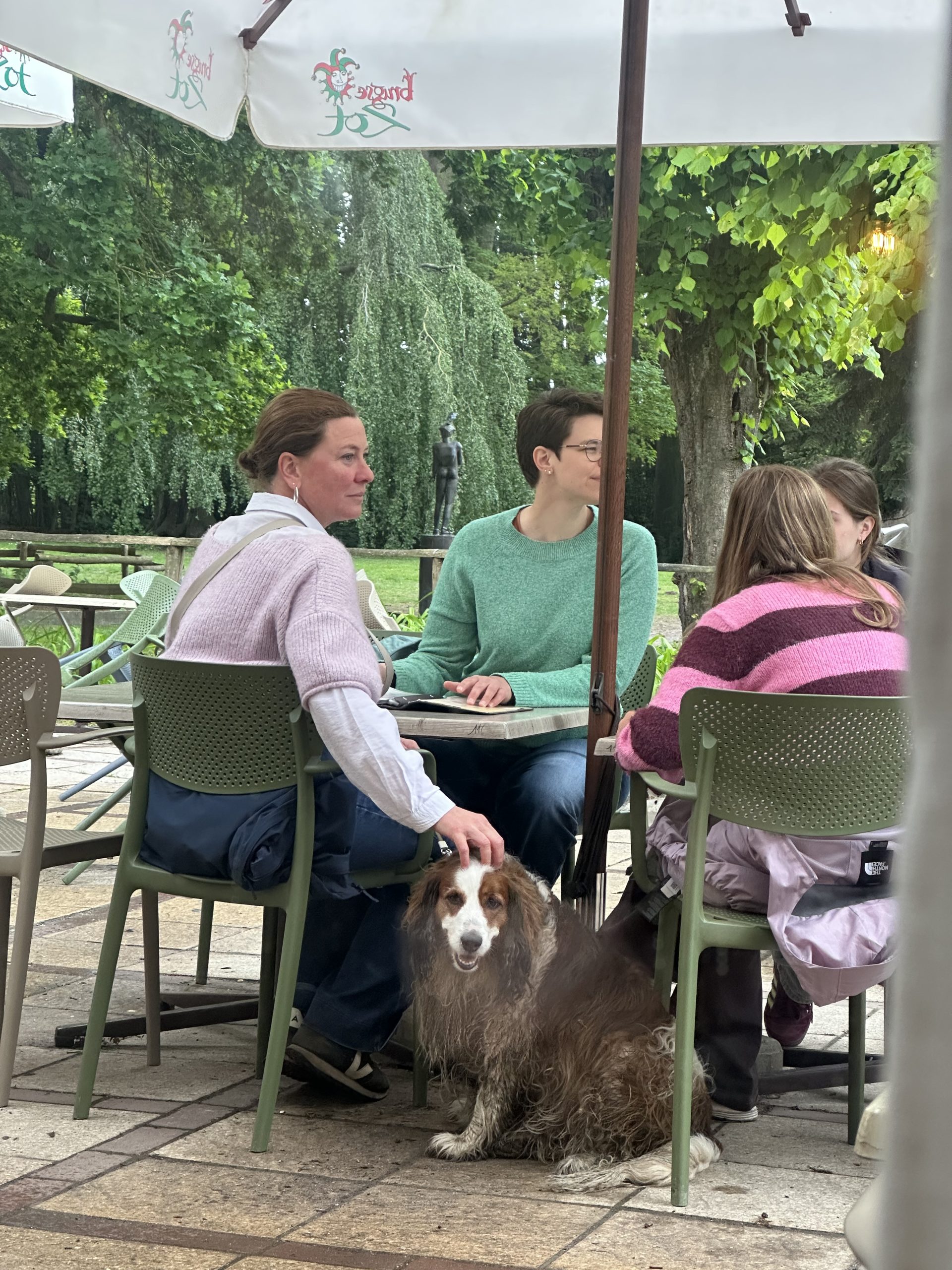
Locals chilling at a cafe in Bruges; Photographed by Khushi Verma
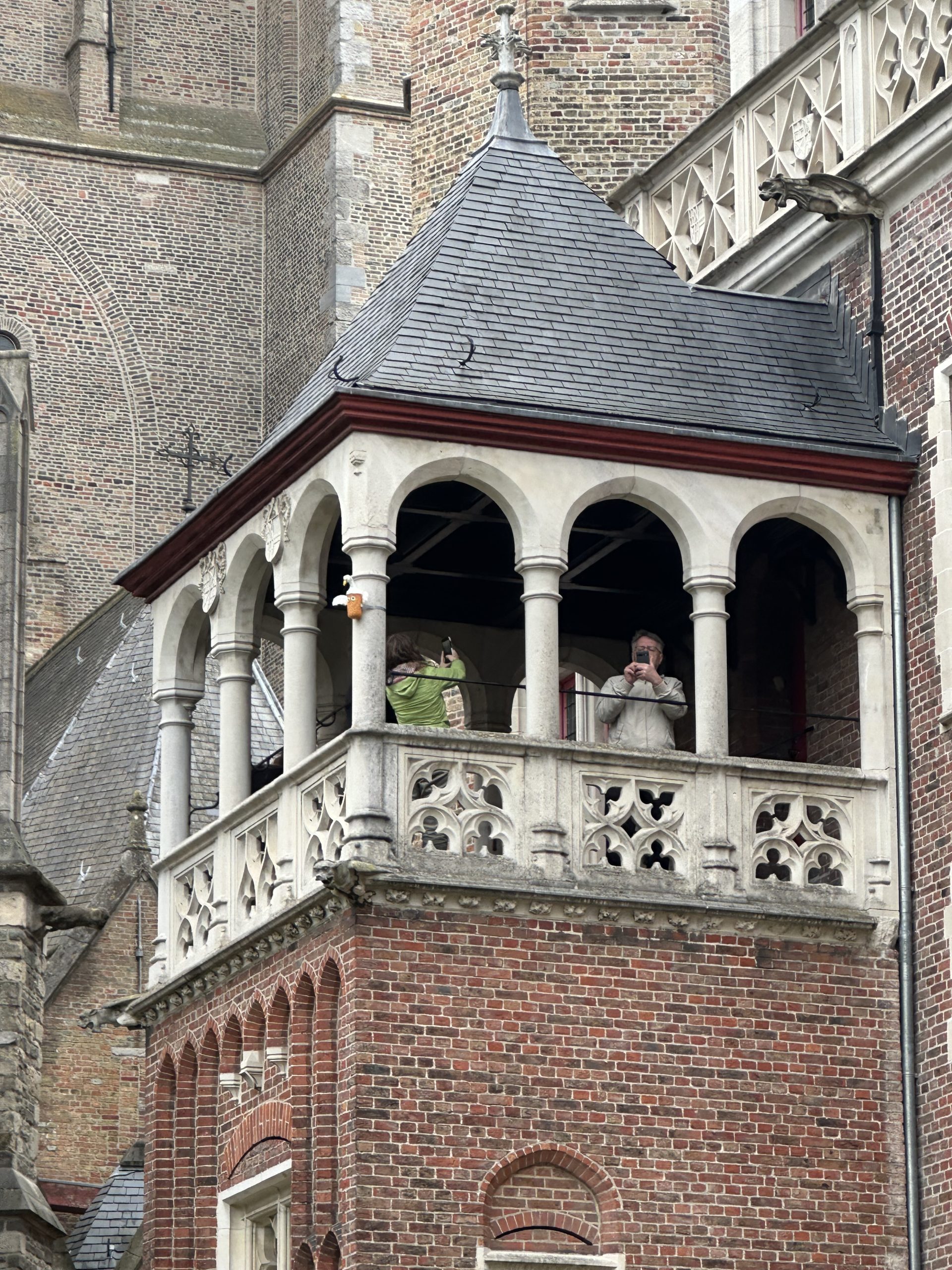
His shot through my shot; Photographed by Khushi Verma
Enjoyed reading about who arrives in Bruges to begin again? Pick up our class magazine, Beyond Hanse, to explore what it feels like to be inside the Bruges postcard.