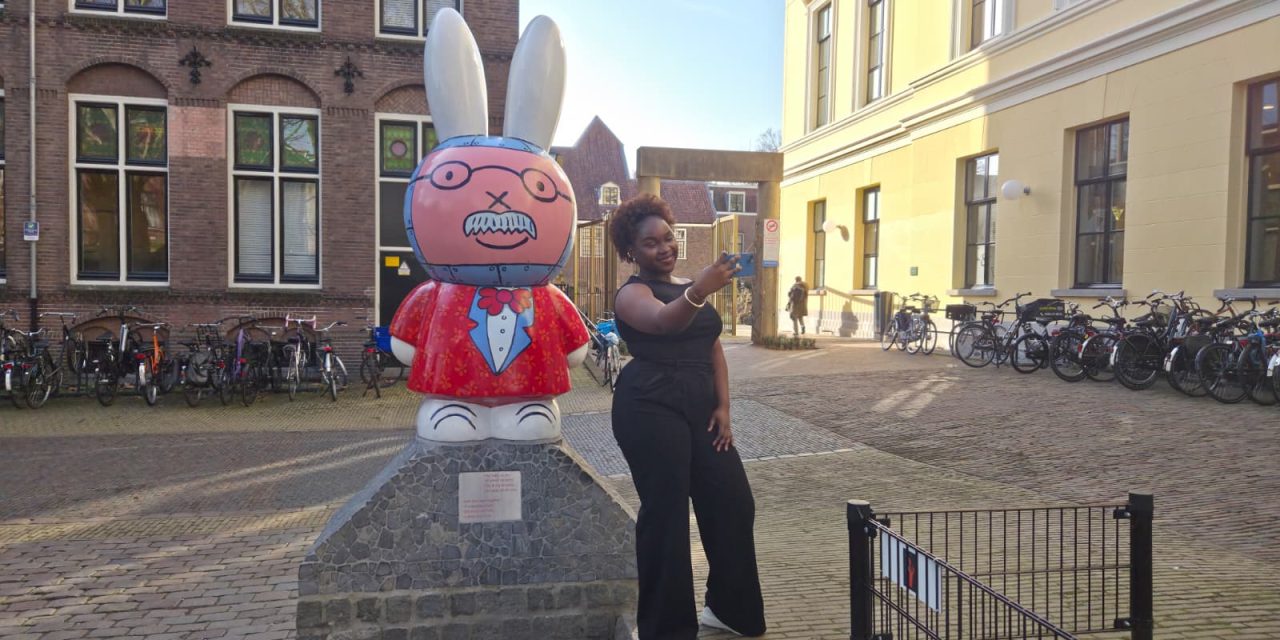
In a busy street in the middle of Utrecht stands a colorful statue of a small white rabbit. It wears a hat, supposed to protect it from the light rain. Despite the rather poor weather, a wide variety of people gather around to take photos.
Nijntje – the simply drawn bunny created by Dick Bruna in 1955 – can be found all around Utrecht. Previously known only as a children’s book character or through her animated series, she can now be seen almost everywhere. She has her own museum, different statues can be found and a Nijntje streetlight guides passers-by over a busy street. Her merchandise can be bought in every tourist shop, and she even has her own square named after her: the Nijntje pleintje.
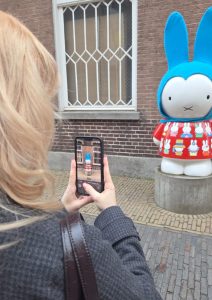
A woman takes a photo of a Nijntje statue outside the Nijntje Museum in Utrecht. The statue is one of several Nijntje spots that attract visitors to the city. Photo: Alicia Queck
From children’s story to adult icon
Originally Nijntje was meant to be a bedtime story for Bruna’s daughter. Now, 70 years later, she has become a recognizable cultural symbol for the Netherlands and especially Utrecht, since that’s where Dick Bruna and therefore also Nijntje were born. Over the past years she has become a draw for adult visitors as well. “All of the adults used to be children,” says Liza Verkroost. She is the store manager of Utrecht’s Tourist Information Center. According to her, the connection to Nijntje could be rooted in nostalgia. “In adult life, you still feel a connection to it because you’ve been seeing it since you were a child.” In Guus Levering’s family-run Nijntje store in Utrecht, the majority of customers are adults. “I think 95 percent,” Levering estimates.
An international Utrecht
When asked about the changing role of Nijntje in Utrecht, Verkroost states that “it’s not necessarily Nijntje that changed but Utrecht. We got more known internationally.” According to a statistic from the municipality of Utrecht, approximately 43 percent of the tourists visiting Utrecht in 2024 came from abroad. By becoming more popular internationally, people start connecting things to Utrecht. Aside from the famous Dom tower, Nijntje is one of those things. So Nijntje herself didn’t change, it’s the audience that has been changing over the last years.
Cute culture and a new perspective
The first noticeable shift in Nijntjes audience appeared around ten years ago, reportedly originated from Asia. According to Liza Verkroost “Dutch people are not used to doing things like that. We have always seen Nijntje as something for children. And then you get another perspective from adult people from Asia that are completely equipped with all kinds of Nijntje things.” Guus Levering also confirms this. Since the opening of his Nijntje themed shop in 2017 he identified two main types of customers: adults buying Nijntje merch for younger family members and adults buying Nijntje merch for themselves, reportedly mostly people from the Asian community.
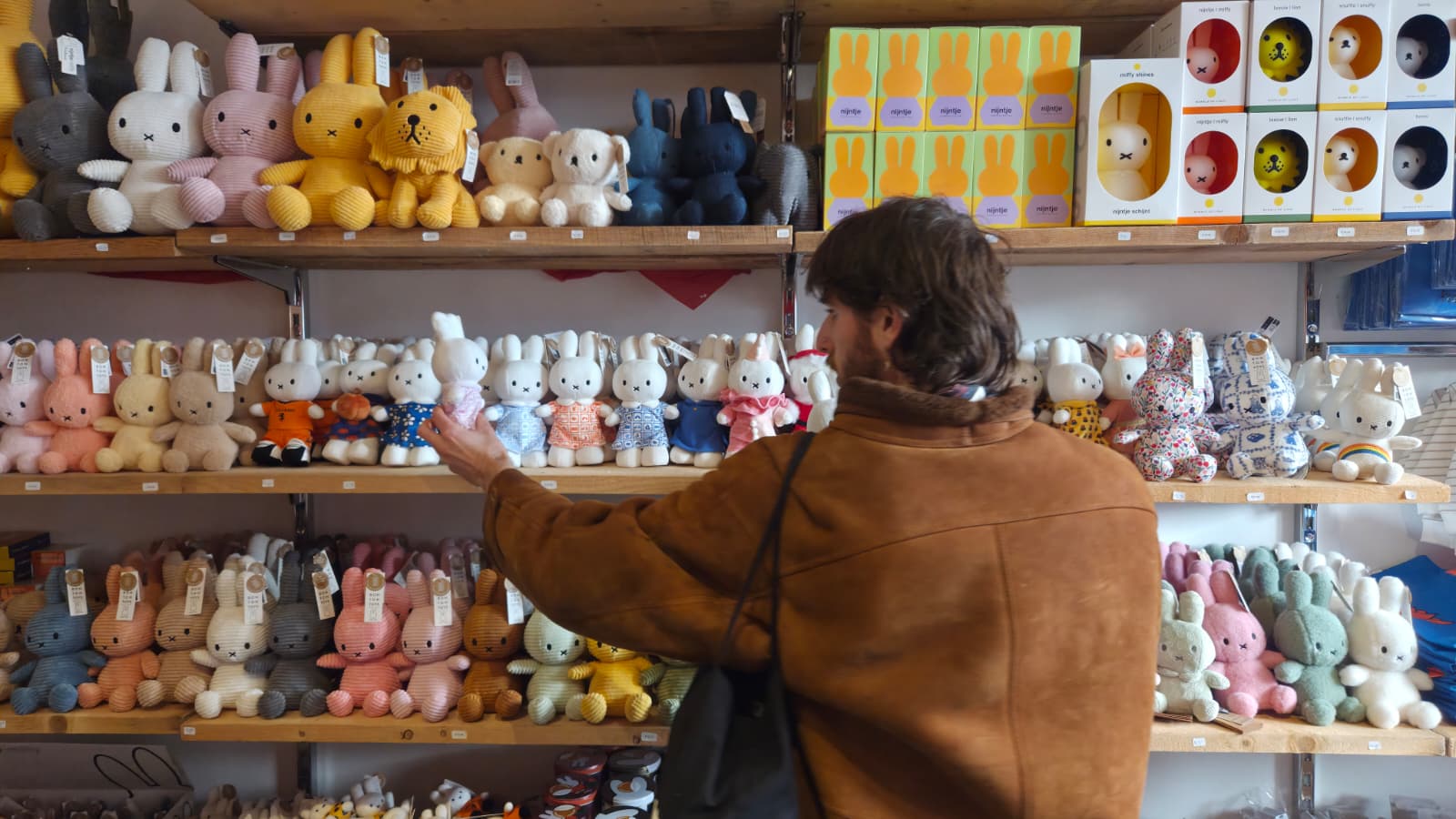
A customer looks through Nijntje plush toys in a store in Utrecht. According to the owner, most of the people shopping here are adults.
Photo: Alicia Queck
According to a study published in the Journal of Consumer Culture “cute” is not just about something looking nice or childish. Instead, cute aesthetics can trigger emotional reactions like warmth, attachment or even a need to protect something. The concept originally came from Japanese youth culture, especially from young women, before becoming part of mainstream consumer culture. Funny or cute merchandise can therefore become an indicator for an easy-going personality and help young people connect with each other. In that sense, buying Nijntje merchandise may not only be about childhood nostalgia, but also about connecting to a certain lifestyle or feeling.
More than just nostalgia
In the end, Nijntje herself did not suddenly become more modern or more international. Instead, the audience around her changed. Through nostalgia, international visitors and the influence of cute culture, she slowly became relevant to adults as well. Today, Nijntje is not only a bedtime story character, but also a lifestyle symbol for both children and adults.