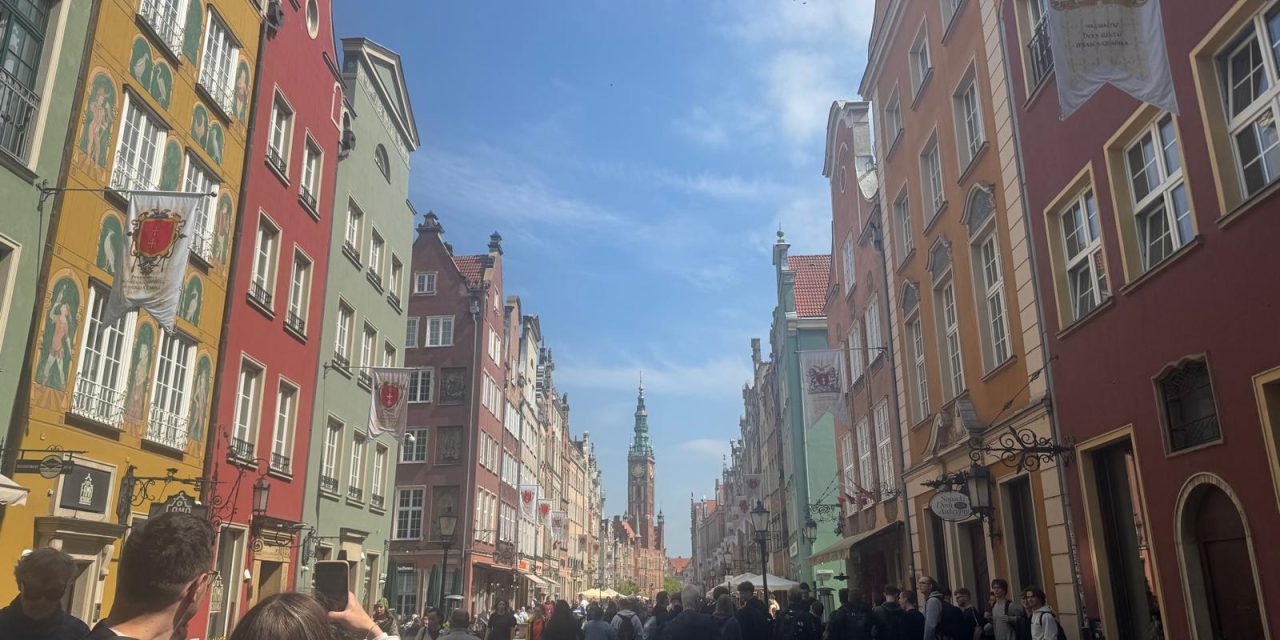
When in 1939 the Polish military depot at “Westerplatte”, Gdansk was attacked by Nazi Germany, it sparked the start of World War II. The underlying roots of that conflict date back centuries, however. Gdansk’s strategic position and shifting cultural identity have played a large part in this.
The city that is nowadays known as Gdansk finds its origin story long ago, around the 980’s. From the moment it was founded, up until the twentieth century, it has been subject to struggle of control. The reason being its strategic location. It lies at the point where Poland’s longest river, the Vistula, enters the Baltic Sea. ‘This is a lifeline. Gdansk lies at the heart of being able to trade with the world’, Anna Mazurkiewicz, professor at the faculty of History, University of Gdansk, explains.
See the timeline below for a chronological sum-up of all the powers that have ruled Gdansk throughout history.
As the timeline shows, Gdansk was ruled by the Teutonic Knights in the early Middle Ages. It was under their rule that the city joined the Hanseatic League in 1361, making themselves one of the most important members of the League. This event marks the beginning of Gdansk’s economic wealth, but also its long and complicated history with Germany. ‘One of the reasons why Gdansk joined the Hanseatic League in the first place is because it was, at that time, controlled by Germanic administration’, tour guide Filip Zabek explains. He wants to stress; however, it is difficult to be accurate here: ‘Teutonic Knights were not Germans in the modern sense. Most of them originated from what we know today as Germany and they spoke the German language, but it was not technically Germany’.
Over the centuries, the city’s ties to the Germanic world continued to grow. According to Zabek, ‘throughout the nineteenth century, there was a big Germanization process happening here. In the twentieth century, there were even laws passed by local authorities, forcing people to change their Polish surnames to German surnames’.
By 1939, the city had a population of over 380 thousand residents, its majority identified as German.
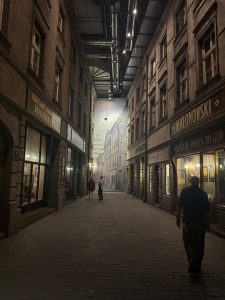
Reconstructed street of 1939 in Gdansk’s WWII museum. Photo by Naomi Goldenberg
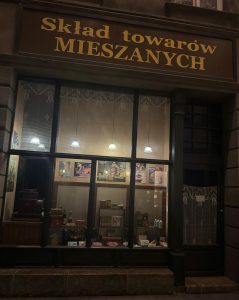
Reconstructed storefront of 1939 in Gdansk’s WWII museum. Photo by Naomi Goldenberg
migrated to the area surrounding Gdansk even before it became a part of the country we know today as Poland’, according to Mazurkiewicz.Only a fraction of this were local Polish, known as the “Kashubians”. ‘They are an ethnic minority. This proto-Slavic tribe migrated to the area surrounding Gdansk even before it became a part of the country we know today as Poland’, according to Mazurkiewicz.
Only a fraction of this population were local Polish residents, known as the “Kashubians”. ‘They are an ethnic minority. This proto-Slavic tribe migrated to the area surrounding Gdansk even before it became a part of the country we know today as Poland’, according to Mazurkiewicz.
At first glance, Gdansk’s predominantly German demographic seems to offer a simple explanation for Nazi Germany’s interest in the city. The reality, however, is a bit more complex.
Following WWI, the Treaty of Versailles limited Germany’s possibility to become a superpower in Europe. One consequence was the loss of much of its territory, giving way for Poland to be recreated as an independent country. One city, however, posed a problem: Gdansk. Most of its inhabitants identified themselves as Germans after centuries under their rule but its strategically important position at the mouth of the Vistula River was crucial to Poland’s trade route.
The compromise was “the Free City of Danzig”, established in 1920. It became an economically autonomous city for the second time in its history. According to Mazurkiewicz, ‘This is a contested site’. It gave Poland access to the sea, but isolated East Prussia from the rest of Germany. So next to autonomy, Gdansk also earned the name of a highly sensitive political subject in Europe’s interbellum years.
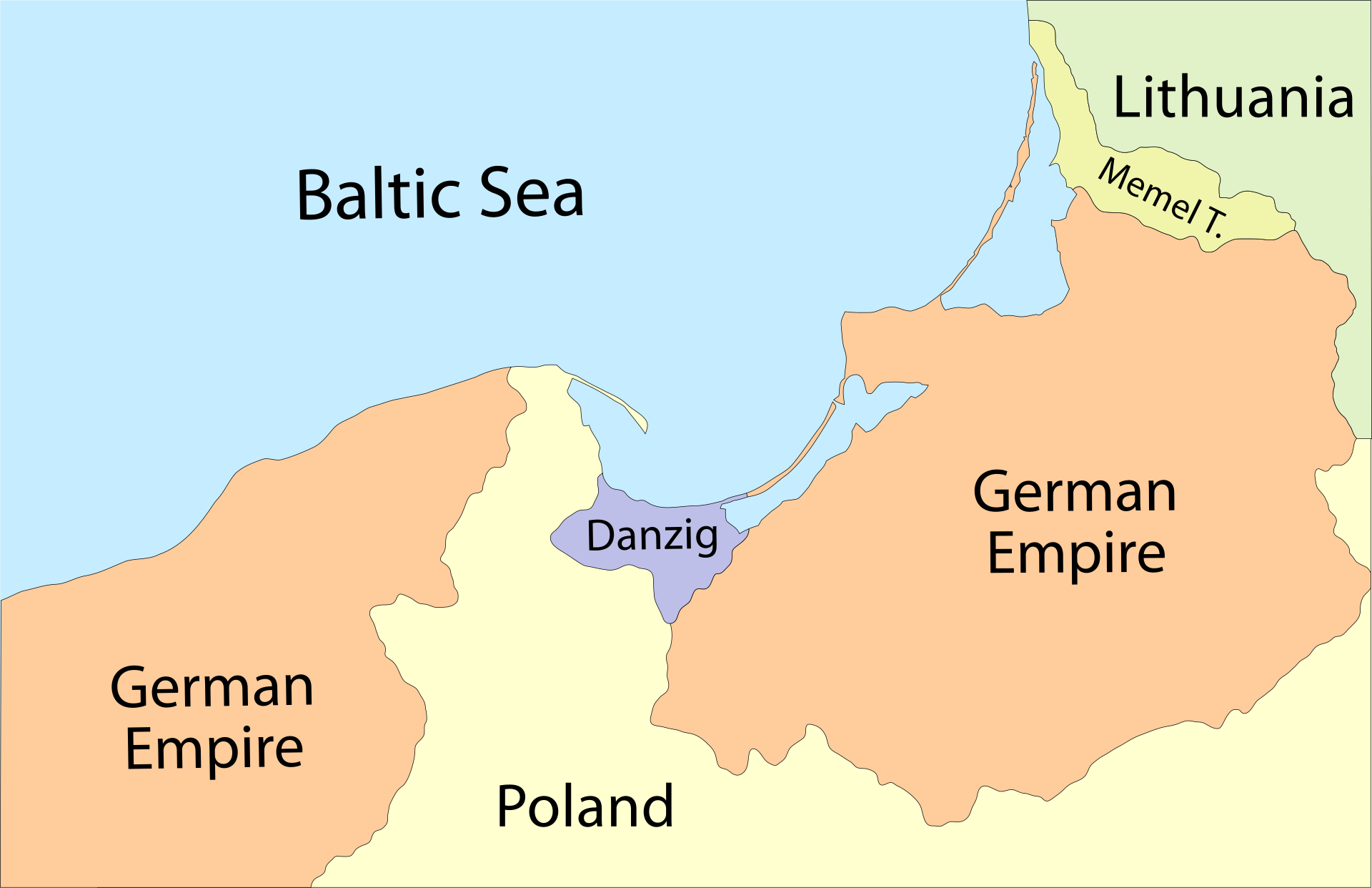
Gdansk’s crucial geographical position in 1939. Source: Wikimedia Commons
After Hitler came into power in 1933 and soon began advancing a claim to power throughout Europe, control of Military Transit Depot of Gdansk – Westerplatte – was about more than reclaiming a predominantly German-speaking city. As seen on the map above, Gdansk could connect Germany and East Prussia. Overtaking Westerplatte was therefore an important strategic objective.
The audio report below follows the story of Westerplatte all the way to the traces still visible today.
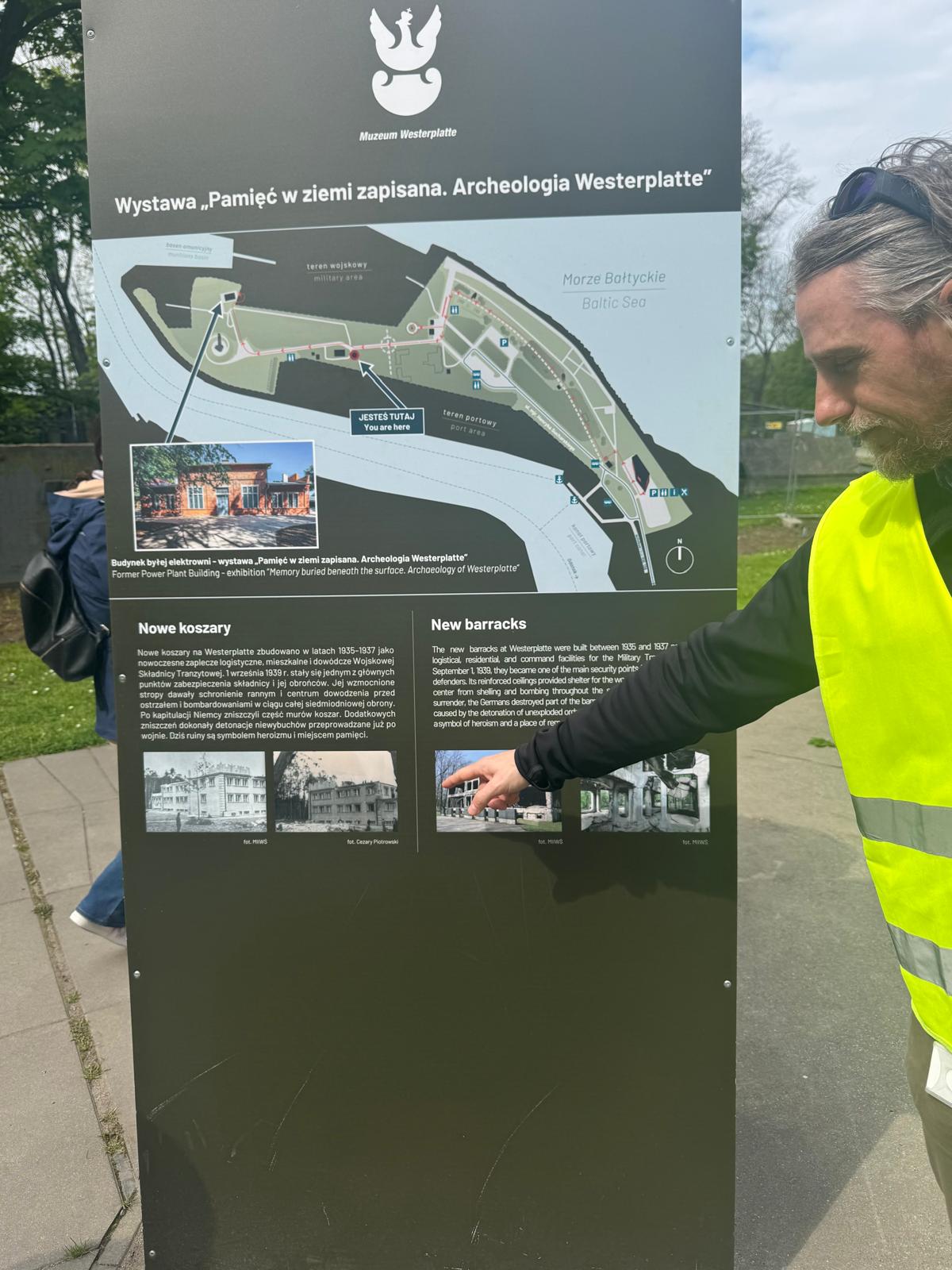
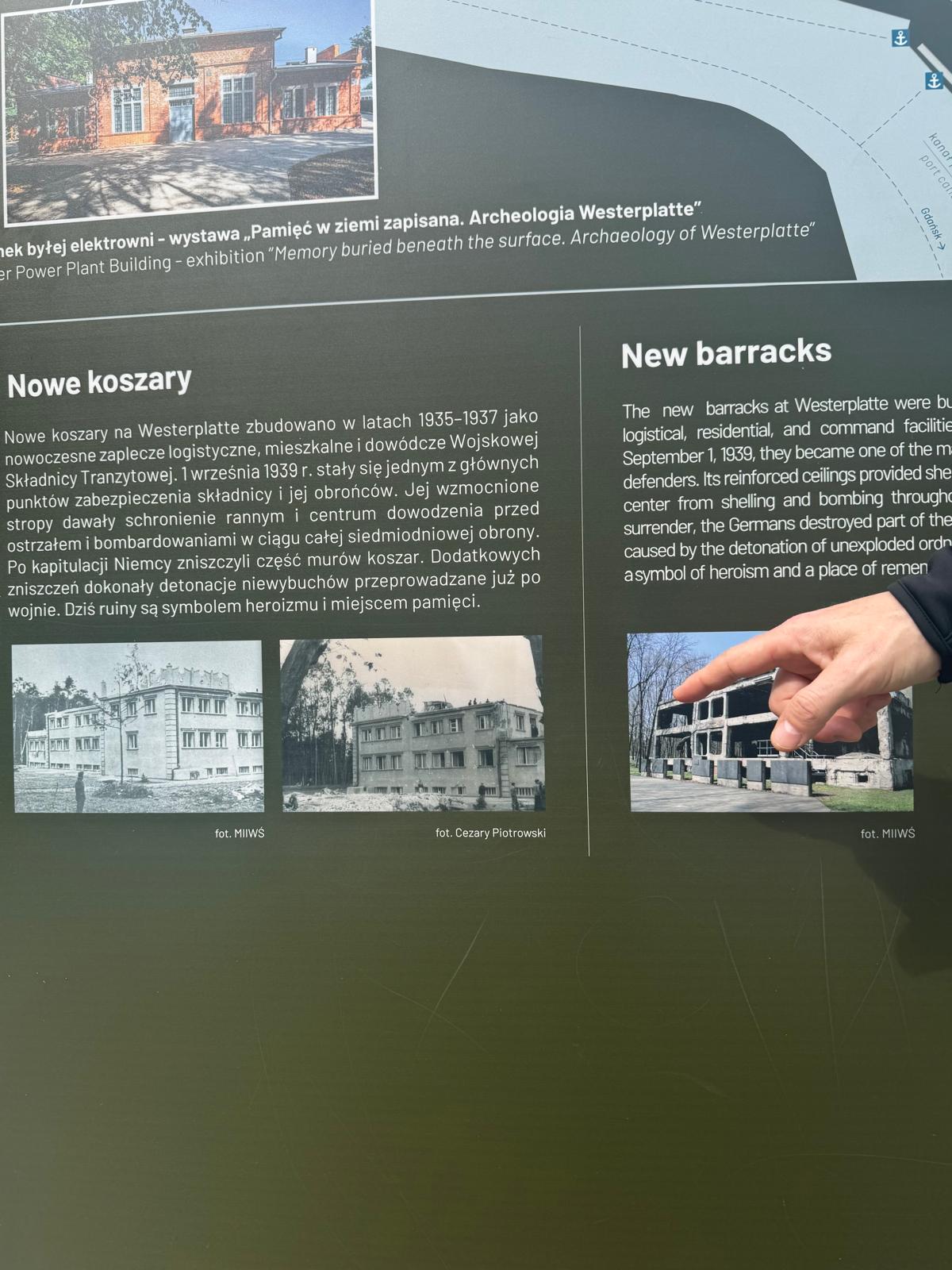
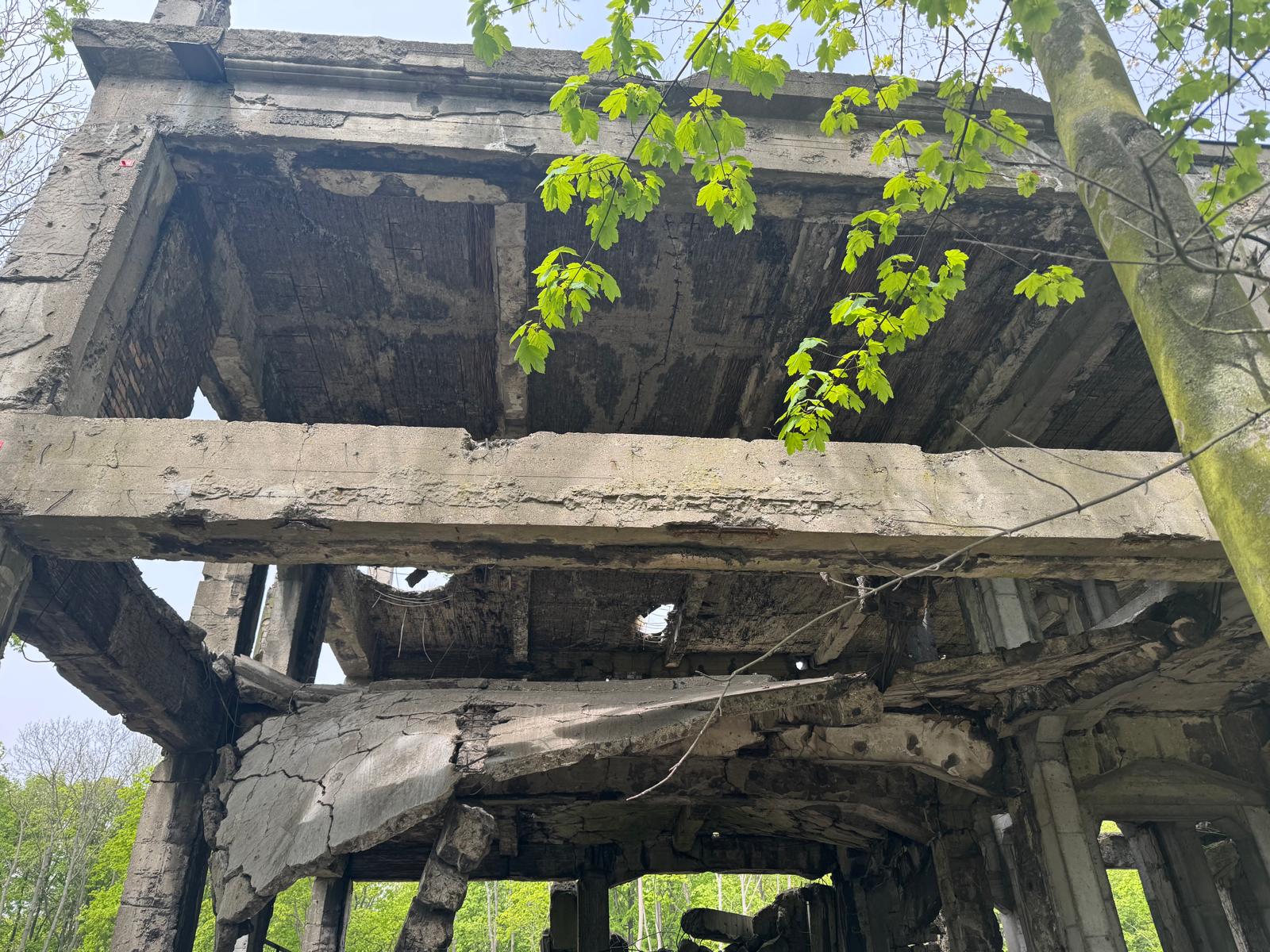
Pictures taken at Westerplatte. Damian Podlinski shows the destruction of one of the Polish commander houses after attack. Photo’s by Naomi Goldenberg
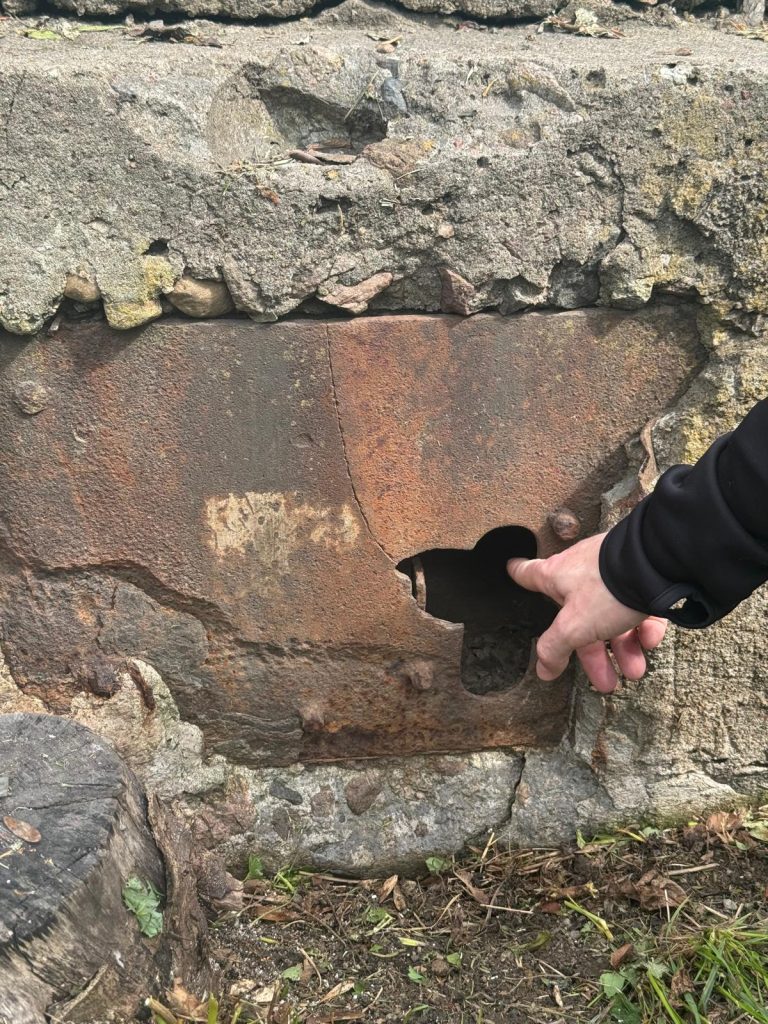
The hole left behind by the bullet that killed the first soldier of WWII. Photo by Naomi Goldenberg
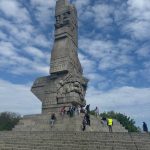
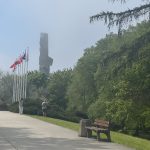
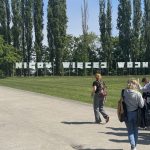
Memorial site constructed between 1964–1966 to commemorate the fallen soldiers at Westerplatte. Photo’s by Naomi Goldenberg
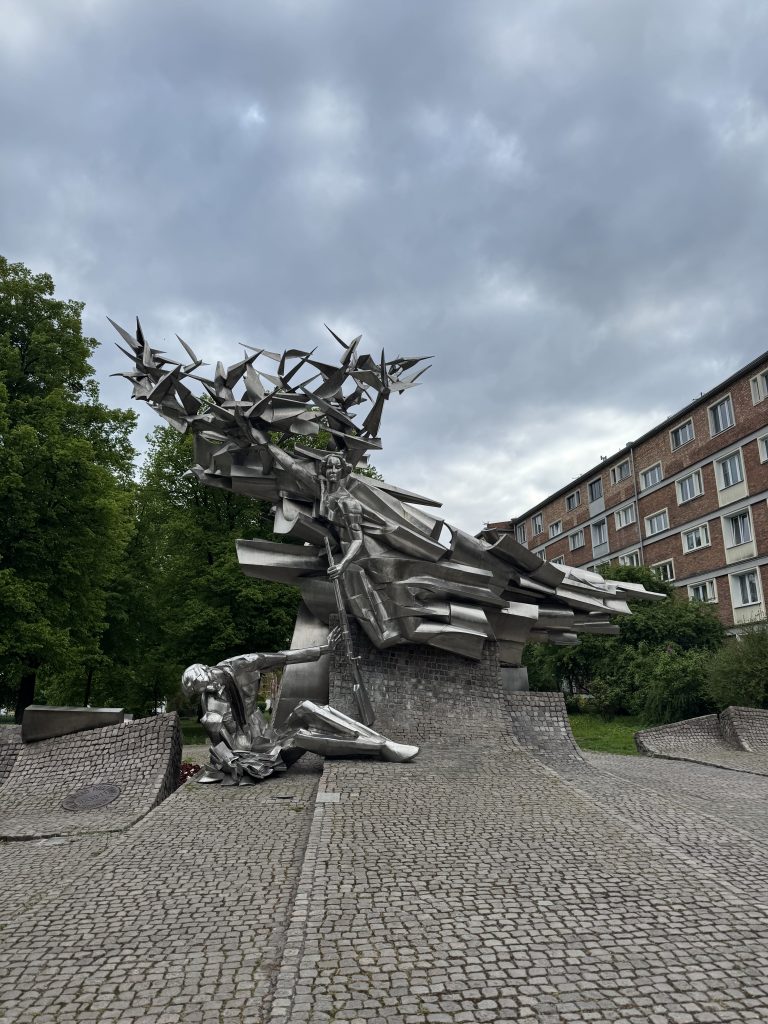
Monument erected to commemorate the defenders of Gdansk’s post office. Photo by Naomi Goldenberg
Gdansk remained rather intact throughout the war. Mazurkiewicz: ‘Because when the Germans were attacking the Soviet Union in 1941 and they came through this area, they had absolutely no interest in actually destroying Gdansk because it was their city’. This changed when in the late days of WWII, the Russians were advancing towards Berlin. ‘The idea was that this was a Nazi stronghold, so they needed to win it. And the fighting was fierce’, she adds.
The city was left in ruins. Up to ninety percent of Gdansk was destroyed, and more than eighty percent of the buildings in the historic center were severely damaged. It was now time to figure out how to rebuild it, or even to rebuild it at all.
Want to read all about Gdansk’s reconstruction? Read the article in the magazine Beyond Hanse.