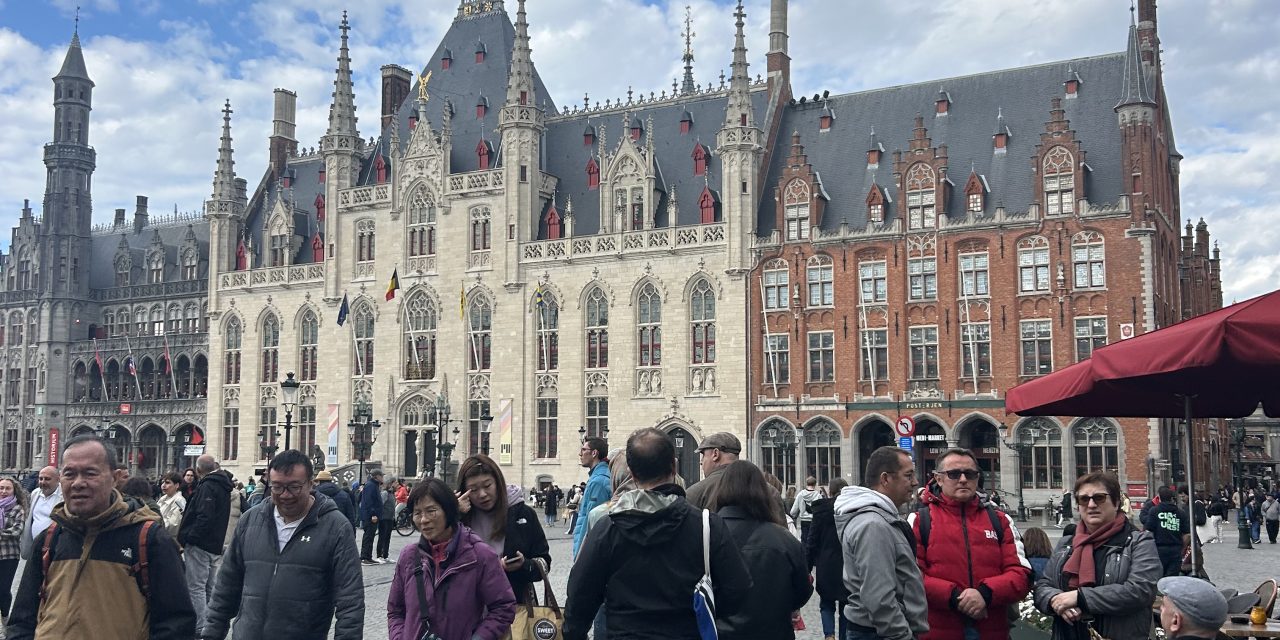
Tourism has become one of Bruges’ most important industries. Around eight million visitors come to the city every year, far outnumbering its population of roughly 120,000 residents.
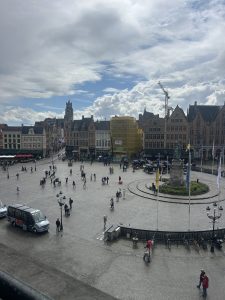
The Markt remains the focal point of Bruges’ tourism industry and one of the city’s busiest public spaces.
For tourists, the city represents the perfect European destination: medieval streets, canals, waffles and historic architecture. However the popularity of Bruges also raises an important question: can a city that attracts so many visitors still remain a place where people live, work and build their everyday lives?
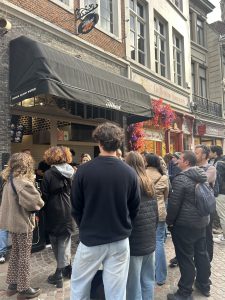
Tourist queque outside a famous waffle shop.
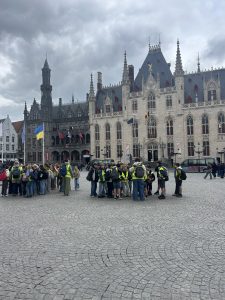
Many school groups are in the city for a day trip.
The discussion is not new. Over the past decade, concerns about overtourism have become increasingly common across Europe. Cities such as Venice, Barcelona and Amsterdam have all struggled to balance tourism with everyday life, and Bruges faces many of the same challenges.
In response, the city has introduced several measures. New hotel developments are heavily restricted through a long-standing hotel stop policy. Tourist buses must reserve parking spaces in advance and stricter rules apply to guided tours in the historic centre. From 2027 onwards, cruise passengers arriving through nearby Zeebrugge will also be charged a disembarkation tax. Authorities hope these measures will help reduce pressure on the city centre without damaging the local economy.
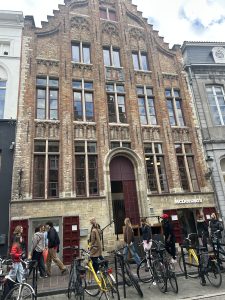
A McDonald’s housed in a historic building in the city centre.
Much of that pressure comes from day visitors. More than six million people visited Bruges in 2023 without staying overnight. Unlike hotel guests, many spend only a few hours in the city before continuing their journey.
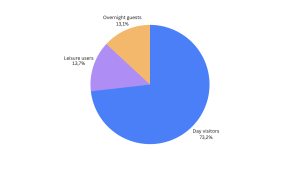
Types of visitors to Bruges in 2023. Source: Visit Bruges

Horse carriages have become a symbol of the medieval image Bruges presents to the tourists.
Local guide Hugo Slimbrouck sees the effects of this visitor flow every day, but he argues that the problem is often concentrated in a relatively small area of the city: “If 29,000 people travel through the same streets, it can get congested,” “But that’s limited between 10 o’clock in the morning and 3 o’clock in the afternoon.”
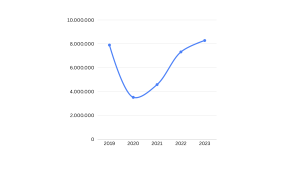
Visitor numbers in Bruges from 2019 to 2023. Source: Visit Bruges
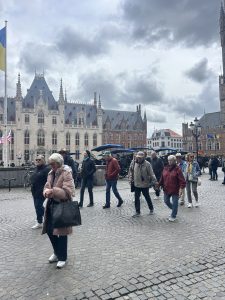
A guided tour moves through Bruges’ historic centre.
According to Slimbrouck, most tourists follow the same route through the historic centre before leaving again later in the day. While streets around the Markt can become crowded, many residential neighbourhoods remain largely unaffected.
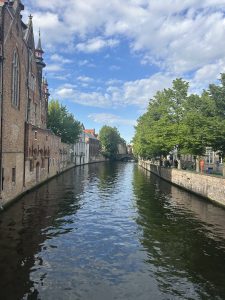
A quiet canal away from the busiest tourist streets.
For local businesses, however, tourism remains essential. Jelle Descamps, who runs Chocolatier Dumon, understands why some residents worry about the growing number of visitors. At the same time, he believes the city is still very much a place where people live and work. “Sixty percent of my staff lives in the centre of Bruges,” he argues. “It is still possible to live in the centre.”
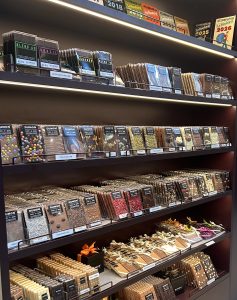
The famous chocolate bars at Chocolatier Dumon.
But for Descamps, the future depends on maintaining a balance: “We need the tourism, but of course we can’t make the tourism strangle the livability of the city.”
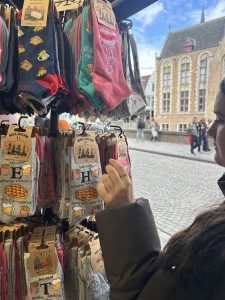
Souvenir shops remain popular and can be found around every corner.
The debate about tourism in Bruges is often reduced to numbers: visitor counts, overnight stays and economic impact. But the city looks very different when seen through the eyes of someone who has lived there for decades. Local guide Hugo Slimbrouck has watched Bruges transform from a relatively quiet city into one of Europe’s most visited destinations.