Berlin is widely known as a centre for circular fashion; it is home to dozens of second-hand stores, thrift stores and “zu verschenken.”/ free to take boxes. The city is a centre for zero-waste and sustainable fashion in Germany. It is the ideal location for upcyclers.
Upcycling is the act of taking one product and turning it into something else; anything can be from a leather jacket to old banners or even unwanted bed linen. There is a wide range of possibilities for what can be created. Two Berlin-based companies have the goal of reducing textile waste through upcycling.
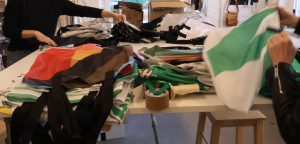
The production room at MOOT
MOOT (Made Out Of Trash) began six years ago as a side project by two university students, Nils Neubauer and Michael Pfeifer. The pair started out making t-shirts out of old bedsheets. This worked well initially. But after a while, they realised a flaw with this design model; everything was one of a kind. “If you only create unique items, is that if somebody likes a shirt, and it’s not their size, or somebody bought it before them, they will not get it anymore. We do not reproduce because that would go against the motive of upcycling, because we would then need to source fresh material,” explained Lukas Landefeld, working student in Sales and Development with the Berlin-based company. It was limiting for their customers.
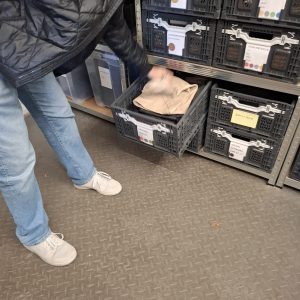
Stock room of leather bags at MOOT
Two years ago, MOOT began working with companies to create new merchandise and products out of their old, misprinted, or excess stock. They have worked with numerous companies, including DHL, Deutsche Post and the German national soccer team, the DFB. They have taken materials from these companies, which would have otherwise ended up in the landfill, and created products, including pillow cases and bags, that can be sold by the companies to their fans and customers. One of their most interesting projects was with the DFB, who were playing two matches within a month. After the first game, MOOT collected the banners that were hanging in the stadium. “We only took those 33 days to take them, make products and get them into this shape [small bags] so that they could be sold in the arena at the next game”, described Lukas. This collaboration reduced the amount of waste created by the football team and allowed fans to own their own piece of the stadium.

One of the products made from an old DFB team banner
For fashion designer and co-owner of tHERAPY Berlin, Angie Aguirre, upcycling was a normal part of her childhood and life in Argentina. “I liked to remake clothes for me and my younger sister. It came natural” said Angie. In Argentina, clothes are expensive, she explained, “So you take care of them.”
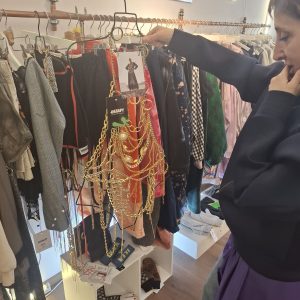
Angie Aguirre showing one of her upcycled creations.
Angie started tHERAPY Berlin in 2012. She started out by using old fabric and clothing that she would find left in the “zu verschenken” boxes. Angie remarked that the culture of vintage shopping in Berlin was “influential” for her business. Angie still tries to source all of the materials that she uses locally. “I try to buy locally [from flea markets]… I never buy wholesale because I don’t really need to; I find a lot here in Berlin. When I need some specific material, I go to second-hand shops”, she explained.
Both MOOT and tHERAPY are using upcycling to reduce the amount of textile waste going to the landfill by using the scrap materials to create something new. MOOT believe that they can continue to expand the network of companies that they work with. “We think that almost every big company has the potential to do a project with us … there are limitless opportunities”, explained. Angie is very passionate about reducing textile trash; for her, the message is simple: “It’s not normal, it can never be normal”.