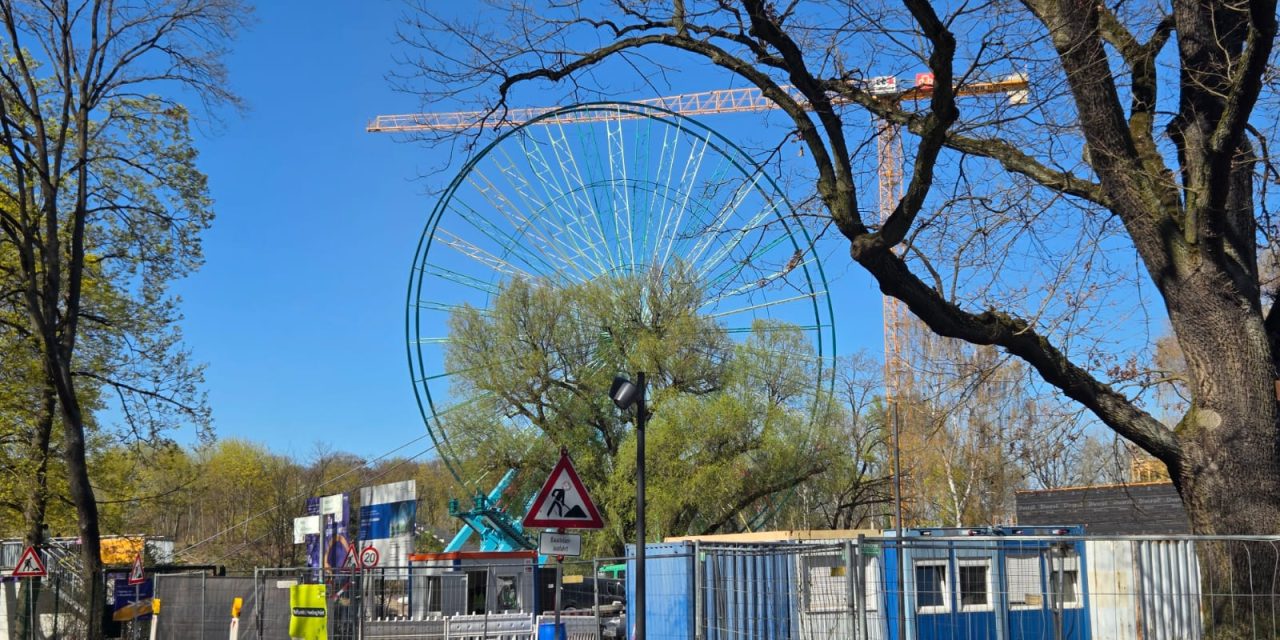
The first thing you see is mud and machines. Only the blue Ferris wheel still hints that Berlin’s Spreepark used to be an amusement park. Behind the fence, diggers are cutting through the old paths. In front of it, an elderly couple on their daily walk stops and shakes their heads. “Too much art and culture,” they say. “There’s nothing left for the kids anymore.” A few minutes later, I’m standing in the bright white rooms of the former Eierhäuschen, now a space for art and culture, where curator Temitayo Oni is working on a very different future for the same place.
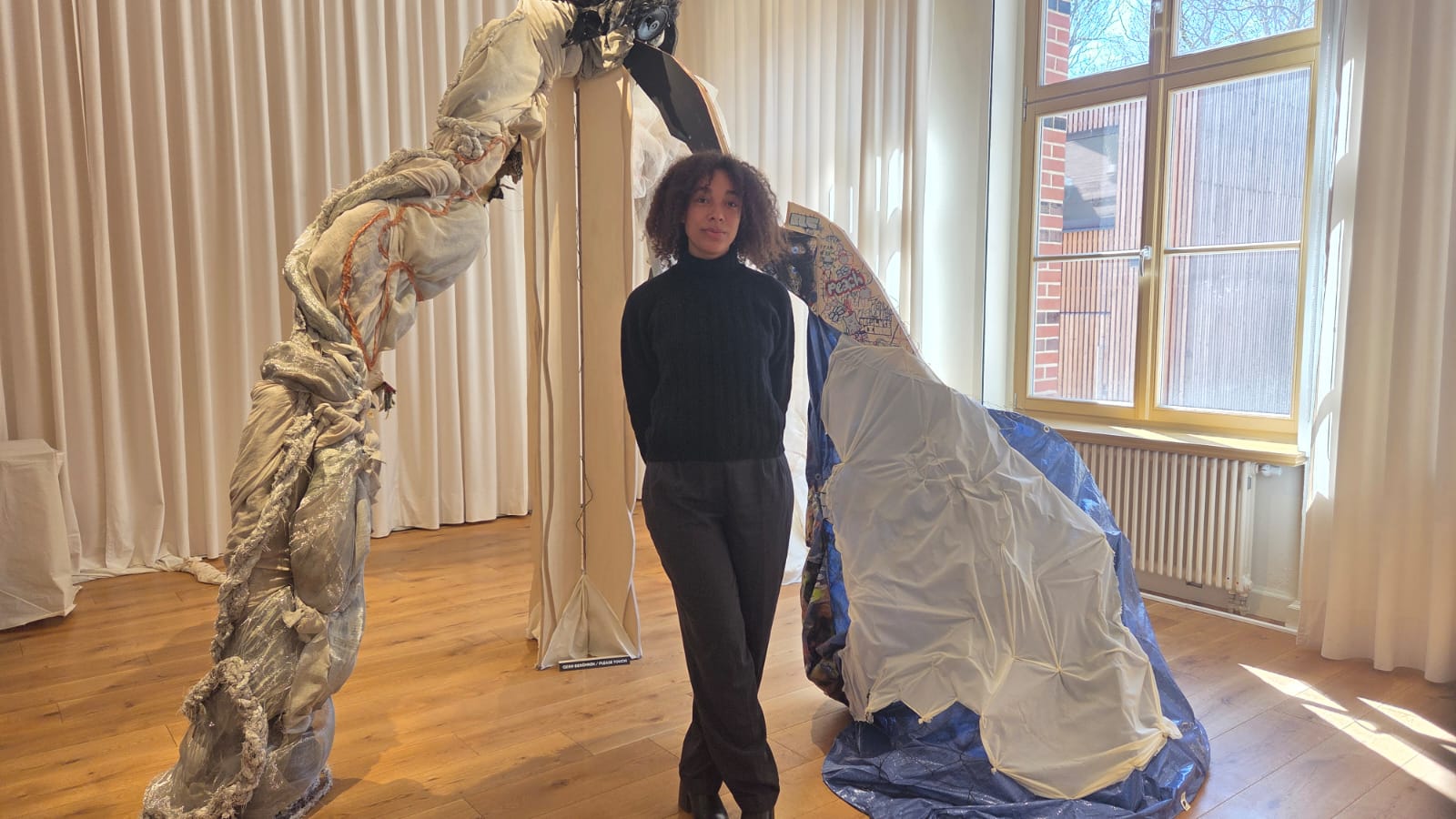
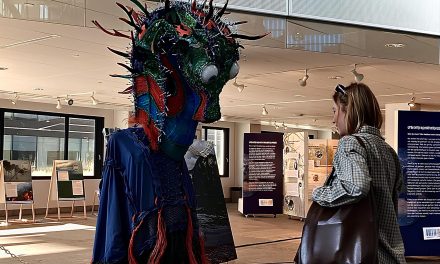
Curator of the exhibition “Transforming Landscapes” Temitayo Oni in front of the artwork “Desire Lines” – a multisensory installation by Rent Collective composed of various textiles and materials that echo plant life and mandmade elements found in Spreepark. Photo: Alicia Queck
Spreepark opened in 1969 as Kulturpark Plänterwald, the only permanent amusement park in the GDR. After reunification, visitor numbers dropped, the concept stopped working and in 2001 the park shut down. For years it was a fenced‑off “lost place”: overgrown carousels, decaying rides, the Ferris wheel rusty and frozen in the sky. Now the city wants to turn the site into a public art park in the middle of protected urban nature.
For people like the couple outside, that change is hard to swallow. They remember coming here with their children for the Ferris wheel and the big slide, a guaranteed day out. Today they look at the construction site and don’t really see themselves in the new plan.
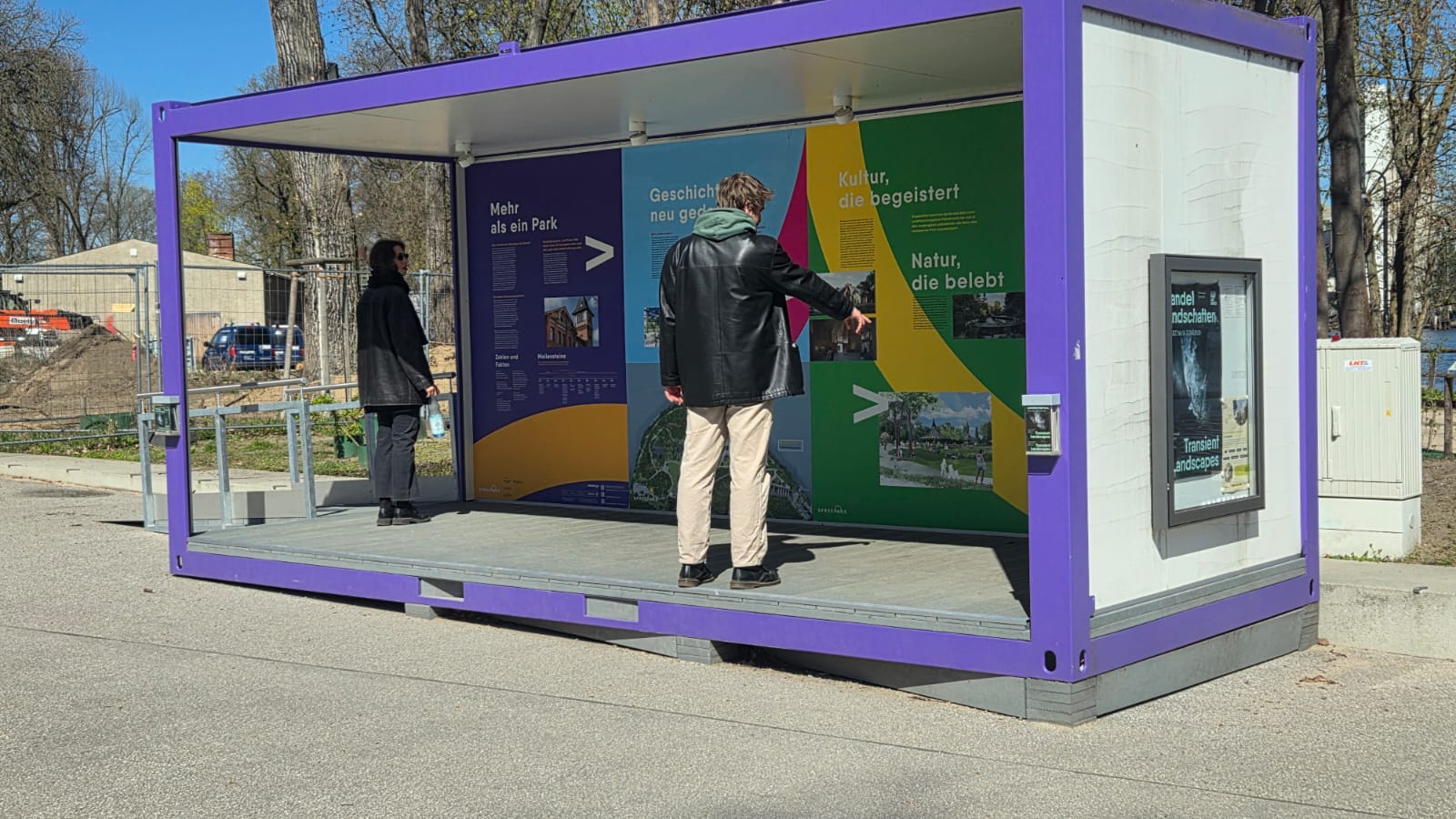
Visitors at Spreepark stop at one of many information boards that explain what the park is planned to become. Photo: Alicia Queck
Oni talks about the same place in a different tone. She describes Spreepark as “a place of exchange and memories” that has always been in motion. What interests her now is this next stage: a park where nature has taken back large parts of the area, and where art is added carefully on top of what is already there. A big section of the site is now a nature reserve.
In the current exhibition in Spreeparks Art Space inside of the Eierhäuschen “Transforming Landscapes”, this idea becomes visible. Four residency groups spent several months researching the park: walking through Spreepark, watching how the light changes during the day, following tracks in the mud and talking to people who have known the place for decades. In the exhibition, these observations turn into room‑filling installations made of soil, stones, sound and video. Walking through the Eierhäuschen feels a bit like moving through different versions of Spreepark: past, present and something in between.
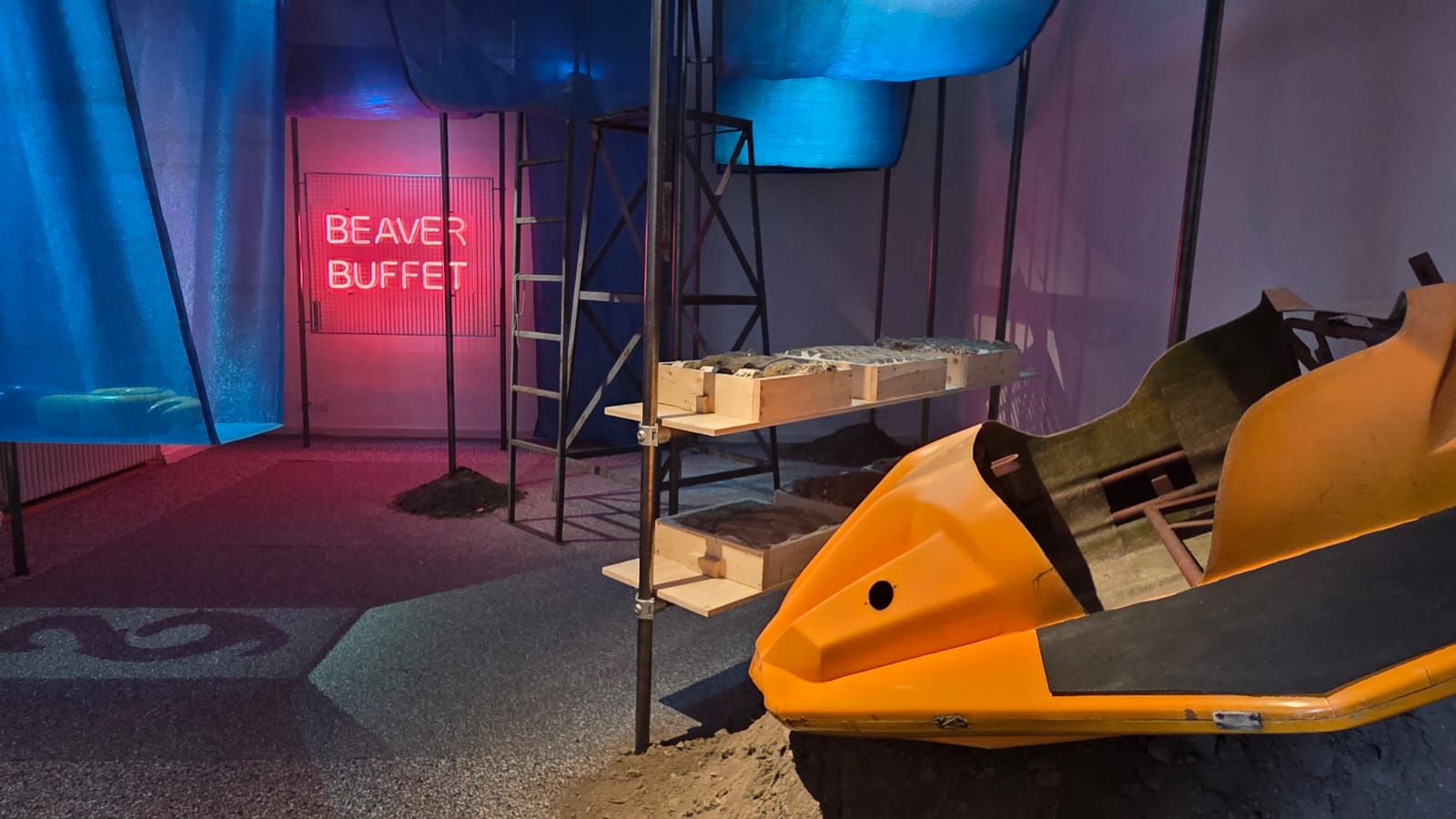
The artwork “Secret Exhibition of the Unfinished” by the group Memoria – an immersive installation made from original objects taken from the park in its current state. Photo: Alicia Queck
Oni says she didn’t want to tell the artists what to think about Spreepark in advance. Instead, she gave them time to get to know the place and then helped them bring their different views together. None of the works tries to simply rebuild the old amusement park, and they also don’t romanticise the ruin. They focus on small shifts: moss slowly climbing over concrete, demolition rubble reappearing as a bench, the soundscape changing as more people return to the park.
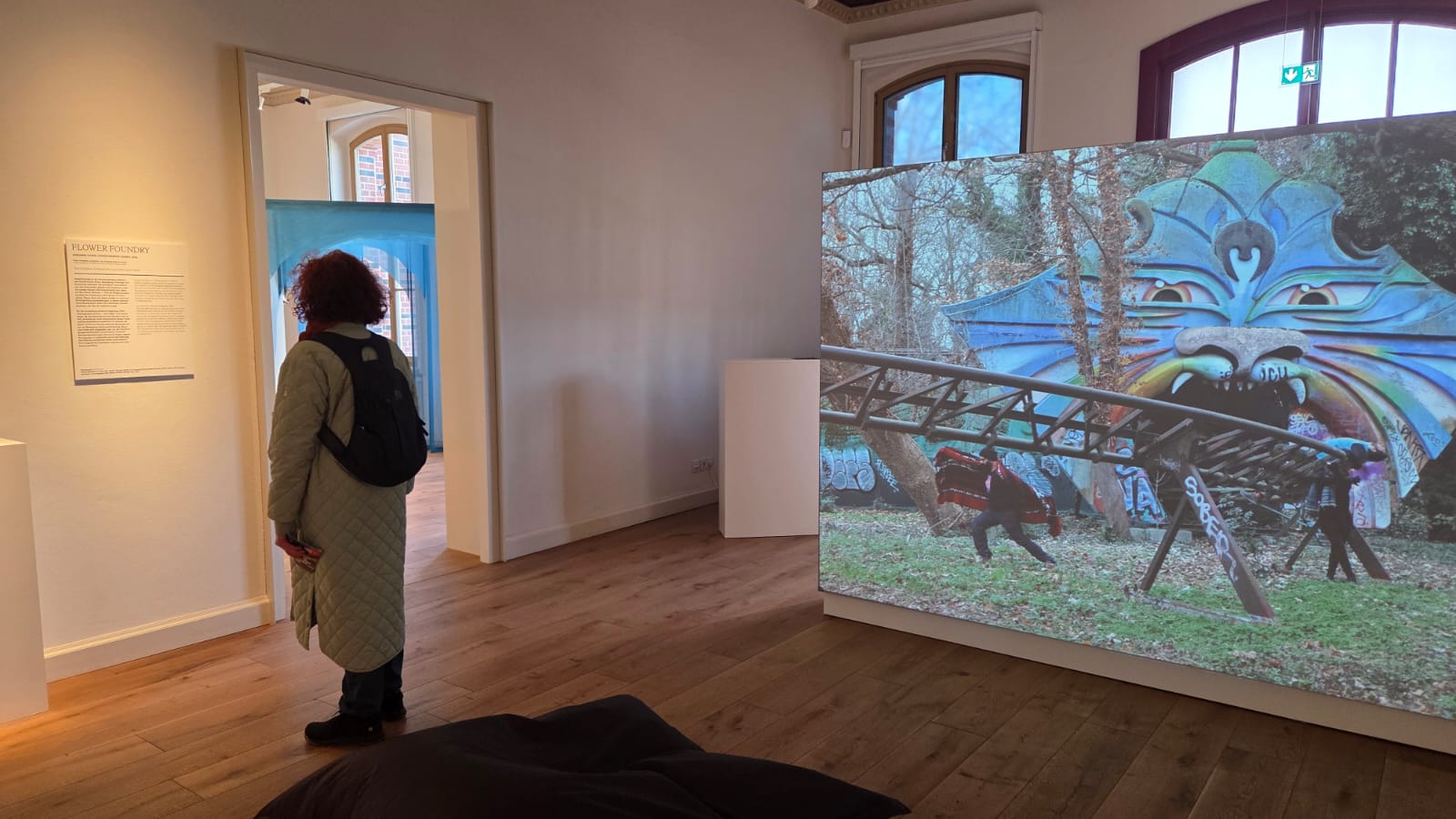
Visitor at the exhibition standing in front of a video installation showing a former ride and choreographic scores recorded by the group “Flower Foundry” for their video and sound work “Imagining a Park: Choreographic Scores”. Photo: Alicia Queck
While the exhibition is temporary, the plans for the park are long term. According to the official vision, the new Spreepark is set to reopen around 2027 as a park for art, culture and nature. A public green space where art, ecology and the remaining relics of the old funfair are meant to coexist. Some central areas are planned to be finished by 2026, with the Eierhäuschen already open as an art space and restaurant. Even the Ferris wheel is getting a second life: its old structure is being refurbished and will float above a new water basin as a kind of walk‑in artwork rather than a classic ride. Between the old rides and a new place for the community we can only wait and see what Spreepark will become.