At the port of Zeebrugge, construction has already started on the future of cruise tourism.
From 2027 onwards, cruise ships docking in Zeebrugge will be able to connect directly to shore-side electricity instead of running diesel engines while in port. Electric shuttle buses are gradually replacing diesel buses, and the port is investing in alternative fuels such as methanol and hydrogen.
For the cruise industry, these measures represent the path toward sustainable tourism. For critics, they are only a small part of a much larger problem.
As cruise tourism continues growing in Bruges, the debate surrounding it has become increasingly polarized. While the industry emphasizes innovation and economic benefits, residents and environmental groups question whether cruise tourism can ever truly become sustainable.
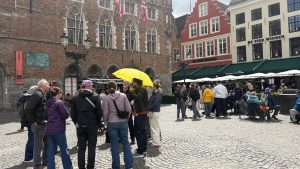
Tourists at the square while doing a free tour through the city. Photo by: Femke Eelderink
A growing industry
Cruise tourism in Zeebrugge has grown rapidly over the past decades. In 2024, the port welcomed more than 557,000 cruise passengers, making it one of the most important cruise destinations in Northwestern Europe.
According to Port of Antwerp-Bruges, the growth partly reflects broader changes in the cruise industry after the COVID-19 pandemic. “There were more ships, bigger ships and lower ticket prices,” the port’s cruise account manager Piet Vandekerkhove explains.
Cruises have become increasingly attractive because they combine transport, accommodation and entertainment into one relatively affordable holiday package. Unlike traditional vacations, passengers can visit multiple cities in one trip without constantly unpacking luggage or arranging transport. “You take your luggage, you check in, and for the rest of the week you don’t have to look anymore for travel arrangements,” Piet says.
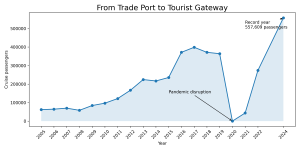
Source: Toerisme vlaanderen
For Bruges, these tourists create significant economic activity. According to Toerisme Vlaanderen, cruise passengers spend an average of around €45 during their visit to Belgian cities. The majority of this money is spent directly in Bruges itself through shopping, food and tourism activities.
“The city feels overcrowded”
Yet economic growth also comes with growing criticism. Research commissioned by Toerisme Vlaanderen found that 57% of Bruges residents want less cruise tourism in the city. More than half believe cruise tourism makes the city too crowded. Party Groen Brugge argues that the issue is not tourism itself, but the concentration of visitors arriving simultaneously. “These tourists arrive at the same time, at the same place, and in large groups,” Group chairman Raf Reuse explains.
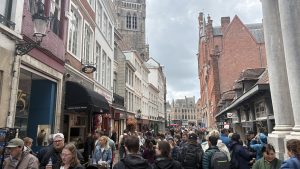
The crowded street in the city center of Bruges. Photo by: Femke Eelderink
Cruise tourists often spend only several hours in Bruges before returning to the ship. Critics describe this as “fast-food tourism”: quickly consuming the city without building any deeper connection to it.
Fabienne Verbaert, who works at chocolate shop Atelier Verbaert in the city center, notices this difference clearly between cruise tourists and other visitors.
“The cruise tourism is only here for a few hours, so it has to be quick, quick, quick,” she says. “The other tourists, they have more time.”
According to Verbaert, cruise tourists often move through the city at a much faster pace because they only have a limited amount of time before returning to the ship.
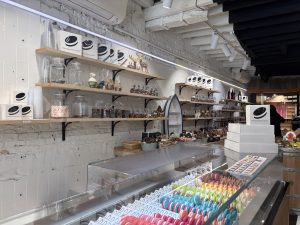
Inside atelier Verbaert. Photo by: Femke Eelderink
For critics of cruise tourism, the problem is not only the number of tourists arriving in Bruges, but also the way they experience the city itself. “They arrive, take pictures, buy waffles and leave again,” Raf says.
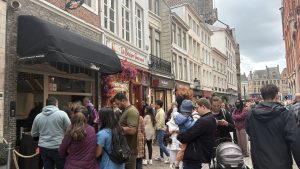
Tourists line up for chocolate and waffle shops. Photo by: Femke Eelderink
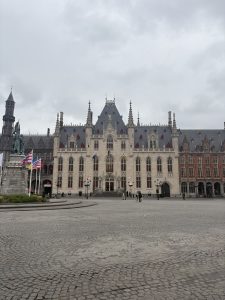
The city square at 7pm, when the busy tourist periods are over. Photo by: Femke Eelderink
The Port of Antwerp-Bruges confirms that most passengers stay in the city for only several hours. “Basically they just walk around, take pictures, have a Belgian cliché like a waffle or a beer, or they buy a box of chocolates,” the port representative says.
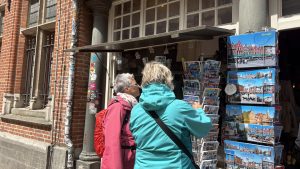
Tourists looking at Brugge postcards. Photo by: Femke Eelderink
According to Groen Brugge, this type of tourism changes not only the streets of Bruges, but also the relationship between visitors and the city itself. “One tourist once asked me where Manneken Pis was,” the representative says, referring to the famous Brussels statue. “That shows how little connection some tourists actually have with Bruges itself.” Souvenir shops also capitalise on tourists’ lack of knowledge. In every souvenir shop, you can find countless figurines of Manneken Pis.
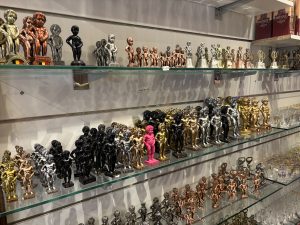
A souvenir shop in the centre of Brugge, filled with Manneken Pis souvenirs. Photo by: Femke Eelderink
For Groen Brugge, the city risks becoming a destination people consume rather than truly experience. “Bruges is not a city to consume in two or three hours,” Raf says. For residents, this can create the feeling that the city center increasingly exists for visitors rather than locals. “People are really losing ownership over the city,” the Groen representative says.
The environmental debate
Besides overcrowding, environmental concerns have become one of the biggest criticisms of cruise tourism. Research by Toerisme Vlaanderen shows that 56% of Bruges residents believe cruise ships negatively impact the environment.
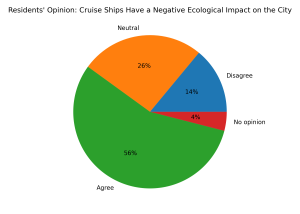
Source: Toerisme Vlaanderen
The cruise industry acknowledges these concerns and points toward new sustainability measures. Shore power installations will allow ships to switch off engines while docked, reducing emissions and noise pollution in the port area.
“When a cruise ship is in port, it becomes the most ecological form of travel you can imagine,” Piet argues. The port is also encouraging greener ships through environmental discount systems and investments in alternative fuels. Still, people argue that these measures only address part of the problem. “The ships still pollute at sea when they’re not connected to the docks,” Groen Brugge responds.
Environmental groups also question whether technological solutions alone can solve the deeper issue of mass tourism and continuous growth.
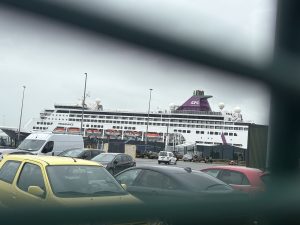
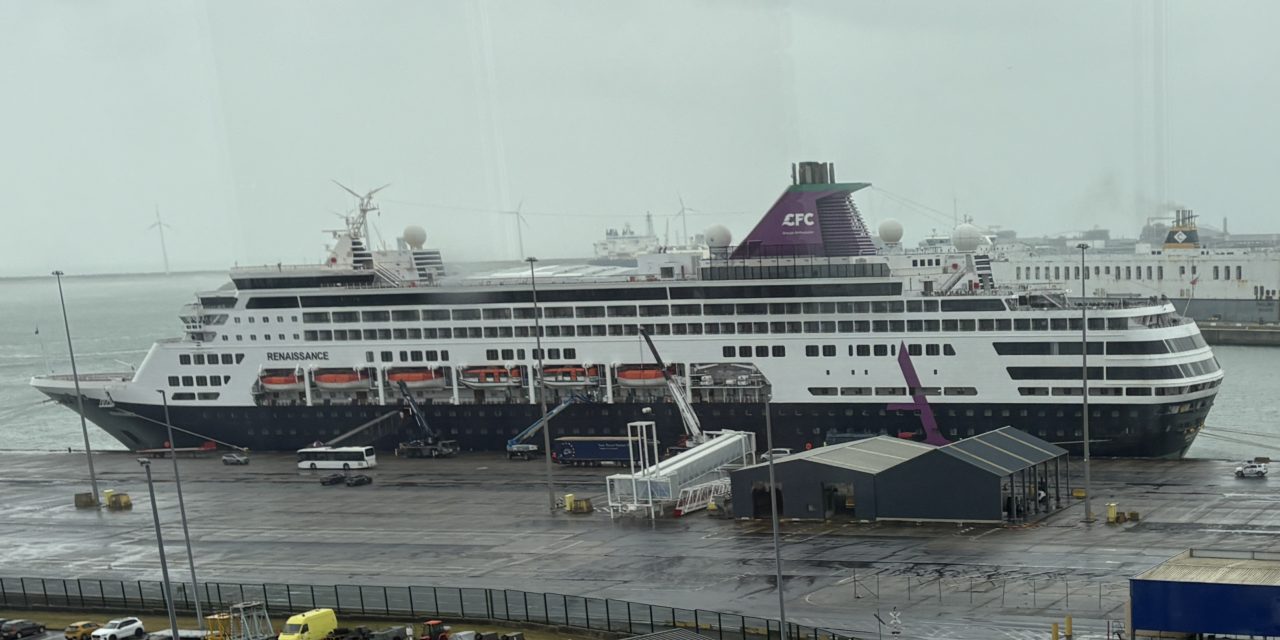
Cruiseship “Renaissance” docked in the port of Zeebrugge. Photo by: Femke Eelderink
“We get all the shit”
The cruise industry increasingly feels under pressure from public criticism. According to the port representative Piet, cruise tourists represent only a small percentage of total visitors in Bruges.
“Cruise passengers are only 4% of all visitors to Bruges,” he says. He argues that cruise ships have become an easy symbol for wider frustrations about tourism and environmental concerns.
“We get all the shit,” he says bluntly. The representative believes the cruise industry is actually pioneering sustainability innovations faster than many other sectors. But whether these innovations will be enough remains unclear.
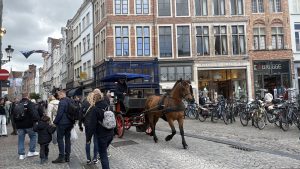
Horse carriages moving tourists through the city centre. Photo by: Femke Eelderink
The future of Bruges
The debate about cruise tourism ultimately reflects a larger question facing many European cities: how can tourism remain economically valuable without damaging local life and identity?
For Bruges, this question feels especially urgent because the city’s economy and international image are deeply connected to tourism. The sea once made Bruges rich through trade. Today, it still brings prosperity, but also difficult questions about sustainability, authenticity and the future of the city itself.
And as cruise ships continue arriving in Zeebrugge, Bruges must decide what kind of tourist city it wants to become.
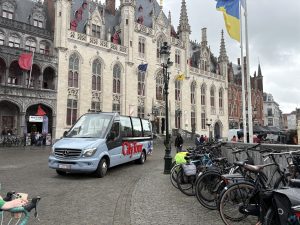
City tour buses fill the city square with groups of tourist. Photo by: Femke Eelderink
Hear more about the personal perspectives of the sources from this article through this audio report: