
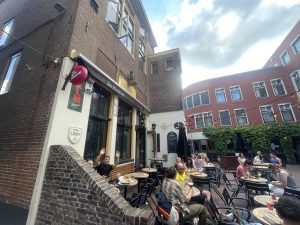
Walking into a local pub for the first time in Groningen can feel daunting, surrounded by a crowd of regulars and students, faced with what seems like an endless list of drinks, it’s easy to get lost in the selection. Then, the bartender recommends a beerperfectly fit for 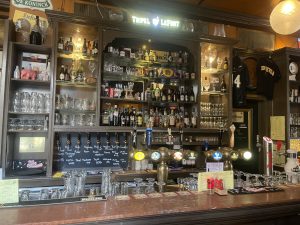 your palate, and then the night truly begins. Often, you’ll be introduced to a brew from local breweries such as BAX Bier, Graansilo or Martinus. Before long, you’ll realise that in Groningen, beer is more than just a drink, it’s an important part of the city’s identity and the highlight of its nightlife.
Alec van Campen, manager of The Pintlier, a beer hall that’s been a household name for more than 25 years offering a variety 250 beers throughout the year, described BAX’s famous Komme Inden beer as 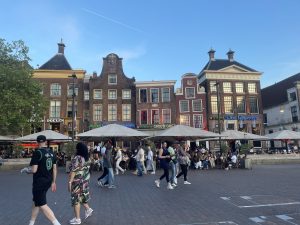 “Groningen in a bottle” explaining that it spears on menus throughout the city and has become one of the region’s most recognisable drinks. The relationship between beer and Groningen stretched back centuries, being a member of the Hanseatic league, the city was part of a large network that connected northern Europe. Merchants travelled between many ports and although beer was only one of many products traded throughout the regions, taverns and inns played an even more important role in urban life, providing spaces where merchants could meet socialise and exchange information. Today, local breweries mark Groningen’s identity the same way the commerce once did.
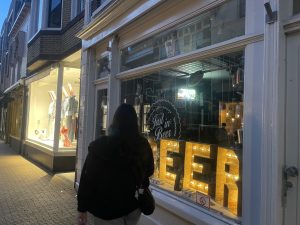 The beer culture is thriving bringing together students, locals and visitors, yet beneath the bubbles the industry is struggling. Research done in 2016 on the changing beer market further argues that craft breweries help create local identity by connecting products to place and community. In cities such as Groningen, breweries such as BAX Bier and Graansilo contribute to its distinctive regional identity that helps differentiate the city from others
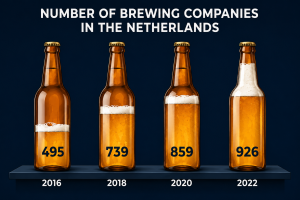
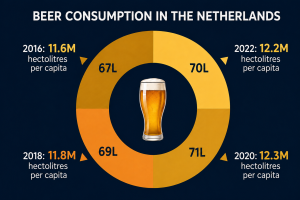
Figure 1&2, source: Brewers of Europe (2024)
Growth in breweries & consumption from 2016 – 2022 in the Netherlands
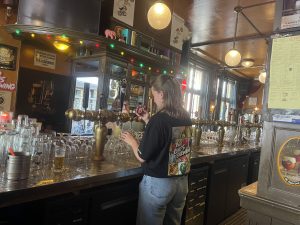 Figure 1 & 2 shows the overall growth of Breweries as well as the consumption of beer in the Netherlands, showing that the number of brewing companies increased from 496 in 2016 to 926 in 2022, with consumption rising from 11.6m in 2016 to 12.2m in 2022. While this growth has increased the choices consumers get, it’s also created a more competitive market for independent breweries.
According to Alec, the beer industry is dominated by global corporations such as Heineken and AB InBev, who own many brands consumers assume are independent craft breweries. They own certain brands of craft beer throughout different countries, and they’ve got so many under their umbrella”. Because of these 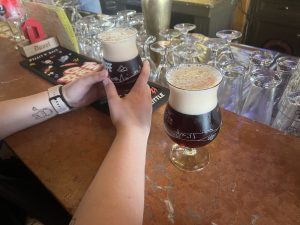 Independent breweries face an event greater challenge, “It’s hard for them to compete against the larger brands” Alec added acknowledging that small brewers now are competing against companies with larger resources and distribution networks. Industry observers have also noted similar trends. Many beers marketed as independent craft productions are now owned by larger brewing groups making it more difficult for genuine independent breweries to compete.
 At the same time, consumer tastes are changing. Iris Gorter, a young bartender explained that while old customer still prefers traditional Belgian abbey and Trappist beers, younger drinks choose IPAs and wheat beers. Alec believes this shift is partly driven by flavour and partly by marketing. “The older craft breweries that do the classic Belgian styles have no clue on how to actually access the new generation…Leffe is a great beer, but nobody below 40 years old is drinking that stuff anymore because they don’t do anything with promotions.” He explained.
Instead, younger consumers are more drawn towards fruitier beers. “Tropical fruits like Juice Punch are far more popular” Alec argued that students generally prefer sweeter flavours over the stronger and more bitter 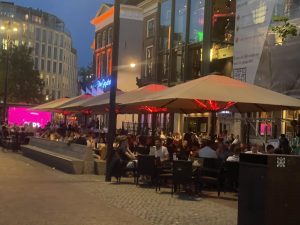 traditional styles. Consumer preferences are also changing across all the Netherlands. Dutch beer sales fell by 5.6% in 2023, while alcohol free and low alcohol beers continue to gain popularity. The change suggest that breweries must constantly adapt to the ever-changing drinking habits to remain in an already competitive and crowded market.
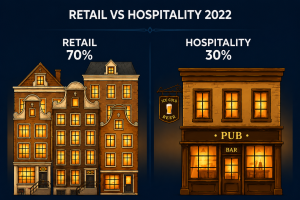
Figure 3 source: Brewers of Europe (2024)
Consumption data of beer in hospitality and retail 2022
 Figure 2 highlights another challenge faced by bars and breweries. Most beer consumed in the Netherlands is purchased through supermarkets and retail outlets rather than hospitality venues, placing additional pressure on bars to attract customers. Along with competing with retailed, local breweries also must tackle the problem of rising costs.
“It’s become very hard to produce at a rate where the beer is still low enough in terms of money to actually sell…with the tariffs for American hops, it’s becoming incredibly expensive to brew beer.” Alec explained how expensive brewing beer has become in recent years and bars feel the same pressure with rising costs. “We try to keep everything on six euros or below six, and that’s very  hard nowadays”. With costs continuing to rise and most consumers preferring to buy from retails, breweries must find a way to remain competitive and keep prices reasonable for consumers.
However, analysts expect moderate growth in the Dutch hospitality sector as consumer spending recovers especially after covid, this offers opportunities for bars and independent breweries to attract customers, only if they remain innovative with unique experiences and local products.
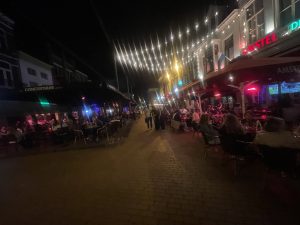 Six hundred years after Groningen’s trading days, the city remains closely connected to beer, however it’s no longer competing with neighbouring cities but instead with multinational corporations and an ever changing market. The future of Groningen’s beer industry remains uncertain, but the importance beer itself has on the community is not lost. Beer brings people together, but for many students in Groningen’s another crucial element shapes the night life of the city the same way that merchant guilds once did when helping newcomers find their place in Hanseatic cities. Associations, student organisations and sports clubs. That’s a story that begins beyond the bar.